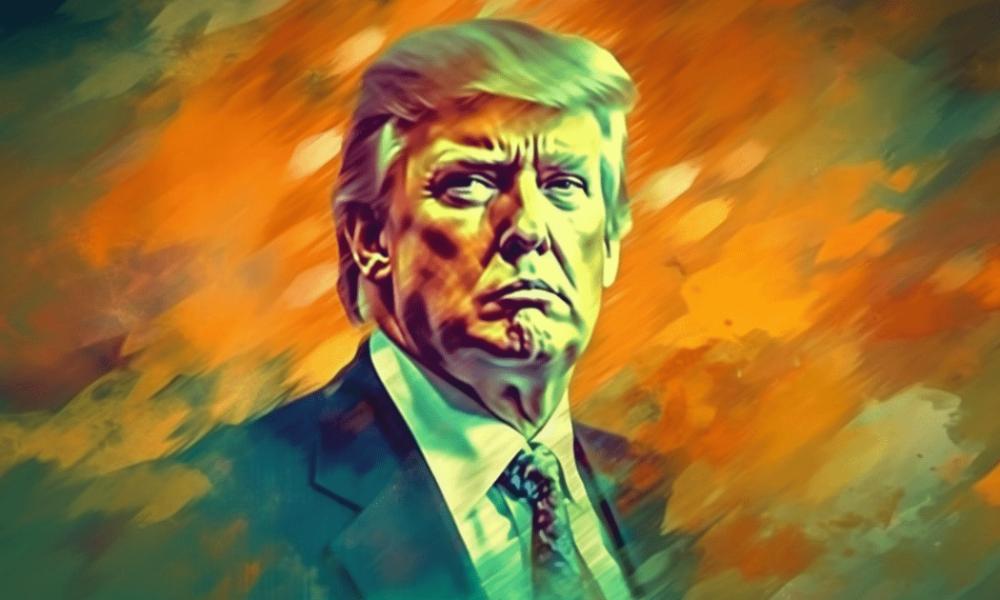
U.S. President Donald Trump delivered a national televised address, unilaterally proclaiming a decisive victory for the U.S. military's Operation Epic Fury against Iran, with the core objective—the total destruction of Iran's nuclear capabilities—having been achieved. He simultaneously announced the withdrawal of all U.S. ground and major combat forces from Iran within two to three weeks, while retaining the right to conduct "targeted strikes" against Iran. Setting the reopening of the Strait of Hormuz as a prerequisite for a ceasefire, he forcefully denounced NATO as a "paper tiger", openly stating he is "seriously considering" withdrawing the U.S. from the alliance and threatening to halt all military aid to Ukraine. This speech not only draws a tentative line under the month-long U.S.-Iran conflict but also reshapes America's global alliances and geostrategic posture with an assertive unilateral stance, sending shockwaves across the international community.
Since ordering the full-scale military assault on Iran on February 28, the U.S. military, relying primarily on precision aerial strikes, has relentlessly bombed Iranian nuclear facilities, missile bases, command and control centers, and energy infrastructure. In his address, Trump claimed that U.S. operations had "completely eradicated all of Iran's nuclear research and production capabilities," including the complete destruction of key underground nuclear facilities such as Fordow and Natanz, leaving Iran devoid of any means to manufacture a nuclear weapon. He emphasized that the achievement of this goal meant the U.S. no longer needed to maintain a large military presence in Iran. "Our soldiers will be coming home soon," he stated. "We expect to complete the withdrawal within two to three weeks, with no further delays." However, he quickly added that the withdrawal does not signify an abandonment of deterrence. "Should Iran dare to restart its nuclear program or launch attacks against U.S. interests, we will not hesitate to return and deliver even more ferocious targeted strikes."
Regarding a ceasefire and regional stability, Trump made the reopening of the Strait of Hormuz the sole condition. He bluntly asserted that Iran bears full responsibility for the current closure of the strait, which has disrupted global energy supply chains and sent oil prices soaring. "Only when Iran fully and unconditionally opens the strait, ensuring the safe and unimpeded transit of global energy supplies, will the United States consider a formal ceasefire." Furthermore, he refused to commit to providing long-term security guarantees for shipping lanes, arguing that "securing these waterways is not the exclusive responsibility of the United States. Countries in Europe, Asia, and elsewhere that depend on Middle Eastern oil must shoulder their own obligations," further underscoring his "America First" unilateralist stance.
The most explosive segment of the speech centered on Trump's scathing attack on NATO and U.S. allies. He railed against NATO for its complete "spectator role" throughout the conflict, refusing to provide military bases, logistical support, or rhetorical backing to U.S. forces. "This so-called transatlantic alliance is nothing but a paper tiger—all looks, no bite, utterly ineffective when it truly matters," he declared. He stated unequivocally, "I have been seriously considering leaving NATO. This organization is obsolete. The United States spends hundreds of billions of dollars annually protecting our European allies, yet receives nothing in return. It is completely unfair." Extending his frustration with NATO to the Ukrainian conflict, he threatened an immediate halt to military assistance. "Europe is unwilling to spend a dime or lift a finger for Ukraine. Why should America bear this burden alone? Effective today, all aid to Ukraine is suspended. Unless our NATO allies cover the entire cost, it will never resume."
These statements instantly reverberated across the global geopolitical landscape. NATO responded urgently, expressing "profound shock and disappointment" at Trump's remarks, reaffirming the alliance as the cornerstone of European security and urging the U.S. to reconsider. Leaders across Europe convened emergency meetings overnight, fearing that a U.S. withdrawal from NATO would completely dismantle Europe's defense architecture and create a regional security vacuum. The Ukrainian government descended into panic, with its foreign ministry issuing an urgent plea for the U.S. not to abandon Ukraine, warning that cutting aid would cause a frontline collapse for Ukrainian forces. Analysts assess that Trump's move is both retaliation for allies' "lack of cooperation" and a critical step in his push for global strategic retrenchment and domestic focus. While his threat to "quit" may not be immediately realized, it has severely shaken the post-WWII alliance system led by the United States.
Additionally, Trump touched on Iran's internal situation, claiming the emergence of a "more rational and communicative" new leadership in Iran, implying the U.S. objective of regime change had been indirectly achieved. However, Iran immediately pushed back with a firm rebuttal. President Pezeshkian issued a statement denying Iran had requested a ceasefire, calling Trump's "declaration of victory" "completely false propaganda." He insisted Iran's nuclear capabilities and defense strength remained intact and that the Strait of Hormuz would never be opened to "America's enemies." Iran's Islamic Revolutionary Guard Corps also vowed to continue counterattacks against U.S. and Israeli targets, insisting the war was far from over.
This speech marks a significant shift in the foreign policy of the Trump administration: concluding the conflict in the Middle East with "limited objectives and rapid withdrawal" to avoid being mired in a protracted war; while simultaneously using extreme unilateralism to reshape alliance relations, coercing allies to assume greater security responsibilities or risk a fractured NATO and an abandoned Ukraine. In the short term, the U.S.-Iran conflict may enter a lull. However, multiple risks remain intertwined—the issue of strait navigation, potential Iranian retaliation, internal rifts within NATO, and a deteriorating Ukrainian battlefield. The global geopolitical order is undergoing its most dramatic restructuring since World War II, with profound uncertainty for the future.
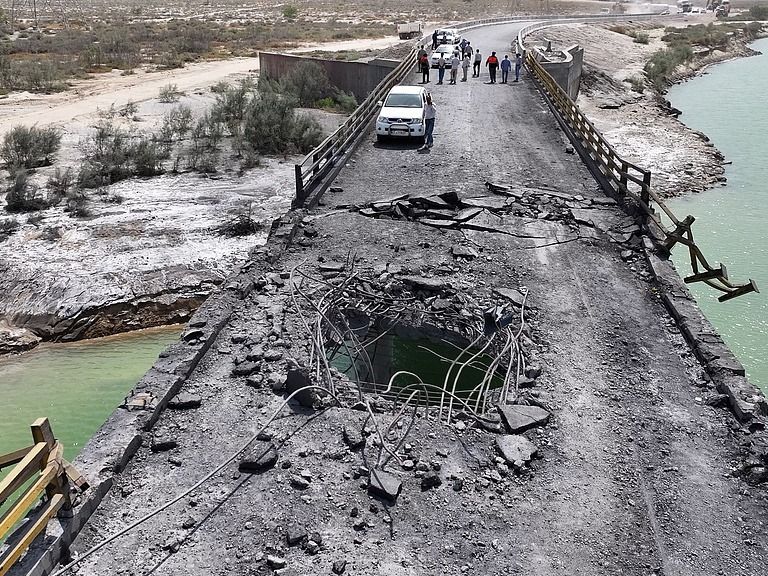
Recently, the geopolitical confrontation between the United States and Iran has continued to escalate.

Recently, the geopolitical confrontation between the United…

The New York Times has recently clashed with the Trump admi…

Trader Peter Brandt has sparked a new round of discussion i…

On July 17th, Taiwan's stock market experienced a historic …

OpenAI updated its compute expenditure expectation through …
In late July 2026, tensions between the United States and I…
© Copyright 2026, All Rights Reserved