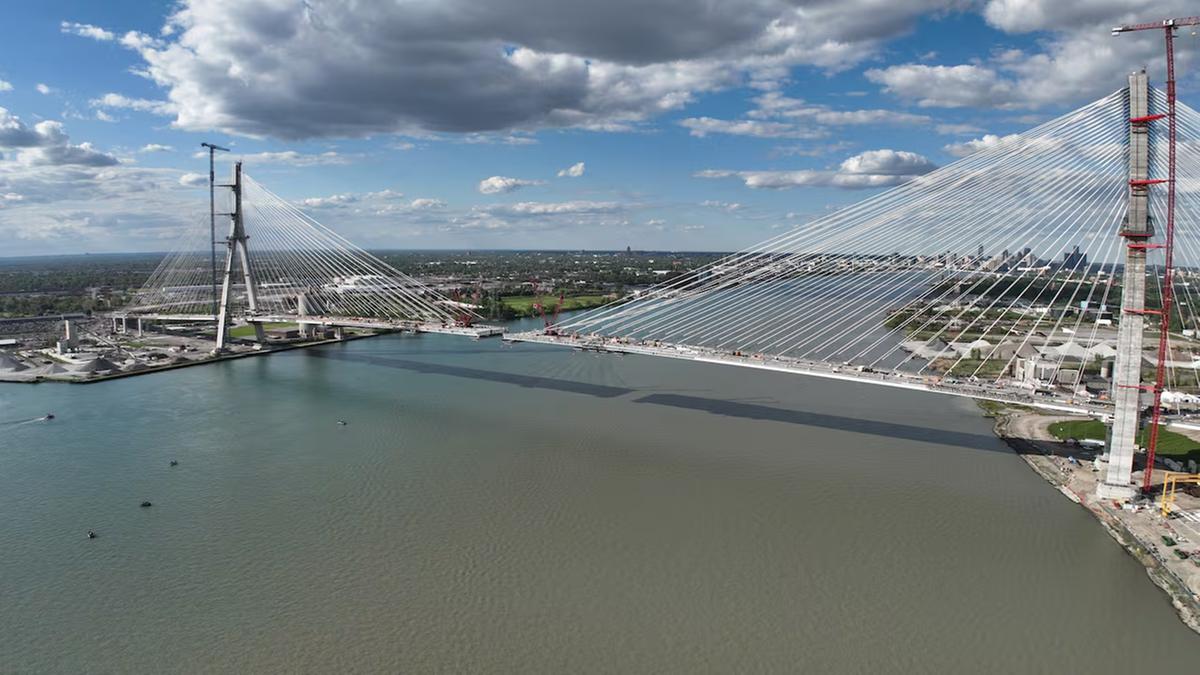
In February 2026, US President Trump made a sensational statement on social media: He threatened to block the opening of the Gordie Howe International Bridge connecting Michigan and Ontario, and demanded that the US obtain at least 50% of the bridge's ownership as "compensation." This modern bridge, which carries the lifeblood of North American trade, instantly became a tangible symbol of the rift in US-Canada relations. Behind this farce lies not only the trampling of unilateralism on multilateral rules but also a fatal challenge to the process of North American economic integration.
The birth of the Gordie Howe Bridge was supposed to be a paragon of North American cooperation. This modern project, costing 6.4 billion Canadian dollars and spanning the Detroit River, aims to replace the century-old Ambassador Bridge and alleviate congestion on North America's busiest trade corridor. According to the 2012 US-Canada agreement, Canada fully covered the construction costs, while Michigan participated in the benefits through future toll revenues, with joint ownership between the two sides. This "Canada-funded, mutually beneficial" model was once praised by Trump in 2017 as an "important economic link."
However, nine years later, Trump has turned this bridge, a symbol of cooperation, into a tool for exerting pressure. He claimed that Canada was "taking advantage of the US" and demanded ownership compensation. He even tied the fate of the bridge to issues such as Canada's economic and trade policies with China and dairy tariffs. This practice of instrumentalizing infrastructure projects exposes the essence of his "transactional diplomacy"—reducing ally relations to a zero-sum game and seeking short-term political gains by creating crises.
From an economic perspective, the opening of the Gordie Howe Bridge is of vital importance to both the US and Canada. Data from Statistics Canada shows that over $2 billion worth of goods pass through the Detroit-Windsor corridor every day, with nearly a quarter relying on this channel. The bridge's designed traffic capacity is 300% higher than that of the old bridge, and it is expected to improve cross-border logistics efficiency by 30% and reduce corporate costs. Michigan Governor Whitmer even stated bluntly that the project has created thousands of jobs and is an "engine for regional economic development."
But Trump's calculations have long gone beyond economic considerations. He accused Canada of not using US steel in the construction, despite fact-checking showing that US steel was widely used in the US section of the bridge. He complained about Canada maintaining high tariffs on US dairy products while ignoring the long-standing US agricultural subsidies. He even linked the bridge dispute to Canada-China relations, claiming that "China will devour Canada." Behind this "double standard" is his hegemonic logic of trying to force Canada to make concessions in trade, diplomacy, and other fields by creating uncertainty.
Trump's threats quickly sparked a strong backlash from the Canadian political and business communities. Windsor Mayor Dilkens criticized him for "ignoring common interests," pointing out that the US section of the bridge strictly used US steel. Chamber of Commerce President Candace Lane warned that blocking the bridge's opening would be a "self-destructive act" that would harm key sectors such as Michigan's automotive industry. More intriguingly, Canadian Prime Minister Carney explicitly refused to make concessions during a phone call, emphasizing that "Canada has paid all the construction costs and Michigan already owns a share of the ownership."
This tough response reflects structural changes in US-Canada relations. Since the Carney government took office in 2025, Canada has begun to accelerate its economic diversification strategy and reduce its dependence on the US. Data shows that Canada's export share to Asia has increased from 18% in 2020 to 27% in 2025, and its trade volume with the EU has grown by 15%. When the US tries to use infrastructure projects as a tool for exerting pressure, Canada chooses to hedge risks through a market diversification strategy, marking a transition of the North American economic community from "unilateral dependence" to "multilateral balance."
Trump's "bridge farce" is not an isolated incident but a microcosm of the global wave of trade protectionism. From threatening to impose tariffs on Canadian goods to restricting technology exports on national security grounds and politicizing infrastructure projects, the US is systematically reshaping its economic relations with its allies. The short-term goal of this approach may be to rally support for domestic elections, but the long-term consequence could be to shake the foundations of North American economic integration.
What is even more alarming is that the US's behavior is encouraging other countries to follow suit. The EU has begun considering imposing digital taxes on US tech giants, Japan has strengthened its supply chain autonomy, and India has launched the "self-reliance" plan. When the world's largest economy begins to abandon multilateral rules and pursue unilateral interests, the stability of the international order will face severe challenges. As Donald Abelson, a professor at McMaster University in Ontario, said, "Carney's message is that we are ready to cooperate, but we won't allow ourselves to be bullied."
Although Trump's threats may delay the bridge's opening in the short term, economic laws and agreement constraints make it ultimately difficult for him to block the project. Canada has invested huge sums of money, Michigan relies on the bridge to enhance regional competitiveness, and the business communities of both countries will not stand by and watch this vital transportation artery be cut off. As the Financial Times said, Trump's remarks are more of a "pose than policy," with his real intention being to show a tough image to domestic voters while exerting negotiation pressure on Canada.
However, the scars left by this controversy may persist for a long time. It has exposed the accumulated mistrust in US-Canada relations: Canada has begun to re-evaluate its economic dependence on the US and accelerate the expansion of diversified markets; the US may further turn to isolationism due to resistance from its allies. When a bridge symbolizing cooperation is used as a tool for exerting pressure, the future of North American economic integration may be standing at a crossroads. And the more far-reaching impact is whether the global multilateral trading system can maintain its resilience under the impact of unilateralism, which will be a key test for the international order in the next decade.
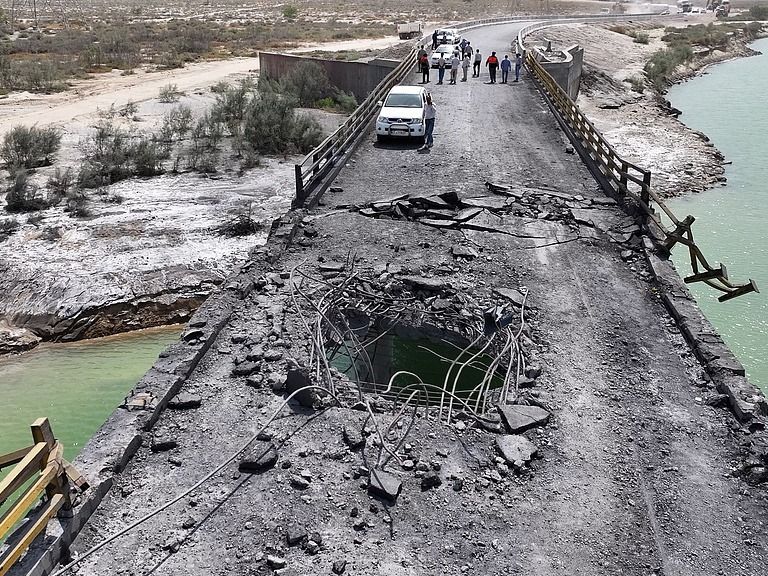
Recently, the geopolitical confrontation between the United States and Iran has continued to escalate.

Recently, the geopolitical confrontation between the United…

The New York Times has recently clashed with the Trump admi…

Trader Peter Brandt has sparked a new round of discussion i…

On July 17th, Taiwan's stock market experienced a historic …

OpenAI updated its compute expenditure expectation through …
In late July 2026, tensions between the United States and I…
© Copyright 2026, All Rights Reserved