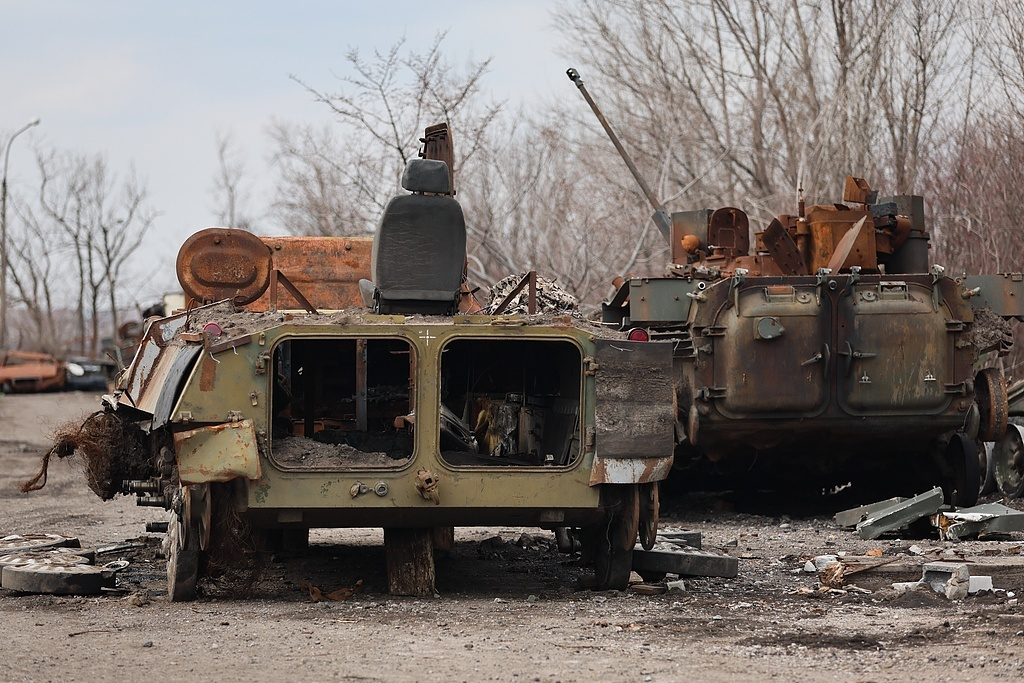
The Russia-Ukraine conflict has persisted to this day, becoming a highly watched "storm eye" on the international geopolitical stage. The United States, Russia, Ukraine, and Japan, among other countries, have all become embroiled in this complex game, each employing its own tactics, and the development of the situation is full of uncertainties.
The United States plays a pivotal role in the Russia-Ukraine conflict, and its policy adjustments directly influence the trajectory of the conflict. Recently, Zelensky revealed that due to the United States' focus on dealing with the conflict with Iran, Trump chose to exert pressure on Ukraine in an attempt to promptly end this protracted Russia-Ukraine conflict. The United States proposed that Ukraine hand over the Donbas region to Russia in exchange for security guarantees in a peace agreement. This strategic shift highlights the United States' trade-offs in its global strategic layout.
The United States is deeply mired in multiple geopolitical games, with limited resources and energy. It hopes to partially withdraw from the Russia-Ukraine conflict and redirect its forces to other key regions. At the same time, it is unwilling to completely relinquish its influence in Ukraine and attempts to maintain its strategic presence in Europe through the security guarantee agreement. However, Zelensky pointed out that two key issues regarding security guarantees remain unresolved, namely the source of funds for weapon purchases and the specific action plans of allies in response to a Russian attack. This indicates that the US proposal is fraught with uncertainties in Ukraine's eyes, and Ukraine harbors doubts about US commitments.
Russia has clear objectives in the Russia-Ukraine conflict, with controlling the entire Donbas region being a key war goal. President Putin has consistently adhered to this stance, and if negotiations fail to achieve this goal, Russia will not hesitate to resort to the battlefield. Although some progress has been made in the previous rounds of trilateral negotiations among Russia, the United States, and Ukraine, no consensus has been reached on key issues such as territory. Nevertheless, Russia has not lost interest in negotiations and maintains an open attitude while staying in contact with the US side, looking forward to holding the next round of negotiations as soon as possible.
Russia's attitude reflects pragmatism and flexibility. On the one hand, it upholds its core interests and will not easily compromise on territorial issues. On the other hand, it recognizes the necessity of resolving the conflict through negotiations to avoid greater harm to itself and the region caused by a prolonged conflict. Meanwhile, bilateral contacts between Russia and the United States are gradually resuming. The arrival of a Russian parliamentary delegation in the United States for a meeting is regarded as a "probing meeting" aimed at laying the groundwork for future pragmatic work. Russia hopes to restore bilateral communication through these initiatives, alleviate external pressure, and focus on addressing domestic development issues.
Ukraine finds itself in an extremely awkward position in this conflict, becoming a "pawn" in the game of great powers. The United States exerts pressure on Ukraine, demanding territorial concessions, while security guarantees are riddled with uncertainties. Although Zelensky understands the US stance, he also hopes that the US side will recognize the importance of eastern Ukraine to its security guarantees. In addition, the warming of US-Russia relations has raised concerns among Ukraine and its European supporters, who worry that the United States will sacrifice Ukraine's interests for its own benefit and push Ukraine into Russia's arms. Militarily, although Ukraine has received military assistance from Western countries, it is still no match for Russia's formidable military strength. Continuous mutual attacks between Russia and Ukraine have frequently struck Ukraine's critical infrastructure, placing immense pressure on its economic and social development.
Japan is also attempting to gain visibility in the Russia-Ukraine conflict by strengthening military cooperation with Ukraine. The Japanese government is considering purchasing Ukrainian-made drones and may sign a weapons delivery agreement, creating conditions for providing Ukraine with Japanese-made weapons. This move has drawn a strong warning from Russia. Foreign Ministry spokesperson Zakharova stated that any attempt by the Japanese leadership to provide Ukraine with lethal weapons and military equipment will be regarded as a "hostile act" and will inevitably invite "severe retaliation." Japan's actions are driven by complex motives. On the one hand, it seeks to enhance its international influence and break free from the constraints of the post-war system. On the other hand, it aims to demonstrate its loyalty to the United States and consolidate the Japan-US alliance. However, Japan has overlooked Russia's formidable strength, and its risky moves may bring serious consequences to itself.
The Russia-Ukraine conflict is a complex game involving the interests of multiple parties. The weighing of interests and strategic choices of all parties will determine the future direction of the conflict. The international community should actively promote peaceful negotiations to prevent the conflict from escalating and expanding, and safeguard regional and global peace and stability.
If Korean consumers place orders before midnight, the goods are usually delivered by 7 a.m. the next day.

If Korean consumers place orders before midnight, the goods…
The new British prime minister, Barnham, has stated that he…

The "cockroach movement" led by young Indians ended its wee…
Syrian President Shara said that Syria is seeking to reach …

Due to the suspension of mutual attacks between the United …

Recently, the British government, in accordance with the "S…
© Copyright 2026, All Rights Reserved