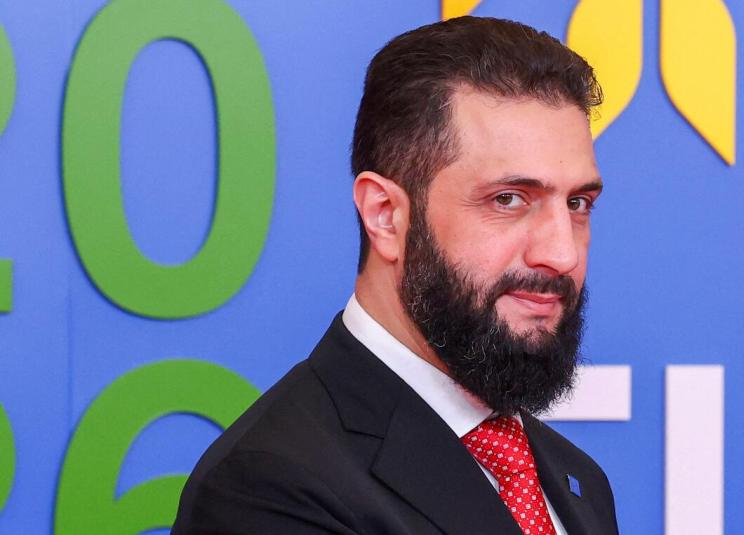
Syrian President Shara said that Syria is seeking to reach a security agreement with Israel.
Reuters reported that Shara said during an interview with Al Jazeera on Sunday (July 26th) that Syria and Israel could pave the way for a comprehensive peace between the two countries without undermining Syria's sovereignty over the Golan Heights.
In the "Six-Day War" (the Third Middle East War) in 1967, Israel seized the Golan Heights from Syria. In 1981, through the "Golan Heights Law", Israel formally unilaterally annexed this area.
Sarah said that Syria is attempting to unite various countries to pressure Israel and adopt a more balanced policy towards Syria. "We are trying to avoid getting into confrontation."
Salah also said that his government "has no intention of conducting military intervention in Lebanon". During the Syrian civil war, the Lebanese Shia armed group Hezbollah, which was supported by Iran, was in opposition to Salah.
In December 2024, shortly after the Assad regime in Syria fell under the offensive of the opposition forces led by Shara, the Israeli army entered Syria and occupied strategic locations. The Israeli army entered the demilitarized zone within Syria, including the Mount Hermon on the Syrian side that overlooks the Syrian capital Damascus. Since then, the Israeli army has launched air strikes against Syria and detained people within the country. Israel also got involved in its so-called mission to protect the Druze minority in the southwestern part of Syria.
In 2025, Shara became the first Syrian president to attend the United Nations General Assembly in New York since 1967. Shara's government is striving to rebuild diplomatic relations and restore the domestic economy.
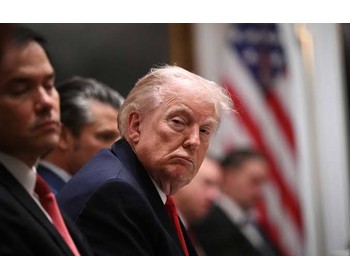
Earlier this year, US President Trump said that he had discussed the issue of combating Hezbollah with Sarah. Trump had previously criticized Israel for causing too many civilian deaths in Lebanon.
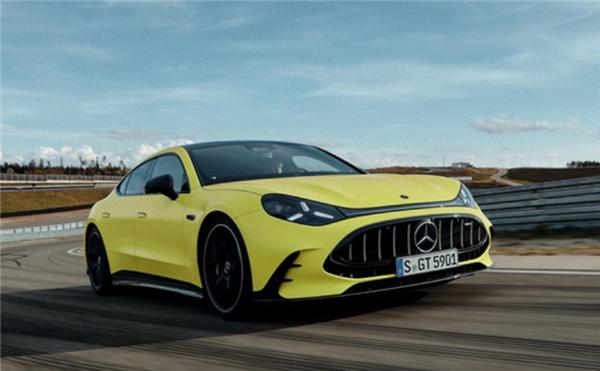
Recently, the US Senate Commerce Committee passed the "Connected Vehicle Security Act of 2026", setting a hard limit of 15% for Chinese ownership: if a carmaker is jointly held by Chinese entities and has voting rights exceeding 15%, its intelligent connected vehicle models will be prohibited from being sold in the US market.
Recently, the US Senate Commerce Committee passed the "Conn…

A showdown that could shape the global semiconductor landsc…
As the September Federal Open Market Committee (FOMC) meeti…

The news that U.S.-Iran military operations have been suspe…
As the 13th night of U.S. airstrikes against Iran unfolds, …
US President Trump has consistently emphasized his strong l…
© Copyright 2026, All Rights Reserved