As the September Federal Open Market Committee (FOMC) meeting approaches, global financial markets are holding their breath as they await the Federal Reserve's interest rate decision.
After a policy pause lasting five meetings, the market generally expects the Federal Reserve to resume its interest rate cut cycle in September. However, under the dual pressure of persistent inflation stickiness and accelerated cooling of the job market, the magnitude, pace, and subsequent path of this interest rate cut are still full of variables. The September decision of the Federal Reserve not only concerns the quality of the US economy's soft landing, but will also have a profound impact on global capital flows and asset pricing logic.
1、 Inflation is declining and stagnating, and the road to interest rate cuts is not smooth
Inflation has always been the core anchor point of the Federal Reserve's monetary policy. According to the latest data, the downward trend of inflation in the United States has clearly stalled. The Consumer Price Index (CPI) for July increased by 2.7% year-on-year, unchanged from the previous value. Although slightly lower than the market expectation of 2.8%, the core CPI excluding food and energy rose to 3.1% year-on-year, setting a new high since February and a month on month increase of 0.3%, the highest monthly increase since January this year. The Personal Consumption Expenditures (PCE) price index, which is closely monitored by the Federal Reserve, rose 2.5% year-on-year in June, with a core PCE of 2.7%, both significantly higher than the long-term target of 2%.
Behind the stickiness of inflation, tariff policies have become a new source of uncertainty. Several Federal Reserve officials explicitly stated in the minutes of the July meeting that the recent rebound in commodity price inflation is mainly due to the newly implemented tariffs. The price increases in areas such as air tickets, healthcare services, and entertainment services, coupled with the rebound in second-hand car prices, have collectively pushed up the core inflation reading. Although Powell has repeatedly emphasized that the impact of tariffs may be "temporary", the market still has doubts about this - if the scope of tariffs further expands or lasts longer than expected, the timetable for inflation to fall back to 2% will be forced to be postponed. This also means that even if the Federal Reserve initiates interest rate cuts, the pace is bound to be cautious, and it is difficult to return to the rhythm of continuous and significant interest rate cuts in the second half of 2024.
2、 Employment significantly cools down, becoming the core driving force behind interest rate cuts
If inflation constitutes the 'ceiling' for interest rate cuts, then the weakening of the job market is the 'trigger' for pressing the cut button. The non farm payroll data for two consecutive months in July and August fell short of expectations, with the unemployment rate slightly rising. The pace of the labor market's transition from "overheating" to "cooling" exceeded the Federal Reserve's forecast at the beginning of the year. The slowdown in new job opportunities, the spread of layoffs from the technology industry to the manufacturing and service industries, and the upward trend in initial jobless claims indicate that downward risks in the job market are accumulating.
It is this change that has caused the policy balance of the Federal Reserve to tilt. Powell's speech at the Jackson Hole Global Central Bank Annual Meeting in August was seen by the market as a clear signal of interest rate cuts. He admitted that the risk balance is changing, and the risk of a downturn in the job market is increasing, "which may require adjusting policy stance". This statement is in sharp contrast to the hawkish tone of "maintaining high interest rates for longer" previously, indicating that the Federal Reserve's policy focus is shifting from a single anti inflation approach to a dual balance between inflation and employment. Under the dual mission framework, when employment deteriorates faster than inflation falls, interest rate cuts become an inevitable choice.
3、 September interest rate cut almost certain, path divergence still exists
At present, the market's expectation for a 25 basis point interest rate cut in September is highly consistent, with a probability of over 95%. The target range for the federal funds rate will be lowered from 4.25% -4.50% to 4.00% -4.25%. This will be the first interest rate cut since 2025 and the second easing after consecutive interest rate cuts at the end of 2024. The real disagreement lies in: how fast and how far will the Federal Reserve's interest rate cuts go after September?
The changes in the dot matrix will be the key observation points. The June chart shows that officials expect to cut interest rates twice a year, while the updated chart in September is likely to increase the number of rate cuts to three or even four times, meaning there will be an additional 50 basis points of room for rate cuts this year. Institutional forecasts generally suggest that the Federal Reserve may cut interest rates by another 25 basis points each in October and December, with a cumulative annual rate cut of 75 basis points. However, Powell has made it clear that a single significant 50 basis point interest rate cut "has not received widespread support", and the Federal Reserve is more inclined to conduct risk management style interest rate cuts in a "slow and steady" manner, while watching the data.
It is worth noting that the Federal Reserve is not a monolithic entity. The newly nominated council member Milan tends to lean towards more aggressive interest rate cuts, advocating for a 50 basis point reduction at once, while some traditional hawkish officials remain vigilant about the risk of inflation rebound and advocate for a more restrained and relaxed pace.

Recently, the US Senate Commerce Committee passed the "Connected Vehicle Security Act of 2026", setting a hard limit of 15% for Chinese ownership: if a carmaker is jointly held by Chinese entities and has voting rights exceeding 15%, its intelligent connected vehicle models will be prohibited from being sold in the US market.

Recently, the US Senate Commerce Committee passed the "Conn…

A showdown that could shape the global semiconductor landsc…
As the September Federal Open Market Committee (FOMC) meeti…

The news that U.S.-Iran military operations have been suspe…
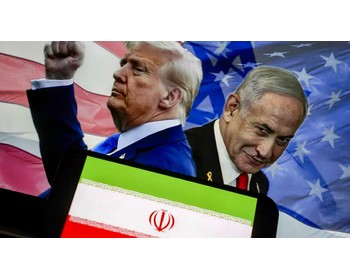
As the 13th night of U.S. airstrikes against Iran unfolds, …
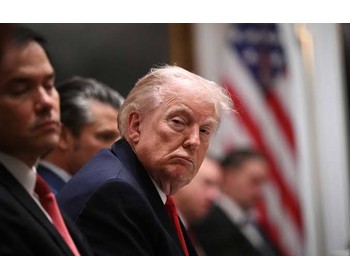
US President Trump has consistently emphasized his strong l…
© Copyright 2026, All Rights Reserved