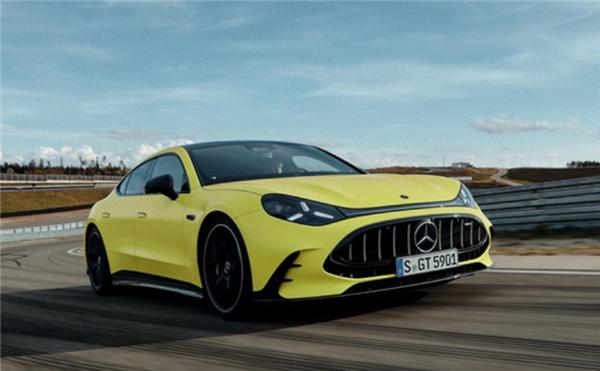
Recently, the US Senate Commerce Committee passed the "Connected Vehicle Security Act of 2026", setting a hard limit of 15% for Chinese ownership: if a carmaker is jointly held by Chinese entities and has voting rights exceeding 15%, its intelligent connected vehicle models will be prohibited from being sold in the US market. This bill seemingly targets Chinese vehicle exports, but it mistakenly hits European luxury carmakers such as Mercedes-Benz first. It also marks the US's blockade of the Chinese automotive industry, extending from component and vehicle trade to capital and equity levels, accelerating the global automotive industry decoupling process to its fullest extent.
The most immediate impact of this new regulation fell on Mercedes-Benz. Equity data shows that BAIC Group holds approximately 9.98% of the shares of Mercedes-Benz, and Li Shufu, the founder of Geely, holds 9.69% through an overseas platform. The combined Chinese capital holds 19.67% and directly exceeded the 15% regulatory threshold. It is worth noting that the two Chinese shareholders only make financial investments and do not participate in the operational decisions of Mercedes-Benz or have control over the board of directors. However, the bill adopts a one-size-fits-all determination standard, without distinguishing between financial investments and actual control. All intelligent models of Mercedes-Benz are facing the risk of being banned from the US market.
To resolve the crisis, Mercedes has initiated congressional lobbying, proposing to raise the shareholding limit to 25%, or to replace the fixed proportion limit with case-by-case risk assessment. At the same time, it is hoping for the 2030 equity adjustment transition period and exemption application channel reserved in the bill. However, the market is generally pessimistic. Once the terms remain unchanged, Mercedes will be in a dilemma: if it divests its Chinese shares to adapt to the US market, it will completely lose China's largest automotive market, and the decades-long local supply chain and dealer network will all be lost; if it retains the Chinese capital, it will directly abandon the core North American market, suffering massive losses in production capacity and consumer base.
Ignoring the individual crises of car companies, the new regulations further expose the deep logic of extreme trade protectionism in the United States. In the past, the US restrictions on Chinese automobiles focused on supply chain links such as batteries, on-board chips, and connected software. This time, directly controlling the equity of enterprises amounts to cutting off the cooperation ties between multinational car companies and Chinese industries at the capital source level, forming a comprehensive "capital - components - complete vehicle" blockade system. The US implements policies under the pretext of "national security", but internally it also involves local car dealers, component suppliers, and job positions. Mercedes-Benz has a complete vehicle factory in Alabama, USA, and tens of thousands of American workers rely on its industrial chain for survival. The blanket ban will ultimately lead to the loss of local employment and a reduction in the income of dealers.
The implementation of the new regulations will trigger a chain reaction in the global automotive industry. The cost of the fragmented supply chain will be borne by the entire industry as a whole. Over the past decades of globalization, the automotive industry has formed a highly coordinated division of labor: China provides cost-effective three-electricity systems and in-vehicle electronics, while Europe and the United States are responsible for vehicle design and high-end chips. Each country relies on its comparative advantages to reduce the cost of vehicle manufacturing. Now, the United States is forcibly promoting the "de-Chinaization" of the supply chain, forcing multinational car companies to build two separate supply chains. The procurement of components, production line renovations, and technical verification will result in huge additional expenses. The already meager profit margins of the vehicle industry will be further compressed, and ultimately, the premium will be fully passed on to American consumers.
At the same time, the unilateral legislation of the United States will set a negative model effect. Many countries may follow suit and introduce rules for reviewing foreign equity holdings. The global threshold for automotive trade will be comprehensively raised. For the Chinese automotive industry, this new stock restriction regulation has limited substantive deterrent effect. Domestic leading automakers have already adjusted their overseas expansion strategies and no longer focus their competition on the highly restrictive US market. Instead, they have shifted their focus to friendly markets such as Southeast Asia, the Middle East, and Latin America. In contrast, European and American automakers that have deep ties with Chinese capital will have to struggle to maintain a balance between the two major markets of China and the United States for a long time.
In summary, the 15% threshold for Chinese holdings in the US is a typical manifestation of geopolitics overriding market laws. This bill not only creates an insoluble business predicament for multinational car companies like Mercedes-Benz, but also disrupts the globalized division of labor pattern that has been formed in the automotive industry for many years, raising the overall operational costs across the entire industry chain. In the short term, car companies can alleviate the pressure through lobbying and applying for exemptions. However, in the long term, the global automotive market will accelerate its division into two independent industrial chains, and the regression of global cooperation has become an irreversible industry trend.
Recently, the US Senate Commerce Committee passed the "Connected Vehicle Security Act of 2026", setting a hard limit of 15% for Chinese ownership: if a carmaker is jointly held by Chinese entities and has voting rights exceeding 15%, its intelligent connected vehicle models will be prohibited from being sold in the US market.
Recently, the US Senate Commerce Committee passed the "Conn…

A showdown that could shape the global semiconductor landsc…
As the September Federal Open Market Committee (FOMC) meeti…

The news that U.S.-Iran military operations have been suspe…
As the 13th night of U.S. airstrikes against Iran unfolds, …
US President Trump has consistently emphasized his strong l…
© Copyright 2026, All Rights Reserved