
The news that U.S.-Iran military operations have been suspended for two consecutive nights quickly triggered a drop in WTI crude of nearly 6% to around $84, with Brent falling below the $90 mark, basically giving back most of last week's geopolitical gains. This price trend validates the core judgment previously held by the market—that a substantial proportion of the oil price surge over the past two weeks belonged to pure geopolitical sentiment premium rather than physical shortage based on actual supply disruptions. However, problems follow closely: if oil prices can easily surge above $90 in the absence of substantial supply gaps, and quickly fall back to $84 without a clear peace agreement, then the disturbance caused to the operation of the global economy by this pricing model determined by the rhythm of military operations rather than supply and demand fundamentals has far exceeded what oil prices themselves can explain. It is difficult for enterprises to arrange production plans based on such high-frequency fluctuations, the fuel hedging strategies of aviation and shipping companies almost fail in the face of this zigzag trend, and the terms of trade of oil-importing countries have experienced sharp deterioration followed by partial repair within weeks, while the exchange losses and contract renegotiation costs in this process will not automatically disappear because of the price pullback.
Even more tricky is that, despite the short-term plunge in oil prices, the deep-seated risks of obstructed passage through the Strait of Hormuz have not been lifted. South Africa has proposed its largest crude oil reserve construction plan in decades, aiming to restore it to a level equivalent to 60 days of oil imports; India has approved the second phase of its strategic petroleum reserve plan, building nearly 13 million barrels of new oil storage capacity in the south; Pakistan has launched the bidding process for its first strategic petroleum reserve, and the Philippines and Bangladesh are also advancing similar plans. The concentration of these actions on the very same day that oil prices fell constitutes an economic paradox in itself—if the market truly believed that geopolitical risks had subsided, countries should logically suspend reserve expansion at current high prices to wait for lower prices, rather than accelerating large-scale infrastructure investment at the $84 price level. Policymakers in these countries clearly realize that the suspension of military operations is only a tactical breathing space, and the long-term passage risks in the Strait of Hormuz have prompted them to reassess the economic costs of energy security.
From an economic perspective, the large-scale expansion of strategic petroleum reserves implies the superposition of three major costs. The first is direct facility construction expenses—India's construction of 13 million barrels of new storage capacity in the south involves underground cavern excavation, pipeline connections, and the construction of injection and extraction systems, requiring capital inputs in the billions of dollars. These fixed costs will be amortized over the next few decades, but their economic returns depend entirely on whether extreme supply disruptions occur, which essentially belongs to "paying a high premium for a probability event of extremely low likelihood." The second is the acquisition and holding costs of the reserve crude oil itself; restoring South Africa to a level of 60 days of imports means purchasing tens of millions of additional barrels of crude oil and storing them for the long term. When oil prices are in the range above $80, the occupation of this capital not only loses interest income, but also requires bearing the maintenance and security expenditures of the oil storage facilities. The third is the crowding-out effect of these investments on other public expenditures—as low- and middle-income countries, the Philippines and Bangladesh already face funding gaps in the fields of infrastructure, education, and health. Investing limited foreign exchange reserves and financial resources into strategic oil storage facilities means that other long-term development projects are forced to be postponed.
The assertion by asset management professionals that "building oil reserves is non-negotiable from a national security perspective" has logical flaws under the marginal analysis framework of economics. If oil reserves were truly "non-negotiable," then every country should pursue an infinite reserve scale, but this is obviously unrealistic. The trade-off that must be faced in actual decision-making is whether the increase in the safety margin brought by adding one more barrel of reserves exceeds the social benefits that could be generated by using the procurement funds of this barrel of crude oil for other purposes. The simultaneous increase in reserves by multiple countries at present precisely indicates that countries' subjective probability assessments of the disruption of passage through the Strait of Hormuz have risen sharply, and this assessment itself will inversely affect the market through collective action—when multiple countries purchase crude oil on a large scale simultaneously to enrich their reserves, it will in itself drive up global crude oil demand, partially offsetting the price rollback effect brought by the suspension of military operations. The oil price remaining above $84 on the day the reserve plans were announced is significantly higher than the pre-conflict range of $70, indicating that the market has not fully priced in all the consequences of geopolitical relaxation, while the reserve demand of various countries is providing a new price floor for oil.
What is even more noteworthy is that most of these reserve construction plans require construction cycles of several years—India's second-phase storage capacity of 13 million barrels cannot be put into production in the short term, and South Africa's reserve restoration also faces port and logistics bottlenecks. This means that most of the reserve increments announced currently cannot come to the rescue at the critical juncture if a prolonged blockade of the Strait of Hormuz really occurs, and by the time they are actually built and put into operation, the situation in the Middle East may have already entered a completely different stage. This time dislocation of "distant water cannot quench immediate thirst" exposes the limitation of reserve policy as a lagging reaction: construction is only initiated when crisis signals appear, and by the time the facilities are completed, the crisis may have subsided or evolved; while insisting on reserve expansion in peacetime makes it difficult to pass parliamentary budget approval. This institutional dilemma makes the buffer role that strategic petroleum reserves can play in actual economic shocks far smaller than implied by the political momentum when the policies are announced. Countries collectively betting on reserve expansion at current price levels may ultimately find that what truly determines economic resilience is not the capacity of underground oil tanks, but the diversification of energy structures and the flexibility of demand-side adjustments, the latter of which has been systematically ignored in this reserve race.

Recently, the US Senate Commerce Committee passed the "Connected Vehicle Security Act of 2026", setting a hard limit of 15% for Chinese ownership: if a carmaker is jointly held by Chinese entities and has voting rights exceeding 15%, its intelligent connected vehicle models will be prohibited from being sold in the US market.

Recently, the US Senate Commerce Committee passed the "Conn…

A showdown that could shape the global semiconductor landsc…

As the September Federal Open Market Committee (FOMC) meeti…

The news that U.S.-Iran military operations have been suspe…
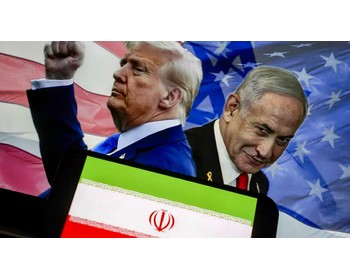
As the 13th night of U.S. airstrikes against Iran unfolds, …
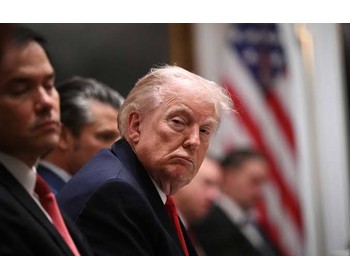
US President Trump has consistently emphasized his strong l…
© Copyright 2026, All Rights Reserved