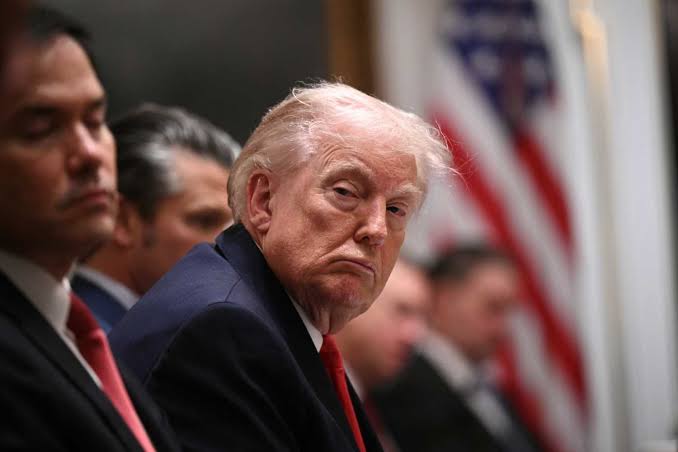
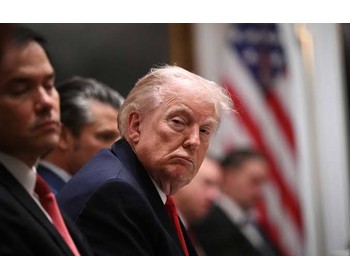
US President Trump has consistently emphasized his strong leadership style and used "unpredictability" as a diplomatic tool in recent years. He has repeatedly stated that his decisions make it difficult for adversaries and allies to predict his next move. However, as the Iran war continues, Trump seems to have discovered that presidential power is not as unrestricted as he previously claimed, and the war is far from ending as quickly as he expected.
Reports indicate that Trump previously ordered attacks on Iranian nuclear facilities and pushed for tough action against foreign governments. He believed that the US possessed the world's most powerful military and that sufficiently strong measures could force adversaries to submit. However, reality has placed him in a predicament.
In late February of this year, Trump launched a large-scale military operation against Iran, aiming to destroy Iran's nuclear program, weaken the Iranian government, and even promote regime change. He hoped to replicate a model similar to the overthrow of the Venezuelan government, forcing change through military pressure. But months later, Iran's nuclear capabilities have not been completely eliminated, the government has not been overthrown, and the US has not achieved the rapid victory Trump initially envisioned.
Meanwhile, the economic impact of the war continues to expand. The international energy market has been impacted, with oil prices rising and vital energy transport routes such as the Strait of Hormuz affected. Trump has threatened to control key Iranian oil facilities and even strike its underground nuclear facilities, but he has also acknowledged that the US has no intention of sending a large number of ground troops to fight in Iran.
Insiders in the Trump administration say the war's progress is not meeting expectations, causing Trump significant dissatisfaction and anxiety. He initially believed that a strong military could quickly resolve the issue, but the reality of military, diplomatic, and economic constraints is increasingly limiting his options.
This sentiment has also influenced his other policy decisions. For example, the US energy sector had just reached a civilian nuclear energy cooperation agreement with Saudi Arabia, but less than a day later, Trump abruptly changed his stance, demanding that Saudi Arabia first recognize Israel, otherwise the agreement might not be able to proceed. This change has led some diplomats to believe that Trump's inconsistent decisions could undermine US credibility in the Middle East and provide Iran with an opportunity to criticize the US as "unreliable."
Now, Trump faces three main choices: First, continue to escalate military action. The US could increase the intensity of its strikes against Iran, including attacks on infrastructure and military targets. However, US officials worry that large-scale operations could cause numerous civilian casualties, triggering a more severe humanitarian crisis, while also depleting vital US military resources. Especially after a prolonged conflict, the US missile defense system inventory has significantly decreased, potentially impacting the US's ability to address risks in other regions.
Second, strengthening economic sanctions. Trump could continue to pressure Iran through energy blockades and financial sanctions, hoping to force Iran's economy to collapse. However, past experience shows that while sanctions put pressure on Iran, they haven't overthrown the Iranian government; instead, they may have spurred Iran to develop a more covert nuclear program.
Third, declaring victory and ending the war. This is the lowest-cost option, avoiding further damage to the US economy and international energy markets. However, the problem is that if Iranian nuclear facilities remain and the Strait of Hormuz is still under Iranian influence when Trump withdraws troops, the outside world might perceive that the US hasn't truly resolved the issue.
Analysts believe the Iran war has become a major test for Trump's administration. This conflict not only affects US Middle East policy but also his political reputation. If the war doesn't end as he plans, it could undermine his previously emphasized image as a "strong leader."
Currently, while Trump possesses the world's most powerful military, the reality of war proves that military force cannot solve all problems. Diplomatic negotiations, economic influence, alliances, and domestic political pressure are all significant factors limiting presidential decision-making. How the war with Iran ultimately ends will be a crucial factor in evaluating Trump's second term.

Recently, the US Senate Commerce Committee passed the "Connected Vehicle Security Act of 2026", setting a hard limit of 15% for Chinese ownership: if a carmaker is jointly held by Chinese entities and has voting rights exceeding 15%, its intelligent connected vehicle models will be prohibited from being sold in the US market.

Recently, the US Senate Commerce Committee passed the "Conn…

A showdown that could shape the global semiconductor landsc…
As the September Federal Open Market Committee (FOMC) meeti…

The news that U.S.-Iran military operations have been suspe…
As the 13th night of U.S. airstrikes against Iran unfolds, …
US President Trump has consistently emphasized his strong l…
© Copyright 2026, All Rights Reserved