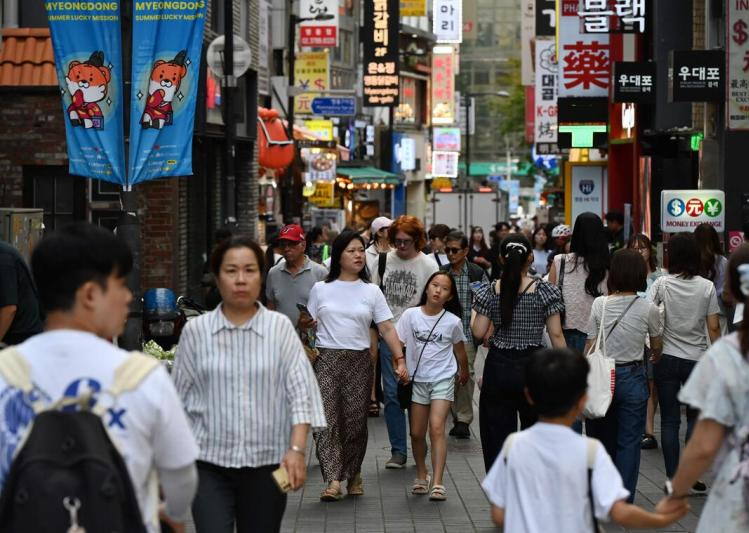
If Korean consumers place orders before midnight, the goods are usually delivered by 7 a.m. the next day. However, the warehouse staff and delivery drivers who support this convenient service are facing long-term night shifts, lack of rest, and the risk of overwork.
The BBC reported that the largest e-commerce platform in South Korea, Coupang, has transformed "delivery by morning" into a daily consumption habit through its extensive warehousing and distribution network.
In 2020, 27-year-old warehouse worker Zhang Dejun passed away due to heart disease. His family said that he had been working night shifts for a long time and had lost 15 kilograms in weight within a year. He also complained of being tired frequently. After an investigation by the Korean Workers' Compensation and Welfare Agency, it was determined that his death was related to overwork.
Official data shows that from 2020 to May this year, a total of 46 warehouse and distribution workers were determined to have died from work-related causes due to stroke or heart disease. However, the exact number of these deaths related to night shifts or overwork has not been fully counted.
Medical experts have pointed out that long-term night work can increase the risks of cardiovascular diseases, diabetes and mental health problems. However, in South Korea, there is currently no specific limit set for night shift working hours.
However, some drivers still choose to deliver goods at night because of the higher income and the convenience of being able to take care of their families during the day. One of the interviewed drivers works from 9 p.m. until 7 a.m. the next day, working five to six days a week. There is almost no rest during the journey. He admitted that the job "continuously wears down the body", but his monthly income of approximately 7 million Korean won is nearly twice the national average wage.
As the related death cases drew attention, the trade union demanded restrictions or even bans on early morning deliveries. The company, on the other hand, emphasized that it had already limited working hours and provided health checks.
The controversy also puts pressure on the government: on the one hand, it needs to ensure consumer convenience and employment options; on the other hand, it must prevent the high-speed delivery system from shifting the health costs onto the low-income workers.

Recently, the US Senate Commerce Committee passed the "Connected Vehicle Security Act of 2026", setting a hard limit of 15% for Chinese ownership: if a carmaker is jointly held by Chinese entities and has voting rights exceeding 15%, its intelligent connected vehicle models will be prohibited from being sold in the US market.

Recently, the US Senate Commerce Committee passed the "Conn…
A showdown that could shape the global semiconductor landsc…

As the September Federal Open Market Committee (FOMC) meeti…

The news that U.S.-Iran military operations have been suspe…

As the 13th night of U.S. airstrikes against Iran unfolds, …
US President Trump has consistently emphasized his strong l…
© Copyright 2026, All Rights Reserved