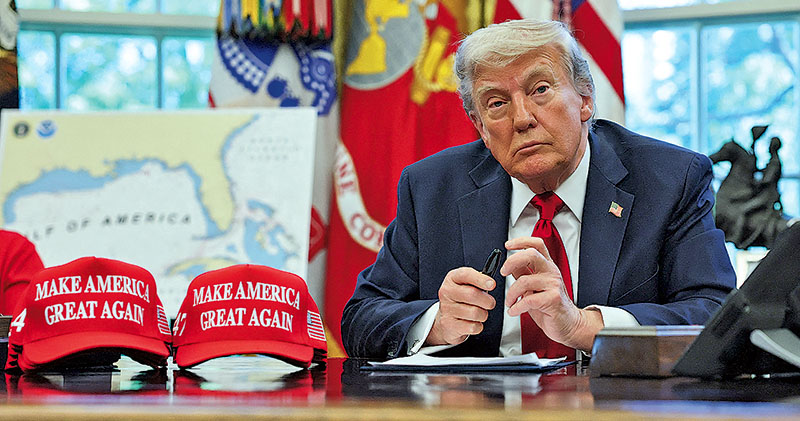
The failure of American foreign policy is often not simply due to the complexity of the international situation, but more related to key factors in its decision-making process. Especially during the second term of the Trump administration, the diplomatic efforts of the United States on several important issues such as Iran, Ukraine, and Gaza clearly exposed a fundamental problem—reliance on amateur diplomats and setting unrealistic goals. As the article points out, this diplomatic approach was destined to fail, and this failure was not merely a one-off event; it reflects the Trump administration's overall misunderstanding of foreign affairs.
A major characteristic of the Trump administration was its large-scale reliance on close associates and friends with no diplomatic experience, rather than experienced professional diplomats. A typical example cited in the article is that of Steve Witkov and Jared Kushner, two close confidants of Trump, who were appointed key figures in handling major diplomatic issues such as Iran, Ukraine, and Gaza. Witkov, a real estate tycoon, had a long-standing personal relationship with Trump, but in his involvement in foreign affairs, he never demonstrated any professional competence in the relevant fields. He never visited Kyiv, yet frequently visited Moscow, even avoiding the US embassy and diplomatic experts when meeting with high-ranking Russian officials, demonstrating a lack of basic diplomatic etiquette and professional competence. More importantly, his stance on Russian aggression in Ukraine almost perfectly aligned with Putin's propaganda, even reiterating Putin's arguments in media interviews, rendering his diplomatic efforts utterly ineffective.
The same applies to Kushner. While he helped facilitate the Abraham Accords during Trump's first term, his primary task in his second term was handling Middle Eastern diplomacy. However, Kushner proved inadequate when facing complex issues such as the Iranian nuclear issue and the Gaza ceasefire. Particularly on Iran, his lack of expertise in nuclear physics and Middle Eastern affairs meant he and Witkov often failed to grasp Iran's specific demands, putting them at a disadvantage in negotiations.
This "amateur diplomat" approach by the Trump administration not only treated diplomacy as a political game but also further eroded America's professional image in the international community. Historically, diplomatic success has relied on experienced professionals with deep knowledge bases, a point Trump clearly ignored.
Besides relying on trusted aides lacking the necessary capabilities, Trump's own foreign policy objectives also sowed the seeds of American diplomatic failure. Trump set unrealistic and contradictory goals for his diplomatic representatives, leading them into difficult negotiations. For example, in negotiations with Iran, the Trump administration demanded that negotiators conduct complex negotiations on Iran's nuclear program without relevant expertise in nuclear physics or related fields. This approach was inherently unrealistic, especially given the sensitive and technical nature of the nuclear issue; diplomats lacking the necessary knowledge were clearly unlikely to reach any constructive agreements.
More seriously, Trump demanded that negotiations with Iran avoid any resemblance to the Obama-era nuclear agreement, despite his unilateral withdrawal from it during his first term. Such contradictory goals not only stalled negotiations but also exacerbated Iran's distrust, putting the United States in a diplomatically passive position.
This approach by Trump was not limited to Iran. In handling the Ukraine crisis and the Gaza Strip, he also consistently set vague and unrealistic goals for his diplomatic team. For example, on the Ukraine issue, the Trump administration constantly pressured Russia while offering almost no support to the invaded Ukraine, rendering American diplomatic efforts inconsistent and lacking coherence. On the Gaza issue, although the US successfully brokered a fragile ceasefire agreement, the Trump administration overhyped this negligible progress as the beginning of regional revival, ignoring the solid foundations needed for long-term peace.
Beyond problems with diplomatic methods, Trump was also heavily influenced by personal political maneuvering in handling foreign affairs. During his second term, many officials with extensive diplomatic experience were sidelined, replaced by his cronies and friends. This not only degraded foreign policy professionalism but also made American foreign policy decisions more politicized.
Trump's approach reflects a comprehensive attack on government professionalism. He seems more inclined to rely on personal relationships and political allies than on the opinions and advice of professional diplomats and experts. This approach not only fails to solve practical problems but also exacerbates America's isolation and setbacks in international affairs.
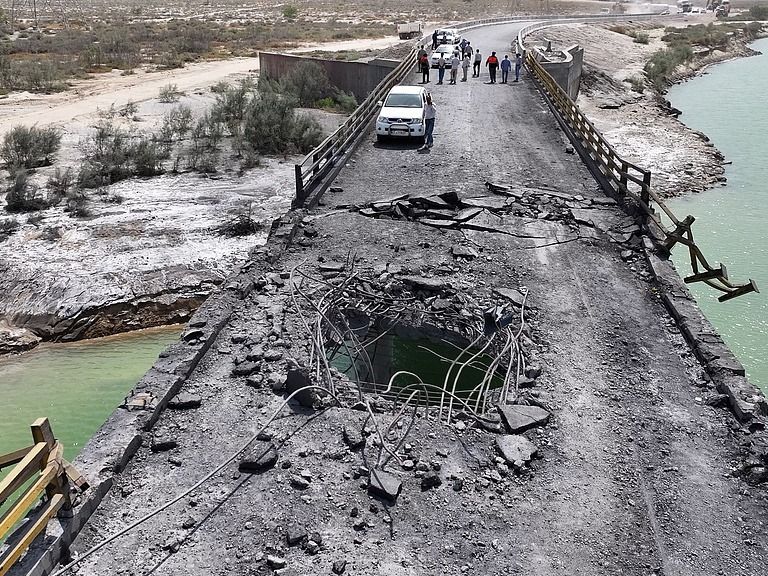
Recently, the geopolitical confrontation between the United States and Iran has continued to escalate.

Recently, the geopolitical confrontation between the United…

The New York Times has recently clashed with the Trump admi…

Trader Peter Brandt has sparked a new round of discussion i…

On July 17th, Taiwan's stock market experienced a historic …

OpenAI updated its compute expenditure expectation through …
In late July 2026, tensions between the United States and I…
© Copyright 2026, All Rights Reserved