At the Davos Forum in early 2026, a conference that was supposed to focus on global cooperation turned into a "stress test" of transatlantic relations due to the remarks made by the US leaders. The speech interwove criticism of European policies with transactional remarks about the "acquisition" of Greenland. The underlying message of "we will remember" instantly placed allies in an awkward and alert position. The Swedish Prime Minister directly stated that his remarks were "full of threats and satire", and this incident was like an unwarned diplomatic strike, clearly revealing the deep and increasingly widening strategic rift within the Western alliance.
This event was not an accidental diplomatic blunder but a concentrated manifestation of the trajectory of US foreign policy in recent years under the catalytic influence of a specific style. Its root lies in a growing "America First" unilateralist logic. Under this logic, complex international relations and alliance loyalty are simplified to naked interest calculations and bargaining chips. The underlying message of "we will remember" instantly placed allies in an awkward and alert position. The ripple effect of this incident is eroding the foundation of the global order. The primary and most direct risk is the accelerated disintegration of transatlantic mutual trust. When core allies repeatedly feel not support but contempt and coercion, the common values and strategic trust on which the alliance exists are undermined. This damage is long-term and structural, and cannot be easily repaired by a change of government. Secondly, the global economic and trade rule system faces the danger of being hollowed out. Linking tariffs with non-economic issues marks the normalization of "trade blackmail", where power replaces rules, seriously undermining the expectations of rule-based international trade. Ultimately, this sets an extremely dangerous example for the world, that is, "might is right". As European leaders warned, if this behavior pattern is emulated, it will lead the international community back to the "law of the jungle" era of relying solely on pure power games.
Facing unprecedented strategic pressure, Europe's response is undergoing a crucial turning point from emotional rebuttal to the rational construction of "strategic autonomy". This transformation is first reflected in the orderly "desensitization" in the economic and trade fields. The EU is accelerating the promotion of free trade agreements with large economies such as the Southern Common Market, with a clear strategic intention: through building a diversified and more resilient economic network, to reduce excessive reliance on a single market. This is both a direct response to external coercion and a layout for long-term economic security. Secondly, in the defense and security fields, the construction of the "European pillar" is receiving unprecedented political impetus and resource investment. From large-scale common defense fund plans to high-level leaders openly calling for "accelerating the pace of independence", it marks that Europe is determined to take a greater share of the fate of security affairs in its own hands.
History is full of irony. The "art of transaction" aimed at obtaining immediate benefits through extreme pressure may have the most profound long-term consequence, which is the complete awakening and acceleration of a more united and independent Europe. The Davos incidently shows that transatlantic relations can no longer return to the "warm alliance" based on completely identical values. Instead, it will be a more calm, realistic, and interest-calculating partnership. Europe's "strategic autonomy" path is destined to be long and accompanied by internal debates, but the continuous external pressure has become the most effective binder. This controversy sparked by the Greenland issue may not ultimately alter the map of the Arctic, but it is likely to become a turning point that rewrites the strategic mental map of Europe.
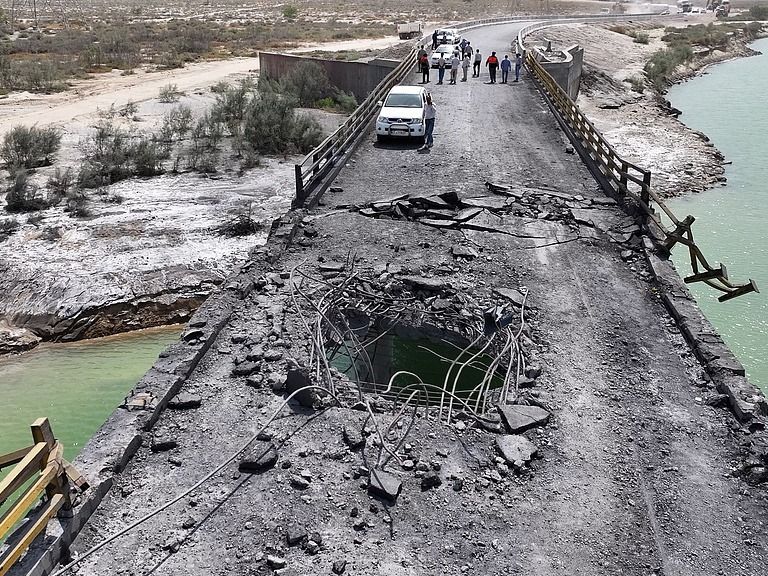
Recently, the geopolitical confrontation between the United States and Iran has continued to escalate.

Recently, the geopolitical confrontation between the United…

The New York Times has recently clashed with the Trump admi…

Trader Peter Brandt has sparked a new round of discussion i…

On July 17th, Taiwan's stock market experienced a historic …

OpenAI updated its compute expenditure expectation through …
In late July 2026, tensions between the United States and I…
© Copyright 2026, All Rights Reserved