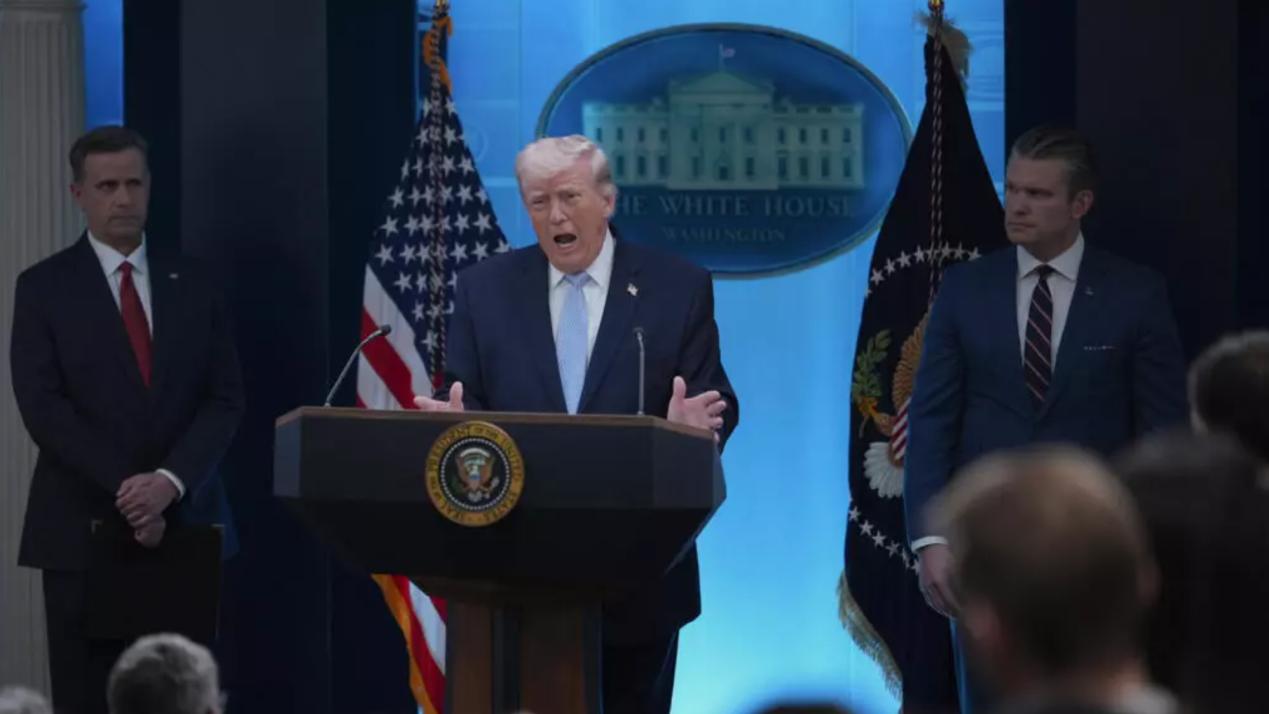
In April 2026, US President Trump publicly threatened the media to reveal the source of the leak regarding the US military's rescue operation in Iran, even threatening to imprison the leaker. This incident not only exposed the complex game behind the US-Iran conflict but also pushed the long-standing power struggle between the US government and the media to the forefront.
I. Background of the Incident: The Leak of the Rescue Operation Sets off a Chain Reaction
On April 3rd, a US F-15E fighter jet was shot down over Isfahan Province in Iran, and the two crew members ejected and survived. The US military then launched a large-scale rescue operation, mobilizing 176 aircraft to enter Iranian airspace and eventually successfully rescued the two pilots. However, during the operation, Israeli journalist Amit Siegel was the first to disclose that "one crew member had been rescued, while the other was missing," which alerted the Iranian side. The Iranian military immediately intensified the search and shot down several US aircraft, resulting in the deaths of four Iranian officers.
At a press conference, Trump angrily accused the media of leaking information, making the rescue operation "more difficult," and threatened that "either reveal the source or go to prison." He claimed that the leaker was a "pervert" whose actions endangered the lives of US military personnel and constituted a national security issue.
II. Legal Conflict: The Struggle between Press Freedom and National Security
Trump's threat directly challenged the "journalist privilege" granted to the media by the First Amendment of the US Constitution. According to US law, journalists usually have the right to protect their sources, except in extreme cases such as national security. However, the Trump administration's attempt to force the media to disclose information under the pretext of "national security" was not the first time.
In June 2025, Trump had threatened to sue The New York Times and CNN for leaking the Defense Intelligence Agency's assessment report on the effectiveness of the US air strikes on Iranian nuclear facilities. The DIA report indicated that the air strikes only "delayed Iran's nuclear program by several months," contradicting Trump's claim of "complete destruction." At that time, Trump had threatened that "national security issues cannot be compromised," but ultimately did not take legal action.
III. Political Motives: Shifting Blame and Consolidating Power
Behind Trump's threats lay complex political motives. On the one hand, the US military's operation in Iran suffered setbacks. The Iranian military claimed to have shot down 12 US aircraft and released details of the killing of four US officers, turning the US military's claim of "zero casualties" into a joke. By blaming the media for the leak, Trump attempted to divert public attention from the military's failure.
On the other hand, Trump is engaged in "deadline" negotiations with Iran. While threatening to bomb Iranian power plants and bridges on April 7th, he is also conducting secret diplomacy with Iran through countries like Pakistan and Egypt. The outbreak of the leak incident at this time may undermine the negotiation atmosphere and even trigger a stronger counterattack from Iran. Trump's tough stance might be aimed at demonstrating a "tough on Iran" posture to domestic conservatives to gain more leverage in the negotiations.
IV. International Impact: The US-Iran Game and the Role of the Media
This incident also highlights the importance of information warfare in the US-Iran conflict. Iran has attempted to weaken the US' public opinion advantage by disclosing details of US military losses, while Trump has tried to control the narrative by suppressing the media. This battle of "information blockade" and "anti-blockade" has become an extension of modern warfare.
In addition, the revelations by Israeli journalist Siegel have drawn attention. As an expert on Middle East affairs, Siegel's sources may involve US or Israeli intelligence agencies. Trump's accusation of "foreign journalists" also implies an intention to shift the blame to allies.
V. Future Outlook: Dual Tests of Legal and Public Opinion Battles
So far, the Trump administration has not taken formal legal action against the media, but the threat has already triggered a chain reaction. Many media outlets have stated that they will continue to protect their sources, while members of Congress have called for an investigation into the leak incident. If Trump insists on holding people accountable, it may lead to constitutional litigation and even reach the Supreme Court.
From an international perspective, the outcome of the US-Iran negotiations will directly affect the course of events. If the two sides reach an agreement, the leak incident may be downplayed; if the negotiations break down, Trump may use the opportunity to increase pressure on Iran, and the media will become the primary target.
Trump's threat to force the media to reveal the source of the leak is essentially a power struggle between power and freedom. Under the guise of national security, can government power expand indefinitely? Can the media truly become the "fourth power"? This proposition not only concerns the US democratic system but will also affect the future of global press freedom and information transparency. In this storm, the only certainty is that the price of truth has never been so high.
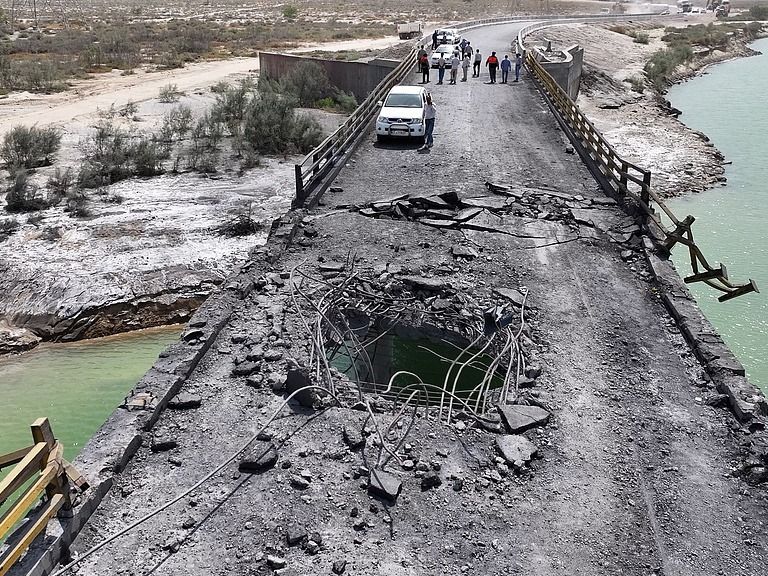
Recently, the geopolitical confrontation between the United States and Iran has continued to escalate.

Recently, the geopolitical confrontation between the United…

The New York Times has recently clashed with the Trump admi…

Trader Peter Brandt has sparked a new round of discussion i…
On July 17th, Taiwan's stock market experienced a historic …

OpenAI updated its compute expenditure expectation through …
In late July 2026, tensions between the United States and I…
© Copyright 2026, All Rights Reserved