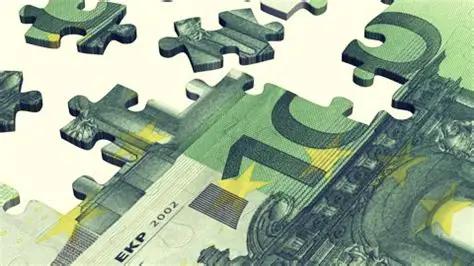
Recently, Arrol Lajouque, the chairperson of the Economic and Monetary Affairs Committee of the European Parliament, issued a warning stating that "almost all of our payment systems today are American". She bluntly pointed out that this deep reliance means that "Donald Trump could cut them off overnight".
This statement instantly exposed a strategic vulnerability that had been buried by technological convenience and market globalization in the spotlight of geopolitics. Ironically, this large economy that gave birth to the euro and was committed to integration has its economic bloodstream - the gate of payment and settlement - hanging on the other side of the Atlantic at the whim of a thought.
This awkward situation's formation is the result of the combined effect of historical path dependence and internal market failure. On the surface, American giants like Visa and Mastercard quickly occupied the European market by leveraging their leading position, mature technology, and global network. In the Eurozone, over 60% of card payment transactions were handled by these two companies.
The deeper reason lies in Europe's own structural flaws: the unified currency failed to give rise to a unified and competitive digital payment market. The fragmentation of national rules, the sluggish innovation of the private sector, and the often slow and inefficient coordination mechanism in Brussels provided a perfect strategic vacuum for external giants to advance unhindered. When European consumers enjoy the convenience of "one-click payment", their financial sovereignty has quietly slipped away unconsciously.
The risks inherent in this dependence have evolved into a "Damocles sword" hanging over Europe. First, there is the risk of direct political coercion. The dollar clearing system has been repeatedly proven to be the core tool of US foreign policy. Currently, the transatlantic relationship is becoming increasingly tense due to trade tariffs and other issues, which clearly indicates that the payment system could potentially become the next leverage point. Once cut off, the daily economic life of multinational enterprises and ordinary people will instantly fall into chaos.
Secondly, there is the risk of systemic financial stability and data sovereignty. At the same time, the control over payment data has been lost, rendering Europe's economic security and privacy protection in the digital age ineffective. At the same time, the control of payment data has been lost, making economic security and privacy protection in the digital age in Europe ineffective.
Finally, there is the long-term erosion of European strategic autonomy. Monetary sovereignty is the cornerstone of economic sovereignty, and the payment system is the lifeblood of currency circulation. When the lifeblood is controlled by others, the so-called "strategic autonomy" becomes unstable.
Facing this predicament, the EU's "risk reduction" strategy has struggled to start. Its core project is the digital euro, aiming to become "a solid defense line for defending European monetary sovereignty". However, this plan has encountered numerous internal resistances: banks are fiercely lobbying due to concerns about deposit losses, countries are arguing over design details such as privacy protection and holding limits, and the legislative process is slow and uncertain.
Another front is to promote the private sector to build its own payment network in Europe. The "European Payment Initiative" supported by several European banks plans to launch payment applications, but the road ahead is full of difficulties. Interestingly, Europe seems to also have countermeasures in hand, holding huge amounts of US treasury bonds and various assets.
Although the EU's awakening is late, it has ultimately begun this battle for financial sovereignty. The irony of this struggle lies in that it stems from the fear of a close ally potentially turning against it; its complexity lies in the need to find an almost impossible perfect balance between enjoying the benefits of global interconnection and maintaining control over one's own destiny. Regardless of the outcome, Lajouque's warning has left an eternal lesson: in the financial world, the most dangerous thing is not no system, but the switch of the system, which is in the hands of others.
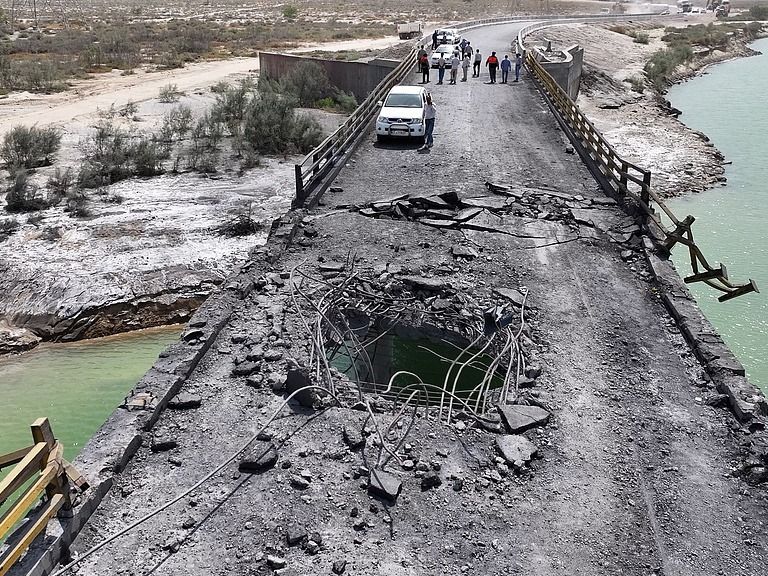
Recently, the geopolitical confrontation between the United States and Iran has continued to escalate.

Recently, the geopolitical confrontation between the United…

The New York Times has recently clashed with the Trump admi…

Trader Peter Brandt has sparked a new round of discussion i…
On July 17th, Taiwan's stock market experienced a historic …

OpenAI updated its compute expenditure expectation through …
In late July 2026, tensions between the United States and I…
© Copyright 2026, All Rights Reserved