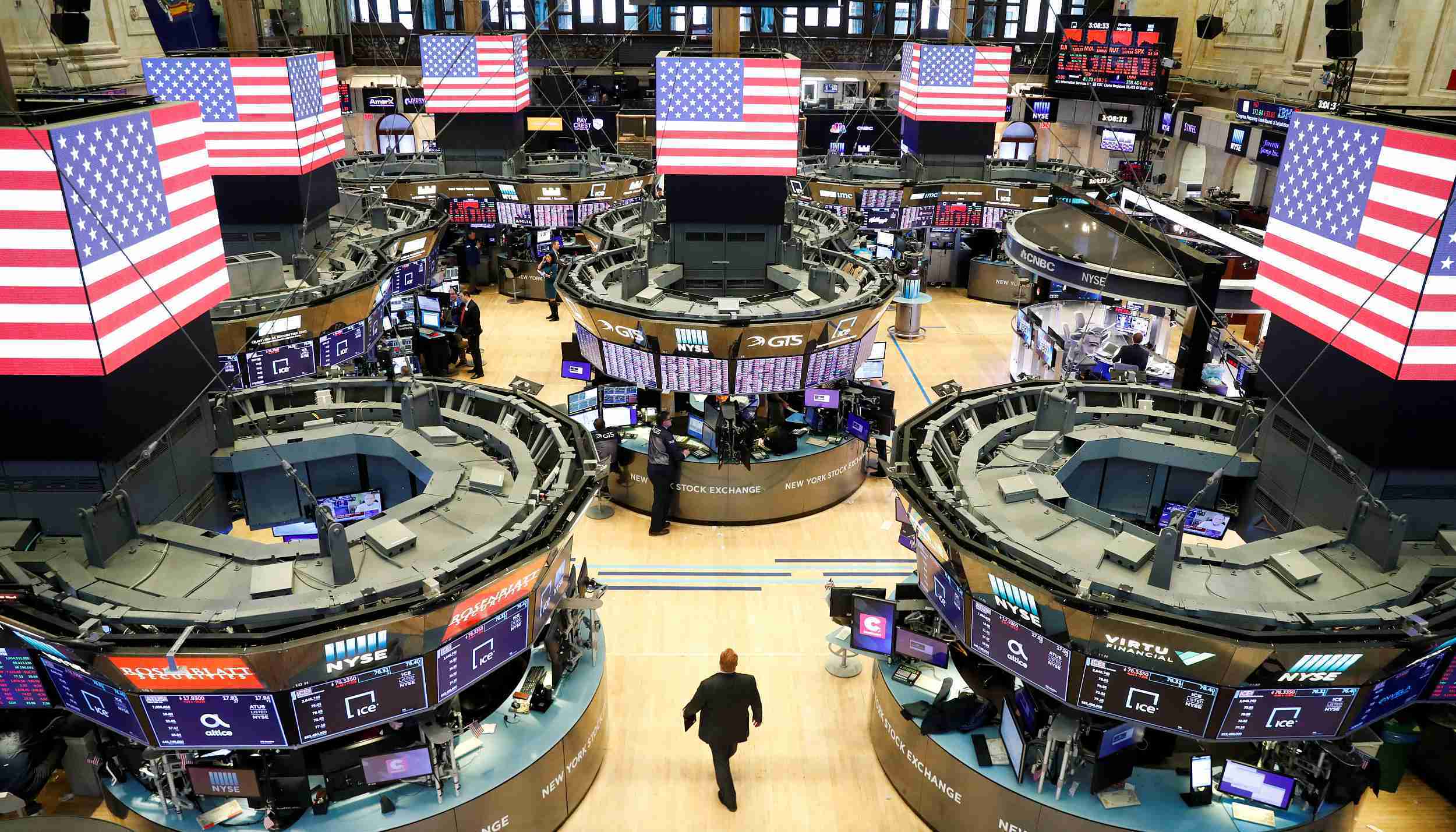
On January 27th (Eastern Time), the US stock market maintained a steady upward trend driven by the resonance of multiple positive factors, with the three core indices collectively closing higher and hitting new highs in more than a week. The Dow Jones Industrial Average rose 0.64% to close at 49,412.4 points; the S&P 500 Index edged up 0.50% to settle at 6,950.23 points; and the Nasdaq Composite Index gained 0.43%, finishing at 23,601.36 points. The recovery in market sentiment was mainly attributed to the better-than-expected US durable goods orders data, combined with the approaching Federal Reserve interest rate decision and the impending resolution of the Fed chairperson candidate suspense, which promoted the orderly rotation of funds between leading technology stocks and cyclical sectors.
Strong data support served as the core driver behind the market's rise on the day. According to the latest data released by the US Department of Commerce, boosted by a surge in commercial aircraft and capital equipment orders, US durable goods orders increased by 5.3% month-on-month in November, marking the largest gain in six months and sharply reversing the revised 2.1% decline in the previous month. As a key indicator reflecting the prosperity of the US manufacturing sector, the better-than-expected rebound in durable goods orders eased market concerns about economic slowdown. In particular, the growth in capital equipment orders indicated a recovery in corporate investment confidence, providing strong evidence for economic resilience. Following the release of this data, the S&P 500 Industrial Sector's gain expanded to 0.8%, becoming an important driver of the index's upward movement.
The technology sector exhibited a distinct differentiated pattern on the day, with the dynamics of leading enterprises becoming the focus of market attention. Apple's stock price bucked the trend and surged 2.97%, leading the gainers among Dow components, mainly boosted by JPMorgan's upward revision of its target price. The bank reaffirmed its "Overweight" rating on Apple and raised the target price from 305 to 315, citing stronger-than-expected demand for the iPhone 17 series and the company's cost control measures that will drive better-than-expected performance. The upcoming financial results to be released after the market closes on Thursday further reinforced market optimism. Alphabet Class A shares also delivered an impressive performance, rising 1.63%, benefiting from the continuous expansion of its cloud business and AI application scenarios.
In contrast, leading chip stocks experienced differentiated adjustments. Microsoft officially launched its second-generation AI chip, Maia 200, on the same day. Built on TSMC's 3nm process, this chip is equipped with 216GB HBM3e memory and native FP8/FP4 tensor cores. Its FP4 performance is three times that of Amazon's third-generation Trainium, while its FP8 performance surpasses Google's seventh-generation TPU, with a 30% improvement in performance per dollar compared to current hardware. Microsoft's move clearly aims to reduce its reliance on Nvidia's GPUs, directly triggering market concerns about Nvidia's competitive landscape, and its stock price closed down 0.64% on the day. However, Nvidia quickly responded to the market by increasing its layout in AI infrastructure, announcing a $2 billion additional investment in CoreWeave. The two parties will jointly build data centers, and Nvidia also launched its first standalone CPU chip, directly challenging Intel and AMD's positions in the data center processor market, demonstrating its strategic intent to strengthen the barriers of its computing power ecosystem. Tesla became the biggest decliner among technology stocks on the day, with its stock price falling 3.09%. The market speculates that lower-than-expected production and sales data and intensified industry competition are the main drag factors.
Another major focus of the current market is centered on the direction of Federal Reserve policy. According to a survey of economists cited by CCTV News, most respondents expect the Federal Reserve to keep the benchmark interest rate unchanged at 3.50%-3.75% at its interest rate meeting on January 27-28, and may maintain the status quo until the end of current Chairman Jerome Powell's term in May. More notably, the suspense over the next Federal Reserve chairperson is about to be resolved. President Trump has completed the candidate interviews, and an official announcement is expected this week. According to people familiar with the matter, BlackRock executive Rick Rieder has emerged as the top contender, with his election probability soaring to 54%, far exceeding other candidates. Rieder advocates cutting the benchmark interest rate to 3% this year and supports more interest rate cuts to ease the financing pressure on small businesses and low-income groups. His "outsider" identity and open attitude towards Federal Reserve reform have received positive market feedback, but the White House inner circle still harbors doubts about whether he will uphold the independence of monetary policy.
Regarding the future market trend, the market generally believes that in the short term, US stocks will continue to fluctuate around policy expectations and corporate profitability. The Federal Reserve's statement at the interest rate meeting, the financial performance of tech giants such as Apple, and the potential trade policies to be launched by the Trump administration (such as the threat of imposing tariffs on Canadian goods) will become key variables. In the long run, the technological iteration and competitive pattern evolution of the AI industry, combined with the pace of the Federal Reserve's monetary policy adjustments, will continue to dominate the structural market of US stocks. Investors are closely monitoring the progress of various key events, while seizing the main line of technological growth, and also seeking valuation recovery opportunities in cyclical sectors.

Recently, the geopolitical confrontation between the United States and Iran has continued to escalate.

Recently, the geopolitical confrontation between the United…

The New York Times has recently clashed with the Trump admi…

Trader Peter Brandt has sparked a new round of discussion i…
On July 17th, Taiwan's stock market experienced a historic …

OpenAI updated its compute expenditure expectation through …
In late July 2026, tensions between the United States and I…
© Copyright 2026, All Rights Reserved