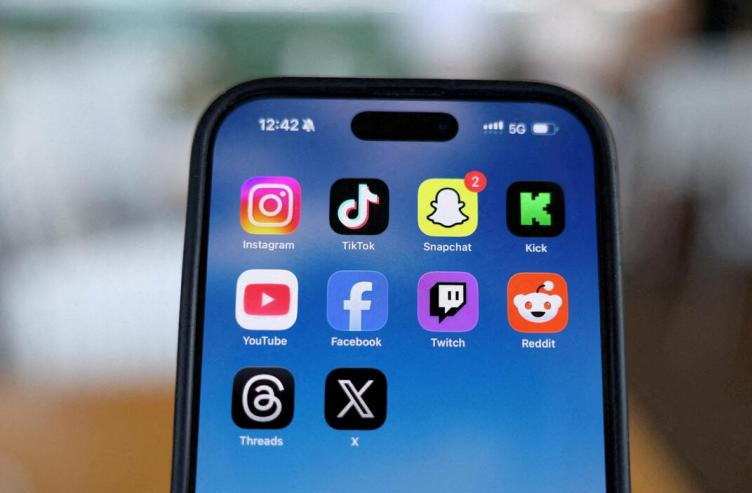
A jury in Los Angeles ruled that the parent company of social media platform Facebook, Meta Platforms, and Google, a subsidiary of Alphabet, were negligent in the design and operation of their social media platforms, endangering minors, and must pay $6 million in damages. This verdict will set a precedent for numerous similar cases.
The jury ruled that Meta must pay $4.2 million (S$537,000), and Google must pay $1.8 million (S$230,000). For these two companies with annual capital expenditures of over $100 billion each, the compensation amounts are insignificant. This trial in Los Angeles aims to set a precedent for thousands of similar lawsuits being heard by the California courts.
Reuters reported that the case involved a 20-year-old woman. At the beginning of the case, she was a minor and was referred to as Kaley by the court. She said that due to the highly attractive design of applications such as YouTube by Google and Instagram by Meta, features like "infinite scrolling" encouraged users to keep browsing new content, and she became addicted to it since childhood.
Agence France-Presse quoted Kaley as saying that when she was 6 years old, she downloaded the video-sharing platform software YouTube on her iPod Touch to watch videos about lip gloss and online children's games. At the age of 9, she bypassed her mother's set blocking function and registered on Meta's social media platform Instagram.
Kaley told the jury that she used these social media almost all the time, which led her to give up leisure hobbies and have difficulty making friends, and constantly compare herself with others.
The jury found that Google and Meta had been negligent in designing these two applications, failing to issue warnings about the associated risks.
The statement of the lead lawyer for the plaintiffs said: "Today's verdict is a referendum for the entire industry - from the jury to the entire industry - accountability has arrived."
In the closing argument, the plaintiff's lawyer, Lanier, described the case as a story of corporate greed. He argued that features such as infinite scrolling, automatic video playback, notifications, and likes were all meticulously designed to induce young people to become addicted to using their platforms.
Spokespeople for Meta and Google said that both companies did not agree with the verdict and planned to appeal. Meta and YouTube have always maintained that Kelly's mental health issues had nothing to do with their platforms.

Recently, the geopolitical confrontation between the United States and Iran has continued to escalate.

Recently, the geopolitical confrontation between the United…

The New York Times has recently clashed with the Trump admi…

Trader Peter Brandt has sparked a new round of discussion i…

On July 17th, Taiwan's stock market experienced a historic …

OpenAI updated its compute expenditure expectation through …

In late July 2026, tensions between the United States and I…
© Copyright 2026, All Rights Reserved