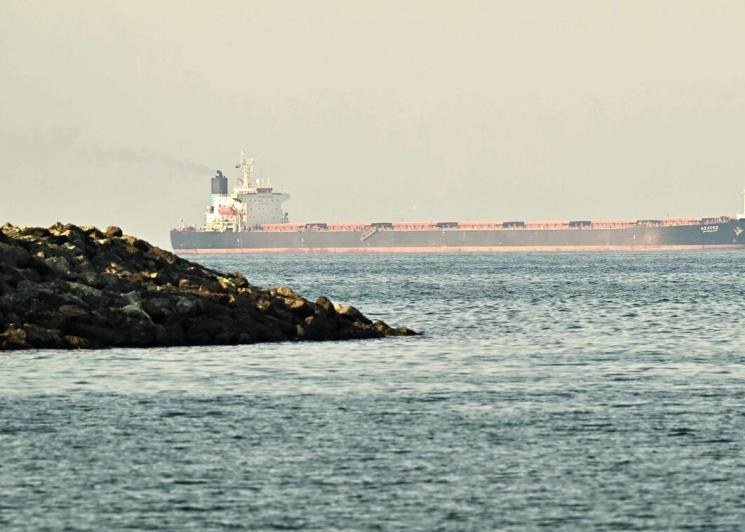
On Monday, the US military, following the instructions of President Trump, began to impose a maritime blockade on Iran. Iran warned that if its ports were threatened, no port in the Persian Gulf or the Gulf of Oman would be safe. The international community called for the restoration of navigation freedom in the Strait of Hormuz and urged the US and Iran to continue peace talks.
Shortly after the blockade order came into effect, Trump posted a message on social media warning that any Iranian naval fast attack boats approaching the US military blockade line would be immediately destroyed. He said that he had never attacked these ships before because he didn't think they posed a significant threat.
The US Central Command issued a statement on Sunday (April 12th) announcing that from 10 a.m. Eastern Time on Monday (April 13th) and until 10 p.m. Singapore Time on Monday, all maritime traffic entering or leaving Iranian ports will be blocked.
The statement said that this blockade measure would apply regardless of nationality and would target all ships entering or leaving Iranian ports and coastal areas, including all Iranian ports in the Arabian Sea and the Gulf of Oman; ships traveling to or from non-Iranian ports could still pass through the Strait of Hormuz.
According to Reuters, the US Central Command stated in a notice sent to sailors that the US military will impose a blockade in the Gulf of Oman and the Arabian Sea east of the Strait of Hormuz. Any vessel that enters or exits the blocked area without authorization may be intercepted, transferred and detained.
Early on Sunday, after the US-Iran negotiations failed to reach an agreement, Trump announced that the US Navy would immediately prohibit all ships from entering or leaving the Strait of Hormuz. Later, he also said that the US would prohibit ships from entering or leaving Iranian ports.
Trump: Iran will "give us everything we want"
Analysts believe that this move by Trump is aimed at cutting off Iran's export income, forcing major customers of Iranian oil, especially China, to put pressure on Tehran to lift the blockade of the Strait of Hormuz.
On Sunday, Trump said in an interview with Fox News that he believes Iran will continue to negotiate with the United States and "give us everything we want".
Iran claims that Trump's blockade order is absurd and ridiculous, insisting that it will not bow to any threats.
The spokesperson of the central headquarters of the Iranian Armed Forces, Hatam Amiba, said on Monday that the US restrictions on the navigation of ships in international waters are criminal acts and acts of piracy, and warned that the security of the ports in the Persian Gulf and the Gulf of Oman belongs to everyone or no one at all.
The Iranian military has stated that enemy vessels currently and in the future have no right to pass through the Strait of Hormuz. Other vessels can continue to be permitted to pass through the strait, but they must abide by the regulations of the Iranian armed forces.
Trump's imposition of a maritime blockade on Iran has raised concerns that the fragile ceasefire agreement between the US and Iran might collapse.
Britain has indicated that it does not support the US blockade of the Strait
On Monday, European Commission President Frans Timmerman emphasized that restoring the freedom of navigation in the Strait of Hormuz is of vital importance. On the same day, foreign ministers of ASEAN member states called for the resumption of safe, unimpeded and continuous passage of ships and aircraft in the Strait of Hormuz, and urged the US and Iran to continue negotiations.
British Prime Minister Stammer stated that the UK does not support the US's blockade operation and will not be drawn into the war. He said that the top priority is to fully reopen the Strait of Hormuz, and the UK will continue to strive for this goal.
Chinese Foreign Ministry spokesperson Guo Jiakun said at a regular press conference on Monday that China calls on all parties to remain calm and restrained, and is willing to continue to play a constructive role. Guo Jiakun also refuted reports that China plans to provide weapons to Iran.
Israeli Prime Minister Netanyahu has stated his support for imposing a maritime blockade on Iranian ports and has warned that the ceasefire agreement could collapse at any time.
Sturle, a former Pentagon official who is currently working at the Washington Institute for Near East Policy, said in an interview with Reuters that Trump's imposition of a maritime blockade on Iran was an attempt to quickly end the war. "But the reality is that this task is very difficult to accomplish alone, and it will also be hard to sustain in the long term."
The Secretary-General of the International Maritime Organization, Dominguez, stated on Monday that according to international law, no country has the right to restrict the freedom of navigation in international shipping lanes used for international transportation.
Countries like Pakistan continue to attempt to bridge the differences between the US and Iran.
According to Axios, an American news website, sources in the region and US officials reported that mediators from Pakistan, Egypt and Turkey will continue to negotiate with the US and Iran in the coming days, attempting to bridge the differences between the two sides. The report said that all parties still believe that an agreement is possible and hope that the US and Iran can hold a new round of negotiations before the ceasefire agreement expires on Tuesday (April 21st).
Pakistani Prime Minister Sharif confirmed on Monday that efforts are still being made through diplomatic channels to resolve the conflict between the United States and Iran.
French President Macron announced on Monday that France and the UK will organize a meeting on shipping safety in the Strait of Hormuz in the coming days, inviting countries willing to participate in a multinational peace operation to attend. He wrote on the social media platform X: "This operation is purely defensive, has nothing to do with the conflicting parties, and will be deployed as soon as conditions permit."
Stammer said that more than 40 countries will attend this conference to discuss how to ensure the safety of international shipping after the conflict ends.
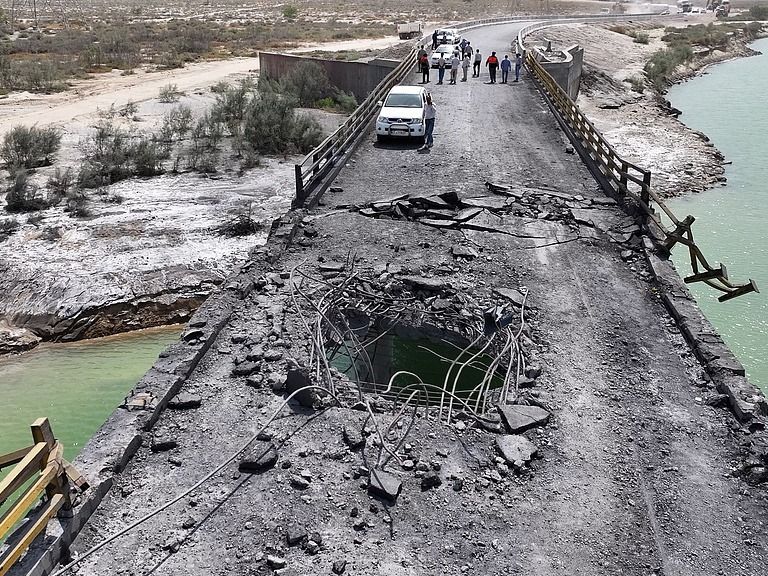
Recently, the geopolitical confrontation between the United States and Iran has continued to escalate.

Recently, the geopolitical confrontation between the United…

The New York Times has recently clashed with the Trump admi…

Trader Peter Brandt has sparked a new round of discussion i…

On July 17th, Taiwan's stock market experienced a historic …

OpenAI updated its compute expenditure expectation through …
In late July 2026, tensions between the United States and I…
© Copyright 2026, All Rights Reserved