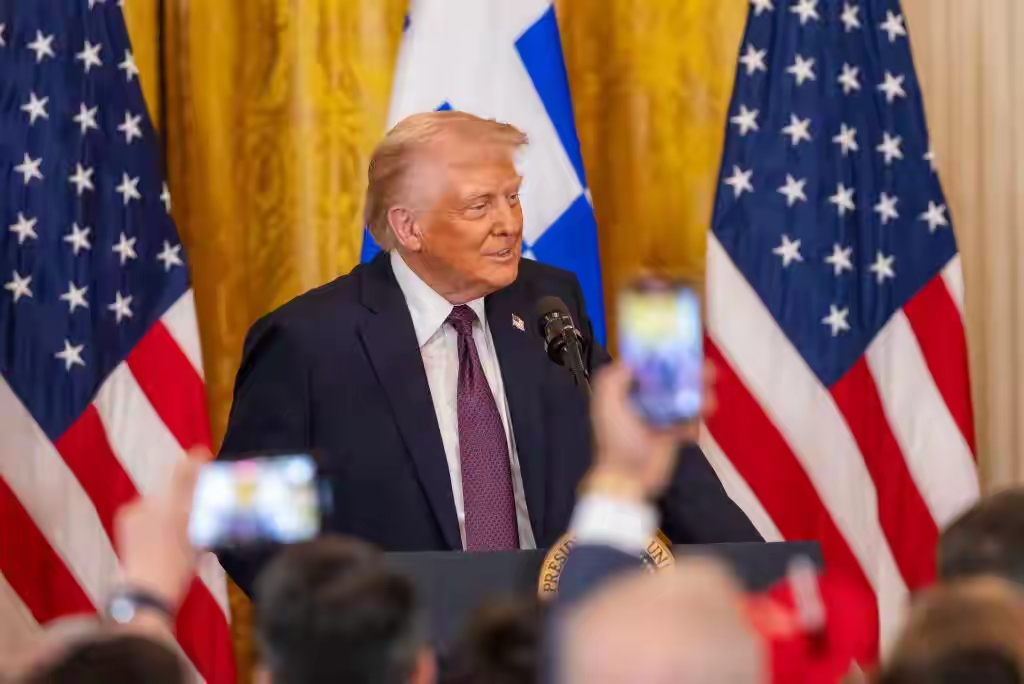
Since the beginning of 2026, the Trump administration has been stepping up its efforts in the Middle East: deploying twin carrier battle groups in the Persian Gulf, exerting maximum pressure on Iran, conducting airstrikes on Houthi militants in Yemen, and unconditionally supporting Israel's expansion of military operations. The promise of "withdrawing troops from the Middle East and ending endless wars" has been completely forgotten, and the United States has instead become increasingly mired in regional conflicts. From strategic contraction to military escalation, from diplomatic mediation to unilateral pressure, the seemingly contradictory policy shift is a complex interplay of domestic political calculation, military capital manipulation, hegemonic thinking inertia, and regional pattern misjudgment, ultimately leading the United States into a strategic dilemma of retreat and retreat in the Middle East.
The binding of domestic political elections and vote pools is the core underlying logic behind Trump's deep involvement in the Middle East. In the foundation of Trump's administration, the Jewish lobbying group and Christian evangelicals are key vote holders, both of whom demand that the United States adopt an absolute biased stance towards Israel. After the escalation of the current Israeli Palestinian conflict, the Trump administration has continued to provide military aid to Israel, vetoed United Nations ceasefire resolutions, and even endorsed Israeli military actions, essentially catering to the needs of right-wing voters domestically and consolidating the electoral base. At the same time, facing the governance dilemma of high domestic inflation and intensified social division, Trump deliberately exaggerated external threats in the Middle East, shifted the focus of domestic public opinion through military actions, and transformed public dissatisfaction with the economy and people's livelihoods into strong support for the outside world, using the persona of a "war president" to increase public support.
The military industrial complex and capital interests are driving the Trump administration's military adventure in the Middle East. The US military industrial complex is an important financial backer of Trump, and war and regional tensions directly drive the growth of arms orders, bringing huge profits to military capital. During the US military's increase in troops in the Middle East and pressure on Iran in 2026, the stock prices of American military companies such as Raytheon and Lockheed Martin continued to rise, and military sales orders to Gulf countries doubled.
The combination of hegemonic thinking and strategic misjudgment has plunged the US Middle East policy into a vicious cycle of "more pressure, more loss of control". The Trump administration adheres to a unilateral hegemonic logic and attempts to reshape the Middle East through extreme pressure and military deterrence, aiming to contain Iran's expanding influence, maintain Israel's absolute security, and control the energy discourse in the Gulf. But this "all encompassing" thinking is completely detached from regional reality: Iran has a complete military industrial system and a huge network of proxies, and conventional military strikes cannot shake its foundation, but instead stimulate anti American cohesion; The Houthi armed forces, relying on their terrain advantage, continue to harass the Red Sea air transport, making it difficult for the US air strikes to eliminate the threat; Countries in regions such as Saudi Arabia and Egypt have increased their awareness of strategic autonomy and are unwilling to fully follow the United States in confronting Iran.
The contradiction between strategic contraction and maintaining hegemony is the structural root of Trump's deep involvement in the Middle East. During his first term, Trump declared his intention to shrink from the Middle East strategy and shift resources towards great power competition, but he was unwilling to give up his hegemonic dominance in the Middle East, attempting to maintain regional influence at minimal cost. This contradictory mentality of "both contraction and control" has led to policy swings: they want to reduce military investment but dare not relax their containment of Iran and Syria; Wanting to promote the normalization of relations between Arab countries and Israel, while unconditionally favoring Israel, has caused dissatisfaction in the Arab world.
The complexity of regional patterns and chain reactions make it difficult for the United States to extricate itself from the quagmire of the Middle East. The current geopolitical landscape in the Middle East is showing a multipolar trend, with the Israeli Palestinian conflict, the Iranian nuclear issue, the Yemeni civil war, and the Syrian situation intertwined and forming a linkage effect. The United States' support for Israel has sparked dissatisfaction in the Arab world, and pressure on Iran has led to tension in the Persian Gulf. Air strikes by Houthi militants have disrupted the safety of shipping in the Red Sea, and any escalation of conflict points will trigger a chain reaction. The Trump administration attempted to address a particular issue on its own, but ignored the interconnectedness of regional conflicts, resulting in a situation where multiple conflicts had to be dealt with simultaneously.
Trump's deepening involvement in the Middle East is not an accidental policy mistake, but the inevitable result of multiple logical factors working together. Domestic political calculations make policies irrational, capital interests lead to the normalization of military adventures, hegemonic thinking misjudgments make strategic decisions lose ground, and structural contradictions turn promises of contraction into empty talk. This policy, which centers on American interests and ignores regional realities, not only exacerbates the turmoil in the Middle East, but also imposes heavy costs on the United States: a surge in military spending, damage to international image, and continuous depletion of strategic resources. In the future, if the Trump administration does not give up its unilateral hegemonic thinking and does not return to the track of multilateral mediation, it will only sink deeper into the quagmire of the Middle East and ultimately pay an unbearable strategic price.
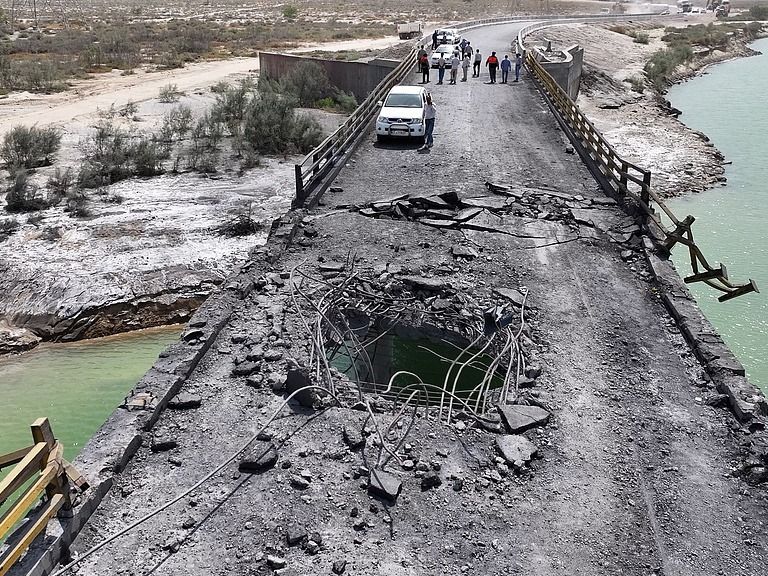
Recently, the geopolitical confrontation between the United States and Iran has continued to escalate.

Recently, the geopolitical confrontation between the United…

The New York Times has recently clashed with the Trump admi…

Trader Peter Brandt has sparked a new round of discussion i…

On July 17th, Taiwan's stock market experienced a historic …

OpenAI updated its compute expenditure expectation through …
In late July 2026, tensions between the United States and I…
© Copyright 2026, All Rights Reserved