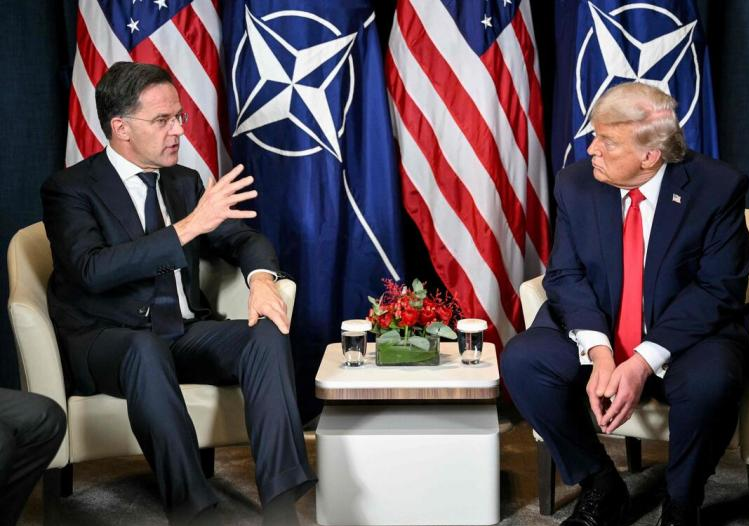
U.S. President Trump has warned that if NATO allies do not assist in keeping the Strait of Hormuz open, the alliance faces a "very bad" future. This constitutes an undoubtedly undisguised and explicit demand by Trump for European nations to join the United States in its military operations against Iran.
Speaking to the *Financial Times* on Sunday (March 15), Trump also stated that he might postpone his summit with Chinese President Xi Jinping—scheduled for later this month—as he is currently urging Beijing to assist in unblocking the Strait of Hormuz, a critical shipping lane.
"The beneficiaries of the Strait of Hormuz ought to help ensure that nothing bad happens in that strait," Trump said. He noted that, unlike the United States, both Europe and China are heavily dependent on oil supplies from the Persian Gulf.
Trump added: "If we get no response, or if the response is negative, I think that would be very detrimental to the future of NATO."
Trump made these remarks during an eight-minute telephone interview with the *Financial Times*. His comments came just one day after he called upon China, France, Japan, South Korea, and the United Kingdom to work together to unblock the "chokepoint" of this vital global shipping lane, through which one-fifth of the world's oil passes.
Since the United States and Israel launched attacks against Iran more than two weeks ago, the Strait of Hormuz has effectively been blockaded by Iran, sparking fears within the global economy of a new round of oil price shocks.
U.S. efforts to reopen this waterway have largely failed. On Sunday evening, international oil prices hit $106 per barrel—an increase of approximately 45% since the outbreak of the conflict involving the U.S., Israel, and Iran.
Despite having issued this warning to NATO, Trump remains pessimistic regarding the likelihood that his allies will heed his call. Trump, who frequently criticizes NATO, stated: "We have an organization called NATO. We have always been very good to them. We didn't necessarily have to help them regarding the Ukraine issue. Ukraine is so far away from us... yet we helped them anyway. Now, we will see if they will assist us. Because I have long maintained that while we would extend a helping hand to them, they would not help us in return. I am not sure if they will join our operation."
Expecting Assistance from China
When asked specifically what kind of assistance the U.S. required, Trump replied, "Whatever it takes." He suggested that U.S. allies should dispatch minesweepers to the Strait of Hormuz, noting that European nations possess a far greater number of minesweepers than the United States. He also expressed a desire for "someone to clear out the bad actors along [Iran's] coast."
Trump implied that European special forces or other military assets could assist in neutralizing Iran, which is currently creating "trouble" in the Persian Gulf region by employing drones and naval mines.
"We are cracking down hard on Iran; aside from stirring up some minor trouble in the Strait of Hormuz, they have run out of options. However, the nations that benefit from this waterway should assist us in maintaining order within the strait. We will provide them with support, but they, too, must participate in the operation. You need a collective effort to deal with these rogue elements."
Trump further stated that he hopes China will assist in keeping the Strait of Hormuz open prior to the summit he is scheduled to hold with President Xi Jinping. "I believe China should also lend a hand, given that 90 percent of China's oil imports pass through the Strait of Hormuz."
Trump remarked that waiting until the U.S.-China presidential summit to make a decision would be too late. He said: "We want to finalize these arrangements before then. Two weeks is too long to wait."
Trump also revealed that his planned visit to China might be postponed, though he did not specify how long the delay would last.
The White House recently announced that Trump is scheduled to visit China from March 31 to April 2; this would mark his first visit to China during his second term in office.
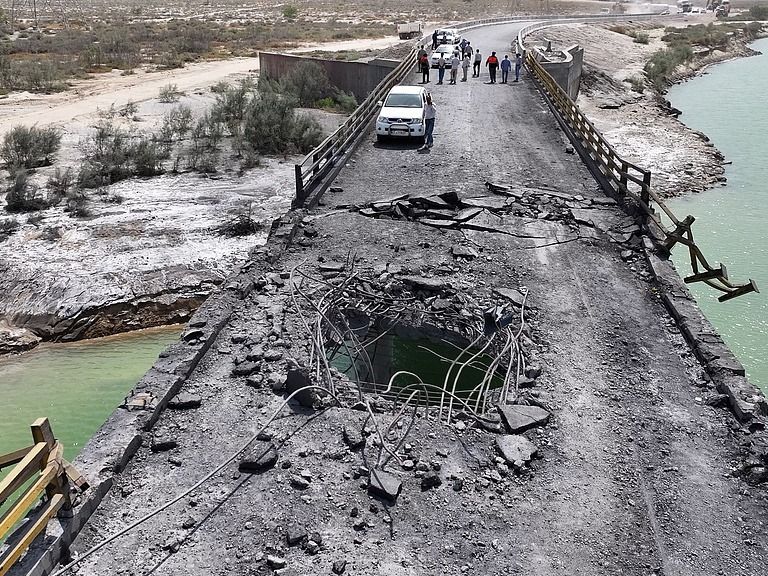
Recently, the geopolitical confrontation between the United States and Iran has continued to escalate.

Recently, the geopolitical confrontation between the United…

The New York Times has recently clashed with the Trump admi…

Trader Peter Brandt has sparked a new round of discussion i…

On July 17th, Taiwan's stock market experienced a historic …

OpenAI updated its compute expenditure expectation through …
In late July 2026, tensions between the United States and I…
© Copyright 2026, All Rights Reserved