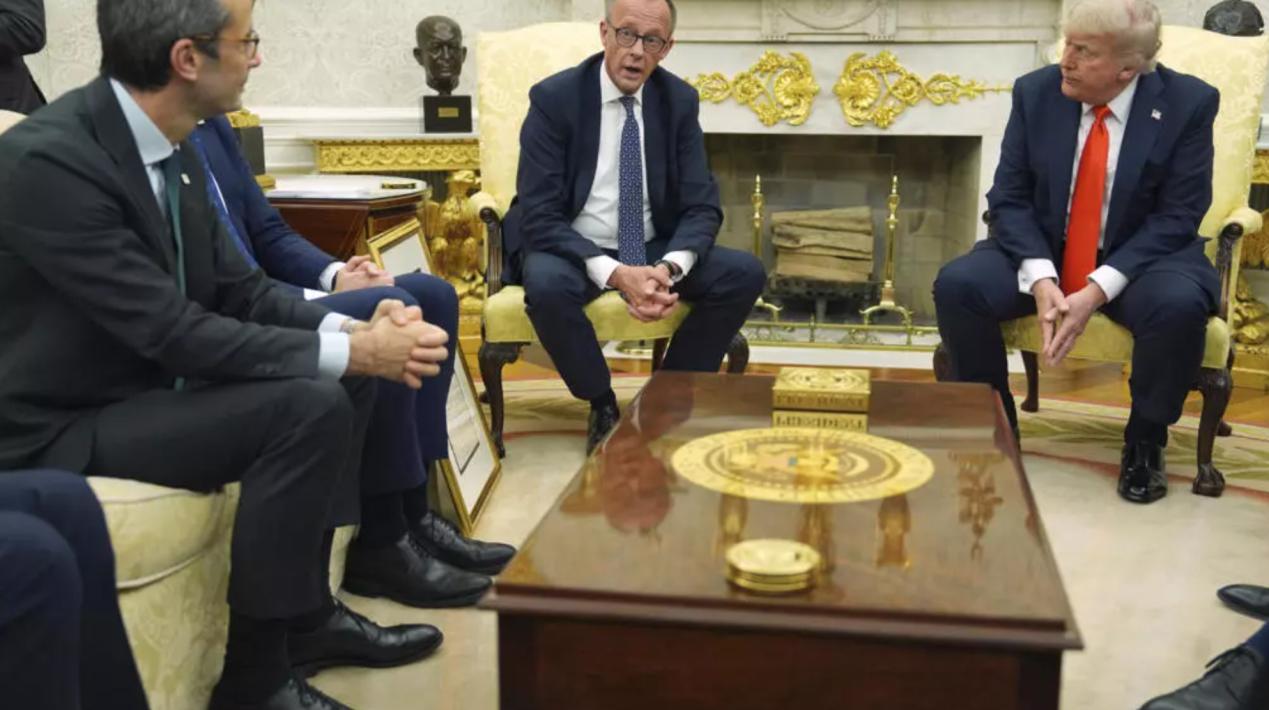
In March 2026, as the conflict between the United States, Israel and Iran continued to escalate, US President Trump and German Chancellor Merkel engaged in a fierce confrontation over NATO's role, exposing the deep-seated contradictions within the transatlantic alliance. This "verbal battle" not only reflected the strategic differences between the US and Europe on the Iran issue but also foreshadowed an unprecedented survival crisis for NATO, a relic of the Cold War.
I. Background of the Confrontation: Unilateral Actions Meet Allies' "Cold Shoulders"
Since the joint US-Israeli military strike on Iran on February 28, the Trump administration has repeatedly called on NATO countries to participate in the escort mission in the Strait of Hormuz, but few responded. German Chancellor Merkel explicitly stated that the escort mission lacked UN authorization and "this is not NATO's war." French President Macron and British Prime Minister Starmer also held similar positions. According to Reuters, as of March 27, only the UK, France, Italy and other countries had sent a small number of warships symbolically, and all refused to directly participate in military operations.
Trump was furious. On March 26, he criticized Merkel by name at a cabinet meeting, calling her statement that "the Iran war is not our war" "inappropriate" and threatening that "the US may no longer support NATO." The next day, at a business forum in Miami, he further declared: "We spend hundreds of billions of dollars every year protecting NATO, but NATO has chosen not to help the US this time... I think we don't need to support them anymore." More strikingly, he publicly disclosed for the first time that there were "3,554 targets remaining" in the war against Iran, suggesting that the conflict would be prolonged.
II. Root Causes of the Contradictions: The Triple Collapse of Interests, Law and Trust
1. Doubts about the Legality of the Actions
The US-Israeli military actions lacked legal basis under international law. German President Steinmeier pointed out that the so-called threat of "Iran developing nuclear weapons" was "untenable," and the 2015 nuclear deal had significantly reduced the possibility of Iran obtaining nuclear weapons. Le Monde of France commented that the US's attack without UN Security Council authorization was "a blatant challenge to the international order." 2. Unilateralism intensifies allies' dissatisfaction
The Trump administration did not consult its allies before taking actions and only called for their support through the media afterwards. Merz complained, "If you want us to help, please tell us in advance instead of informing us through the newspapers afterwards." This "act first, explain later" approach has made European countries feel marginalized.
3. Trade and territorial disputes erode trust
In recent years, the US has initiated steel tariffs and digital tax investigations against the EU and even threatened to invade Greenland, seriously damaging the relationship with its allies. Denmark has transported explosives to Greenland and destroyed the runway to prevent a US invasion. The Guardian of the UK stated directly, "When the US dares to infringe upon the sovereignty of its allies, who would still believe its promises?"
III. The Future of NATO: From "Paper Tiger" to "Brain Death"?
Trump's threats are not groundless. He has repeatedly demanded that NATO member states increase their military spending to 5% of GDP (originally 2%) and hinted at reducing protection for "non-paying" allies. This "transactional diplomacy" is shaking the foundation of NATO:
Former German Bundestag member Sevim Dagdelen called for, "Any country that hopes to avoid its people falling into poverty should get off the US track." French President Emmanuel Macron was even more direct, stating, "NATO has 'brain death,' and Europe needs to establish its own defense system."
If NATO disintegrates, Europe may accelerate the easing of relations with Russia, while the US may shift its strategic focus to the Asia-Pacific region. A spokesperson for the Iranian armed forces warned, "The US and Israel will be forced to accept the war outcome we decide." This indicates that the Middle East landscape will undergo a new round of reshuffling.
The confrontation between Trump and Merz is essentially a collision between "America First" and "European sovereignty." The survival of NATO depends not only on the sharing of military expenses but also on the member states' commitment to common values and international rules. If the US continues to replace "commitment" with "transaction" and "bullying" with "negotiation," the rift in the transatlantic alliance will eventually evolve into an irreparable fracture. For the world, the mutual accusations and shirking of responsibility among major powers in hot conflicts will only make peace more elusive.
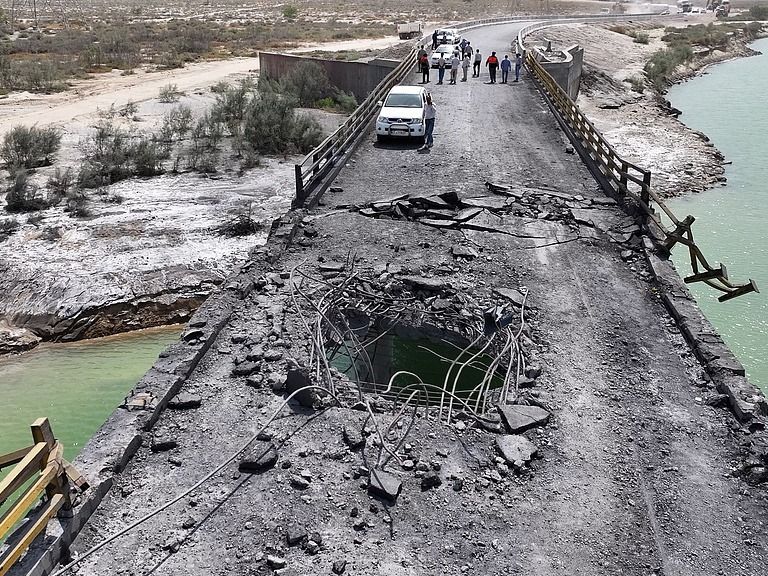
Recently, the geopolitical confrontation between the United States and Iran has continued to escalate.

Recently, the geopolitical confrontation between the United…

The New York Times has recently clashed with the Trump admi…

Trader Peter Brandt has sparked a new round of discussion i…

On July 17th, Taiwan's stock market experienced a historic …

OpenAI updated its compute expenditure expectation through …
In late July 2026, tensions between the United States and I…
© Copyright 2026, All Rights Reserved