When the European Parliament officially froze the approval process of the US-EU trade agreement, and when the EU was considering countermeasures to restrict the data flow of US enterprises, a financial game triggered by geopolitical factors was sweeping across both sides of the Atlantic. The US threatened to impose tariffs on Greenland based on the sovereignty dispute over the territory, while the EU responded by using anti-coercion tools and digital regulatory weapons. This seemingly local trade conflict was actually a concentrated outbreak of the trend of "weaponization" of finance, profoundly shaking the stability foundation of the global financial system.
The direct trigger of this game was the US's tariff coercion. The Trump administration announced that starting from February 1st, it would impose a 10% tariff on goods from Denmark, Germany, France, etc. to the US, and would further increase it to 25% after June, pressuring relevant countries to cooperate with its territorial claims over Greenland. This violation of international trade rules directly triggered a strong backlash from the European Parliament, the largest party group, the European People's Party, clearly stated that it would suspend the US-EU trade agreement reached last year, and various parties called for the activation of the EU's anti-coercion tools. This agreement was supposed to achieve mutual tariff exemption for industrial products and market opening for agricultural products between the US and the EU. Now that it has been shelved, not only has it deprived the transatlantic trade of an important institutional guarantee, but it has also broken the economic mutual trust foundation between the two sides for a long time. A German think tank estimated that if the tariff measures were fully implemented, Germany's GDP would lose 0.3%, and in the context of the sluggish economic recovery in the Eurozone, this loss could have a chain reaction.
The digital regulatory conflict has become another battlefield of the game. The EU fined the US social media platform X 120 million euros under the "Digital Services Act", pointing out its misleading certification mechanism and insufficient advertising transparency, and previously imposed a 2.95 billion euro anti-monopoly fine on Google. Facing the EU's digital regulatory offensive, the US White House threatened tariff retaliation, linking steel and aluminum tariffs with digital regulatory policies. This "regulatory confrontation - tariff counteraction" cycle is essentially the competition for the rule-making power in the digital economy between the US and the EU, and the "weaponization" of financial and trade tools is pushing the transatlantic digital market into the risk of division. The EU's consideration of further restricting the data flow of US enterprises means that the element circulation between the two largest digital economies will encounter artificial barriers, which is contrary to the original intention of financial globalization.
The market has quickly perceived the risks of this game. European stocks experienced a selling spree, and the Citigroup report warned that the transatlantic tensions could wipe out most of Europe's profit growth in 2026; cross-border capital flows between the US and the EU significantly slowed down, and investors, in order to avoid policy uncertainty, turned to safe-haven assets, pushing the spot gold price to a new all-time high. What is more alarming is that the "weaponization" of finance is pushing up the risk premium in global financial markets, with rising corporate financing costs and delayed cross-border investment decisions, and the originally efficient and interconnected US-EU financial markets showing signs of "decoupling". German pension funds and other institutions have begun to consider selling off US bonds, and many European countries are considering selling US assets. This adjustment in asset allocation is weakening the global appeal of US assets.
In the long term, the greatest risk of this game lies in the division and reconstruction of the global financial system. The US frequently uses dollar settlement, asset freezing, and SWIFT exclusion as sanctions tools, which has long made countries realize the systemic risks of relying on the US dollar, and the proportion of the US dollar in global foreign exchange reserves has dropped from 55% in 2021 to 47%. And this financial confrontation between the US and the EU further proves that financial tools are becoming the "weapons" in geopolitical games, and basic principles such as inviolability of private property and financial neutrality have been violated. This will accelerate the process of various countries seeking diversified payment systems and reserve assets. The non-SWIFT payment system is developing rapidly, the proportion of local currency settlement in international trade is continuously increasing, and the global financial landscape is evolving from a single-polar system dominated by the US dollar to a multi-polar one.
As the two largest economies in the world, the financial confrontation between the United States and Europe has no winners. Trade tariffs and digital barriers will increase the costs for enterprises on both sides and hinder economic recovery; financial "weaponization" will shake the credit foundation of the US dollar and the euro, and weaken the global status of these two currencies. For the world as a whole, the rift between the United States and Europe may lead to the fragmentation of global financial rules, increase the institutional costs of cross-border trade and investment, and hinder the global economic recovery process.
Currently, the global financial system is standing at a crucial crossroads. The United States and Europe should abandon the "weaponization" mindset, resolve differences through dialogue and negotiation, and rebuild economic and financial mutual trust. More importantly, the international community needs to jointly defend financial neutrality and the authority of rules, and promote the establishment of a more fair, inclusive and stable global financial order. Otherwise, the vicious cycle of financial "weaponization" will continue to tear apart the globalization process, and push the world into the dual risks of financial division and economic recession.
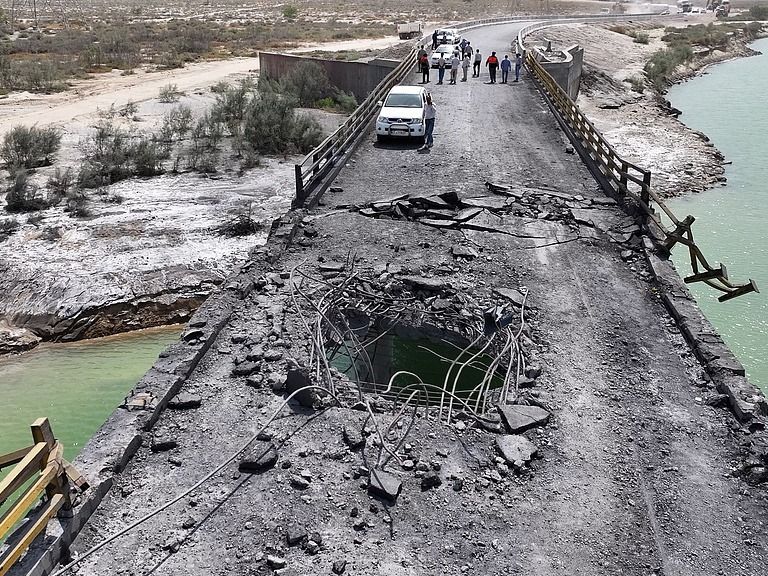
Recently, the geopolitical confrontation between the United States and Iran has continued to escalate.

Recently, the geopolitical confrontation between the United…

The New York Times has recently clashed with the Trump admi…

Trader Peter Brandt has sparked a new round of discussion i…

On July 17th, Taiwan's stock market experienced a historic …

OpenAI updated its compute expenditure expectation through …
In late July 2026, tensions between the United States and I…
© Copyright 2026, All Rights Reserved