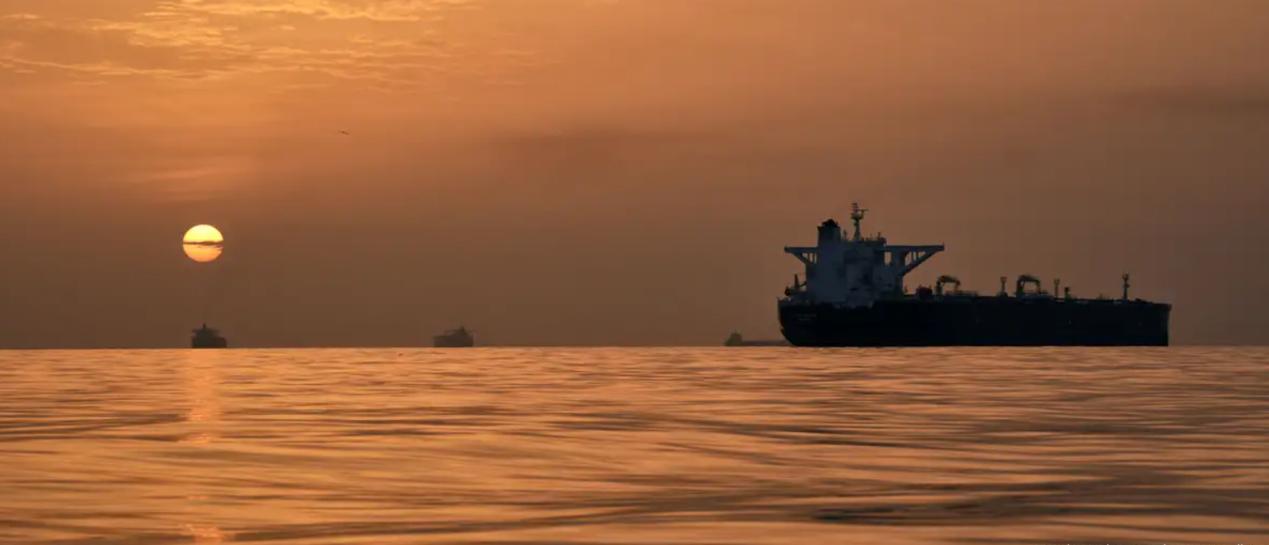
On April 20, 2026, the US military opened fire on an Iranian merchant ship in the Gulf of Oman and sent soldiers to board it. This incident was like a bombshell, instantly detonating the already tense US-Iranian relations and pushing international oil prices to the forefront. This attack was not only a blatant provocation of Iran's sovereignty but also the latest escalation in the long-standing confrontation between the two countries.
The Incident: A Direct Trigger for US-Iranian Confrontation
According to a statement from the Iranian armed forces, the US military launched an attack on the Iranian merchant ship "TOUSKA" in the Gulf of Oman, penetrating the engine room and paralyzing the navigation system. Subsequently, US Marines boarded the ship to take control. Iran accused the US of committing the crime of "sea piracy" and vowed to retaliate. Meanwhile, US President Trump claimed that this operation was a "necessary measure" in response to Iran's attempt to break through the US naval blockade and threatened to seize more Iranian oil tankers. Both sides held their ground, but an undeniable fact is that this US operation seriously violated the basic principles of international law regarding freedom of navigation on the high seas and the rights of sovereign states, constituting a direct military provocation against Iran.
This attack was not an isolated incident. Since the US and Israel jointly launched a military strike against Iran in February 2026, the confrontation in the Strait of Hormuz has continued to escalate. Iran has repeatedly warned that if the US continues to blockade its ports and shipping routes, it will completely close this "choke point" for global energy transportation. Meanwhile, the US has attempted to further compress Iran's strategic space through measures such as increasing troops and seizing oil tankers. This attack on the merchant ship is the inevitable result of this confrontational logic.
Escalation of Tensions: A Vicious Cycle of Negotiation Breakdown and Military Confrontation
After the incident, Iran responded with firmness. The Iranian Revolutionary Guard Corps Navy established a new "Larak Corridor" route, explicitly prohibiting the passage of goods related to Israel and unauthorized belligerent ships, and demanding that all countries pay tolls in rials. At the same time, Iran refused to participate in the second round of US-Iranian negotiations originally scheduled to be held in Pakistan, accusing the US of "excessive demands and inconsistent positions," and stating that it was prepared for "rekindling the flames of war."
The US response further exacerbated the tensions. Trump not only threatened to launch a "devastating strike" against Iran but also announced the expansion of the Navy's strike range beyond the Middle East, attempting to force Iran to submit through global containment. However, this "maximum pressure" strategy not only failed to work but also intensified Iran's will to counterattack. Iran made it clear that if the US military continued to escalate the confrontation, it would completely abandon its restraint on the energy facilities of countries such as Saudi Arabia and the United Arab Emirates and might even directly attack US military bases in the Middle East.
Soaring oil prices: The chain reaction in the global energy market
The escalation of the US-Iran confrontation has the most direct impact on the soaring international oil prices. As of April 20, 2026, the futures price of West Texas Intermediate crude oil rose by 7.4% to $88.7 per barrel, and the futures price of Brent crude oil rose by 7.19% to $96.88 per barrel. This increase far exceeded market expectations, reflecting deep concerns about the risk of the Strait of Hormuz being closed.
The Strait of Hormuz is the "lifeline" of global energy transportation, with about 20 million barrels of oil flowing through it every day, accounting for 20% of global oil consumption. If Iran completely closes the strait, the global energy supply chain will suffer a devastating blow. Analysis agencies have warned that if the closure lasts for several weeks, the price of Brent crude oil may exceed $130 per barrel and even reach the historical high of $200.
Facing the soaring oil prices and the chain risks to the global economy, will the US and Iran return to the negotiating table? Judging from the current situation, the hope for a short-term settlement is slim. Iran has clearly stated that it refuses to accept the US "imposed will" negotiation framework and emphasizes that "the possibility of renewed conflict is higher than that of negotiations"; while the US continues to adhere to the "maximum pressure" strategy, attempting to force Iran to yield through military deterrence.
However, historical experience shows that confrontation cannot solve fundamental problems. After the US and Israel attacked Iran in 2025, oil prices once soared to nearly $120 per barrel, but eventually fell back as market concerns over supply disruptions subsided. Whether this crisis will repeat the same pattern depends on whether both sides can exercise restraint at the critical moment and avoid the complete closure of the "energy lifeline" of the Strait of Hormuz.
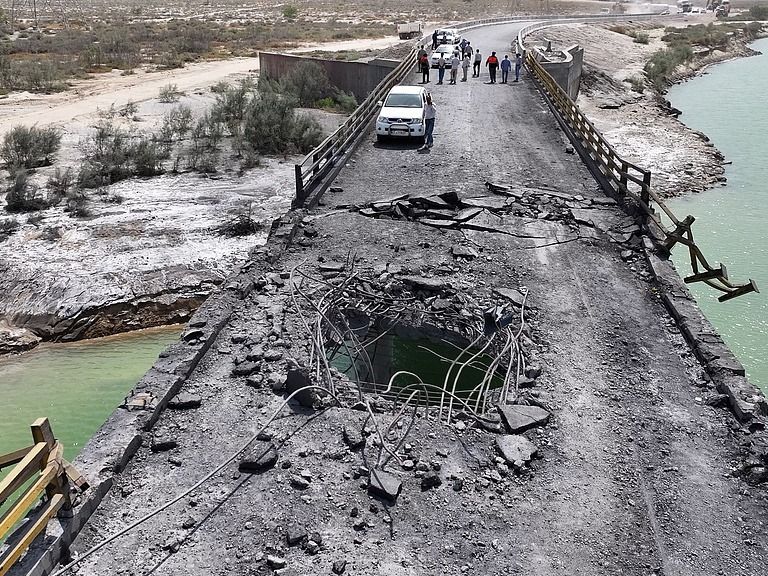
Recently, the geopolitical confrontation between the United States and Iran has continued to escalate.

Recently, the geopolitical confrontation between the United…

The New York Times has recently clashed with the Trump admi…

Trader Peter Brandt has sparked a new round of discussion i…

On July 17th, Taiwan's stock market experienced a historic …

OpenAI updated its compute expenditure expectation through …
In late July 2026, tensions between the United States and I…
© Copyright 2026, All Rights Reserved