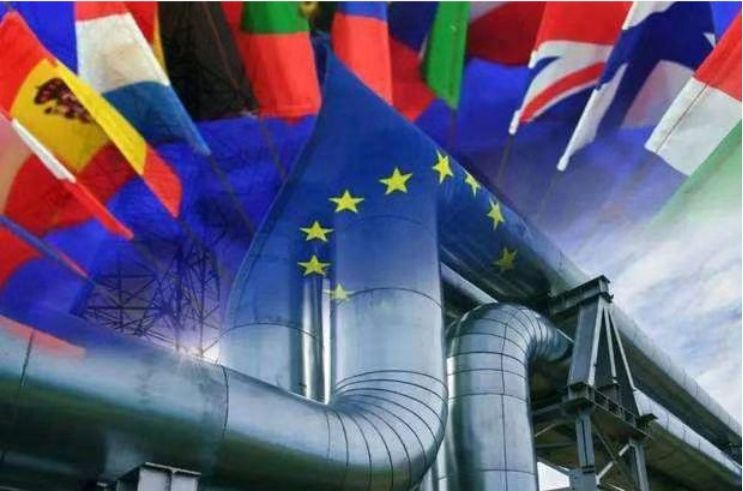
European Commission President Ursula von der Leyen recently admitted at the Paris Nuclear Energy Summit that Europe had made "strategic mistakes" in its nuclear abandonment policy in the past. This statement came at a crucial moment when tensions in the Middle East were driving up oil prices and several European countries were forced to engage with Iran to ensure the security of energy routes. The seemingly coincidental timing reveals the structural predicament of Europe's energy system - as the world returns to a period of frequent geopolitical conflicts, energy policy has transcended the simple climate issue and become a strategic cornerstone related to national security.
Europe's response to the situation in the Middle East was almost reflexive. As regional tensions escalated, the benchmark price of natural gas rose significantly. This scene is reminiscent of the energy crisis caused by the "pipeline rupture" during the Russia-Ukraine conflict, which is still fresh in memory. Now, global energy transportation routes are once again under threat. No matter where the shock originates, it points to the same reality - Europe still heavily relies on external energy imports, and its energy security foundation is far from solid.
Before the Russia-Ukraine conflict, Russian natural gas accounted for nearly 40% of the EU's total imports. After the conflict, Europe quickly restructured its supply structure by increasing the purchase of liquefied natural gas. However, this "de-Russification" did not truly solve the problem of external dependence; it merely shifted the reliance from a single source to multiple ones. The most significant change was the sharp increase in dependence on US liquefied natural gas.
Continuous external shocks are changing Europe's mindset: the Russia-Ukraine conflict exposed the vulnerability of the energy system to a single supply source, while the Middle East crisis warned of the high uncertainty of global energy routes. Policy makers have to reweigh the weight of energy security in the strategic agenda.
The most notable change is that Europe's interest in nuclear energy technology has significantly increased, especially the growing attention to small modular reactors. The EU plans to promote the first small reactor projects after 2030. For more and more policy makers, nuclear energy is being re-evaluated as a stable power source that can complement renewable energy. Von der Leyen's public reflection represents the European decision-making layer's re-examination of the "nuclear abandonment" consensus of the past two decades.
However, the shift towards nuclear energy faces significant resistance within Europe. After Germany completely abandoned nuclear energy, domestic politics remains highly sensitive to the nuclear energy issue. At the same time, some countries believe that instead of betting on the still-researching small reactor technology, it is better to continue to increase investment in wind power and solar power. The more realistic challenge comes from the cost dimension. European nuclear projects have long faced problems such as huge investment and long construction periods.
The energy price issue is undoubtedly one of the most sensitive issues in European politics. During the Russia-Ukraine conflict, countries invested a lot of fiscal subsidies to alleviate the impact of price shocks. Now, the Middle East situation has once again pushed up oil and gas prices, and discussions within Europe about whether to re-intervene in the market have begun to heat up. This dilemma reflects the deep-seated predicament of Europe's energy policy: to promote green transformation, to ensure energy security, and to maintain price stability.
It can be said that Europe is standing at a complex strategic balance point. On the one hand, green transformation remains the core pillar of the EU's long-term strategy; on the other hand, geopolitical shocks are forcing Europe to re-prioritize energy security. In the context of continuous global political uncertainty, the relationship between energy security and climate goals needs to be re-examined.
The evolution of the situation in the Middle East will be the test of Europe's strategic resilience. If the shipping risk in the Strait of Hormuz remains high, Europe will not only have to bear higher energy prices but also have to re-evaluate the resilience of its own energy system. For Europe, the real question is not "whether to develop nuclear energy" as a specific option, but how to build a more stable and resilient energy system in a world full of geopolitical uncertainties. In this sense, the "strategic mistakes" referred to by Van der Leeuw are not merely a reflection of a re-examination of the past nuclear abandonment policy, but also reflect the collective rethinking of Europe on energy strategies. Whether Europe can draw lessons from these experiences and explore an energy-independent path in the face of geopolitical changes will be an important indicator to test its strategic wisdom.
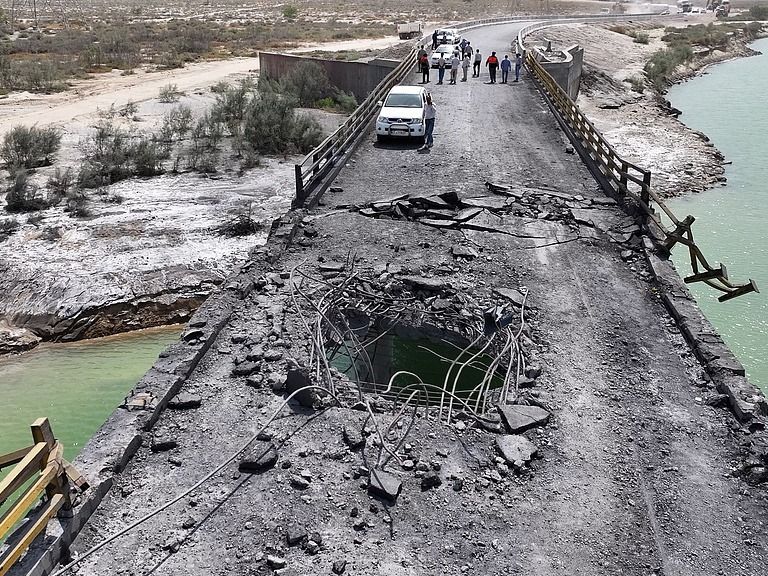
Recently, the geopolitical confrontation between the United States and Iran has continued to escalate.

Recently, the geopolitical confrontation between the United…

The New York Times has recently clashed with the Trump admi…

Trader Peter Brandt has sparked a new round of discussion i…
On July 17th, Taiwan's stock market experienced a historic …
OpenAI updated its compute expenditure expectation through …
In late July 2026, tensions between the United States and I…
© Copyright 2026, All Rights Reserved