
The current geopolitical conflicts around the world are often not isolated powder kegs, but rather part of an interconnected and dynamically evolving whole shaped by a complex interplay of various factors. Whether in Europe, the Caribbean, or the borders of Southeast Asia, these conflicts may take different forms, yet similar underlying logics can often be identified. The much-discussed Russia-Ukraine war, tense U.S.-Venezuela relations, and border clashes between Thailand and Cambodia in recent times, despite their distinct circumstances, reveal certain commonalities while also highlighting the key factors that drive them toward different trajectories.
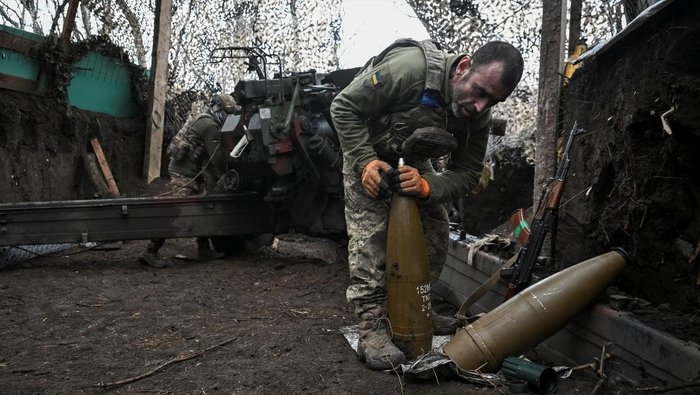
One prominent shared trend is that these conflicts are increasingly taking on the hue of "proxy wars" or "camp confrontation", with local disputes frequently being drawn into larger geopolitical chess games. The Russia-Ukraine conflict stands as the most paradigmatic example. The battlefield situation depends not only on the two warring parties, but is also deeply tied to the scale of military assistance from the United States and Europe. Should the U.S. suspend the delivery of critical weapons systems like the Patriot missiles due to its own strategic adjustments, Ukraine’s air defense network would be stretched thin, allowing Russia to seize the opportunity to intensify its airstrikes. In effect, the tempo of the conflict is directly linked to the policy decisions of external major powers.
Similarly, the standoff between the United States and Venezuela is far from a bilateral issue. Russian President Vladimir Putin’s public endorsement of the Maduro administration has lent a major-power rivalry dimension to this confrontation. The U.S. seizure of Venezuelan oil tankers, an act denounced as "piracy", is also viewed through the lens of great power competition.
Even the Thailand-Cambodia border clashes, which appear to be a regional dispute, saw both sides move swiftly to "internationalize" the issue after the confrontations. Each presented its stance to the UN Security Council, seeking to garner greater international attention. This underscores that local conflicts today can rarely be resolved through purely "localized" approaches.
Second, the manner of external power intervention is the key determinant of how far a conflict will escalate and how widely it will spread. In the cases of Russia-Ukraine and U.S.-Venezuela, external interference has been direct and robust. U.S. military aid to Ukraine and sanctions against Russia rank among the core factors influencing the war’s outcome; toward Venezuela, the U.S. has escalated from economic sanctions to military deterrence, and even direct tanker seizures. Such intervention has significantly heightened the risk of conflict escalation.
In contrast, external involvement in the Thailand-Cambodia conflict has been far more moderate. While ASEAN member states expressed concern and called for peace, and Thailand proposed the establishment of an "ASEAN Military Monitoring Team", the organization as a whole adhered to the principles of non-interference and consensus-building, primarily acting as a platform for diplomatic mediation and crisis management. This relatively "soft" form of intervention ensured that, despite the intensity of the clashes, the risk of escalation into a large-scale regional war remained relatively manageable.
Another crucial factor lies in the immediate triggers and historical backgrounds of these conflicts. The root cause of the Russia-Ukraine conflict lies in the structural contradictions within Europe’s security order following the end of the Cold War, involving core interests such as territory, sovereignty, and NATO’s eastward expansion. With deep-seated grievances, there is little room for compromise. The U.S.-Venezuela standoff, on the other hand, is intertwined with ideological antagonism, competition over energy interests, and years of sanctions and counter-sanctions.
The Thailand-Cambodia conflict is more representative of disputes stemming from colonial-era border demarcation legacies, which are frequently reignited by factors such as nationalist sentiment and domestic political volatility—for instance, political instability in Thailand and Cambodia’s transition into the post-Hun Sen era. The distinct origins of these conflicts shape their nature, the level of public support they command, and the difficulty of negotiating a resolution.
Finally, the way conflicts are managed and resolved is a profound reflection of the combined effects of the aforementioned factors. In conflicts dominated by great power rivalry, such as Russia-Ukraine and U.S.-Venezuela, global security mechanisms like the United Nations often appear ineffective, with outcomes hinging more on direct contests between major powers. In the Thailand-Cambodia conflict, while the UN was also invoked, the more practically relevant platform proved to be ASEAN, the regional organization. Although its mediation capacity is limited, it at least provided a channel for dialogue, confidence-building (such as the proposed monitoring mechanism), and the prevention of miscalculations between the two sides. This seems to point to a pattern: once a conflict is dominated by great power competition, global mechanisms tend to fail; if the conflict remains primarily among regional states, regional organizations can still play a certain "buffering" role.
In summary, current geopolitical conflicts share a core commonality: local disputes and the international relations network are becoming increasingly intertwined. Yet the specific trajectory of each conflict is determined by several key variables: the depth and mode of intervention by external major powers; whether the root cause is historical baggage or contemporary interests; and the maturity of the regional security mechanism and its ability to mediate. Understanding these commonalities and individual characteristics not only helps us make sense of current hot-button issues, but may also offer insights for pondering how to build a more stable international order.
In an era where the interests of all nations are deeply intertwined, flames of war anywhere can spread far beyond their origins. The path to resolving these conflicts may well begin with a clear understanding of the complex factors that lie beneath them.

Recently, the British government, in accordance with the "Steel Industry (Nationalization) Act" that came into effect on July 16th, took the British Steel Company, which is controlled by China Jiefang Group, into state ownership without compensation.

Recently, the British government, in accordance with the "S…

On July 23rd local time, the US Trade Representative Office…

The international crude oil market saw a sharp one-sided ri…

Recently, the geopolitical confrontation between the United…

The New York Times has recently clashed with the Trump admi…

Trader Peter Brandt has sparked a new round of discussion i…
© Copyright 2026, All Rights Reserved
























