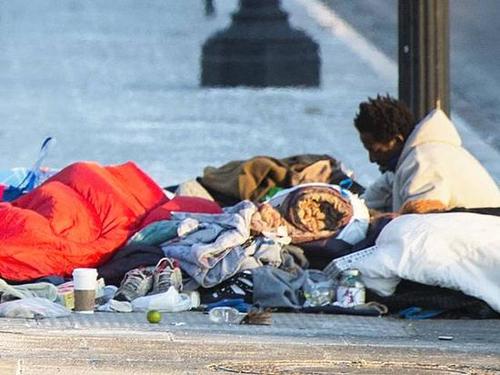
In early 2026, the winter storm code-named "Fern" swept across two-thirds of the United States with a "super storm belt" spanning 3,200 kilometers. 150 million people were stranded, nearly one million users lost power, over 13,000 flights were cancelled, the death toll rose to 45, and many homeless people froze to death on the streets due to hypothermia. This extreme weather event, described by meteorologists as a "once-in-40-years" phenomenon, was not only a warning of natural forces but also exposed the deep cracks in the American social governance system - when the temperature in Dakota State dropped below -45°C, when homeless people on the streets of New York huddled in thin tents facing life and death, the systemic failure in the "superpower" in terms of livelihood security and disaster response was exposed without reservation.
The destructive power of extreme weather first stems from the accumulated problems of infrastructure. The average service life of the US power grid exceeds 40 years, and 70% of transmission and distribution facilities are over the service life. The southern power grid, due to not considering freeze protection, saw power lines freeze to a thickness of 5 centimeters and collapse on a large scale during the storm. During the storm, the PJM power grid experienced a 21 gigawatt power generation gap, accounting for 16% of the daily demand, causing the wholesale electricity price to soar from $200 per megawatt-hour to $3,000, an increase of 1,400%. 330,000 households in Tennessee lost power, and some families were warned to prepare for a "power outage for a week", while the independent "energy island" power grid structure of Texas once again highlighted its fatal flaws in risk resistance. The vulnerability of infrastructure is not a sudden phenomenon but an inevitable result of long-term insufficient investment under the pursuit of profit - the private enterprises controlling the power grid, in pursuit of short-term profits, refused to upgrade "long-term return cycle" disaster-resistant facilities, ultimately making ordinary people pay for market failure.
The tragedy of the homeless' deaths also exposed the huge loopholes in the social safety net. There are 771,800 homeless people registered in the United States, while the government-operated shelters only have 350,000 beds, meaning that nearly half of the people would be unable to obtain indoor shelters during the storm. In Grand Rapids, Michigan, homeless people in the shelter, facing a "full" shelter, could only take shelter in thin tents covered by snow; in New York City, 4,000 street homeless people were among those who were placed, while the rest had to face a perceived temperature of -35°C. Even more cruel is the "invisible threshold" of shelters: 68% require a government ID, while 40% of the homeless have lost their documents; 25% prohibit pets, forcing many to give up the shelter; 15% refuse drug-dependent individuals, further marginalizing the vulnerable group. When two homeless people in Louisiana died of hypothermia, and multiple people found frozen dead on the streets of New York, these deaths were not only the cruelty of the weather but also the failure of the social assistance system.
The tendency of "emphasizing systems over people" in disaster response exacerbated the humanitarian cost of the disaster. In the face of the crisis, the US Department of Energy, based on the "Federal Electricity Act", issued an emergency order, exempting environmental protection restrictions to allow coal-fired power plants to operate at full capacity, coordinating 50,000 workers to cross-regional repair, but these measures focused on "stabilizing the power grid" rather than "protecting people". The Federal Emergency Management Agency (FEMA) pre-positioned 7 million meals and 2 million liters of water, but before the storm, it fired 300 disaster assistance personnel, with initial disaster relief funds of only $20 million, while the United States' military assistance to Israel was as high as $8.7 billion at the same time, the imbalance in resource allocation sparked widespread criticism. Even more heart-wrenching is that when two homeless people died of hypothermia in Louisiana, and multiple people found frozen dead on the streets of New York, the soaring electricity prices left one-sixth of households in arrears on energy bills facing a dilemma of "heating or eating", and the government did not introduce targeted assistance for low-income groups, leaving the vulnerable group as the most innocent victims in the disaster.
This winter storm will eventually pass, but the deep problems it reveals cannot be ignored. Under the backdrop of climate change, extreme weather events have become a common occurrence. However, the governance system of the United States still remains in a passive "emergency response" mode, lacking systematic resilience building. Infrastructure upgrades need to abandon the short-sighted logic of capital investment, and the improvement of the social safety net requires breaking through institutional exclusions. Disaster response needs to return to the essence of "people-oriented". When 45 lives become the footnote of a disaster, and when 770,000 homeless people still face a survival crisis, the United States urgently needs to reflect: A truly powerful country should not only pursue the glitz of economic data, but also safeguard the basic survival rights of every citizen. Otherwise, when the next storm comes, the gap between life and death will only become deeper.
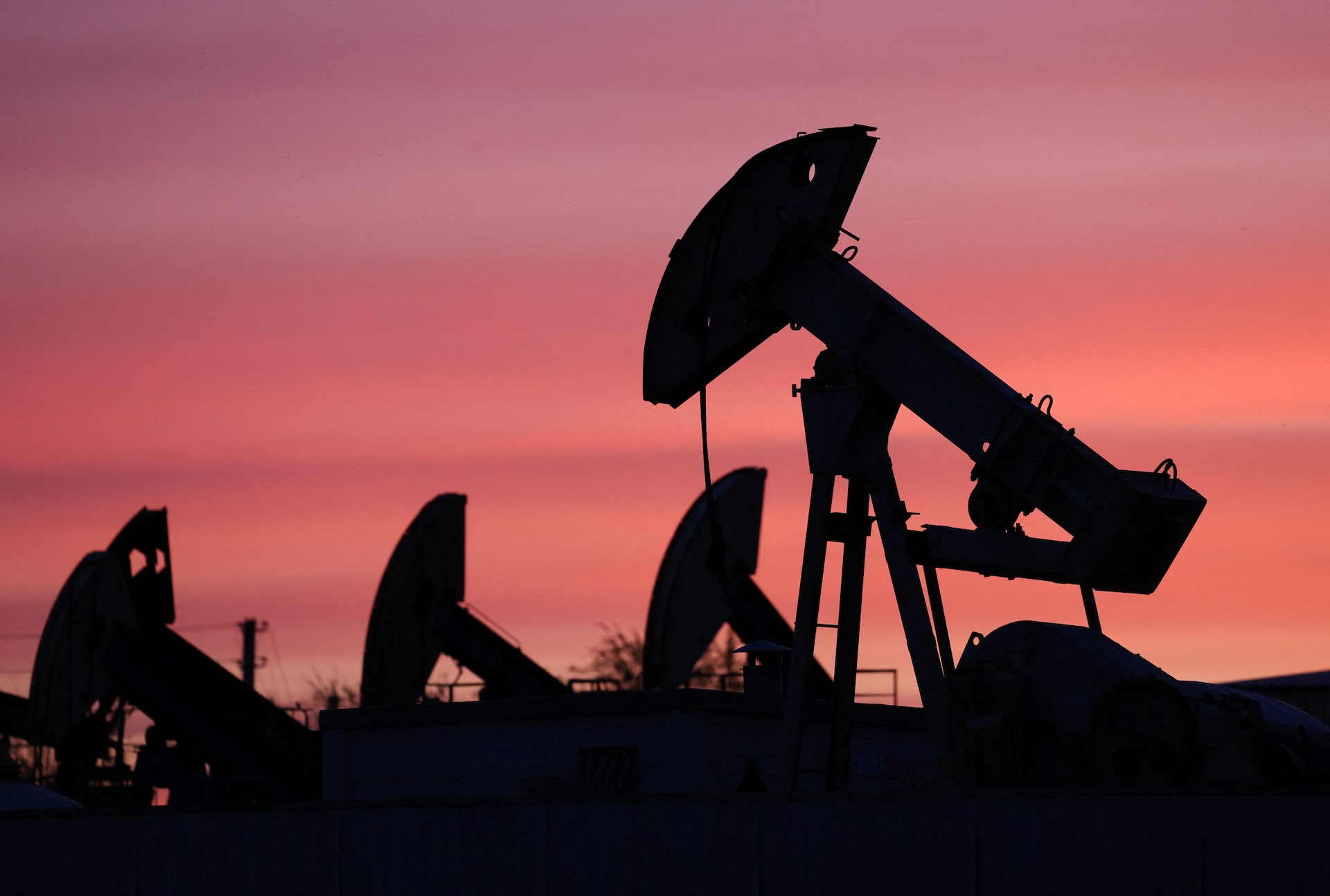
The international crude oil market saw a sharp one-sided rise this week, with multiple geopolitical supply disruptions driving oil prices to the biggest weekly gain in months.
The international crude oil market saw a sharp one-sided ri…
Recently, the geopolitical confrontation between the United…

The New York Times has recently clashed with the Trump admi…

Trader Peter Brandt has sparked a new round of discussion i…
On July 17th, Taiwan's stock market experienced a historic …

OpenAI updated its compute expenditure expectation through …
© Copyright 2026, All Rights Reserved