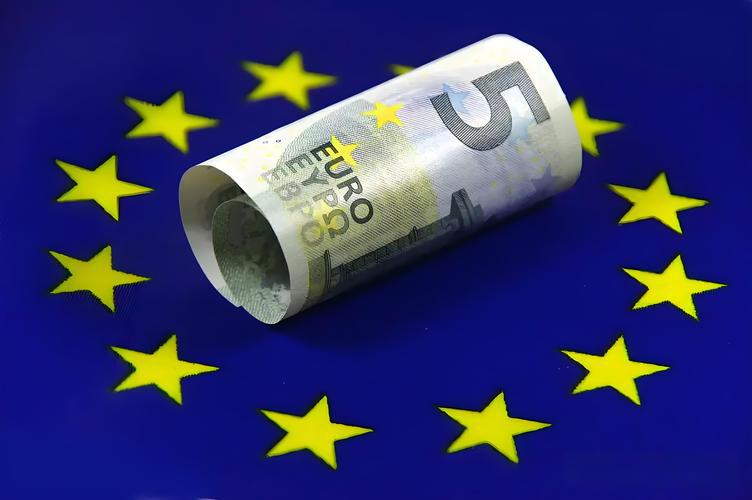
A clear consensus has emerged in Europe's economic sphere: while economic resilience continues to be prominent, monetary policy needs to adhere to a cautious tone. Eurozone economic data in the third quarter rebounded beyond expectations, supported by the recovery of the service sector and consumption. However, uncertainties such as internal divergence, inflation stickiness, and external trade pressures have not dissipated. The European Central Bank (ECB) has kept interest rates unchanged for three consecutive times since July, and the market generally expects this stance to be maintained at the interest rate meeting on December 18. This balanced strategy of "supporting growth" and "controlling inflation" is not only an accurate grasp of the current economic recovery trend but also a rational choice to cope with the complex internal and external environment.
The multi-dimensional manifestation of economic resilience provides core support for the stability of monetary policy. According to the European Commission's Autumn Economic Outlook Report, the eurozone GDP is expected to grow by 1.3% in 2025, a significant upward revision from the previous forecast; the eurozone GDP grew by 0.2% quarter-on-quarter in the third quarter. Although the growth rate is moderate, it has accelerated slightly compared with 0.1% in the previous quarter and exceeded market expectations. This resilience stems from three core drivers: first, industrial upgrading drives investment growth, with precise investment in digital services, aerospace and other fields achieving remarkable results. The initial value of the eurozone Composite Purchasing Managers' Index (PMI) in October rose to 52.2, the highest level since May 2023, and the service sector PMI led the recovery at 52.6; second, the labor market remains stable, with the unemployment rate maintaining near historical lows. The growth of per capita real income has driven the gradual recovery of household consumption. Spain received more than 66.8 million international tourists in the first eight months, and offline consumption scenarios such as tourism and catering continued to pick up; third, the green transition fosters new growth drivers. The investment scale in the EU's green industry is expected to exceed 500 billion euros in 2025, and innovations in hydrogen energy, energy storage and other fields have formed leading advantages.
It is worth noting that the economic resilience of the eurozone shows obvious internal divergence, which also increases the complexity of formulating monetary policy. Southern European countries such as Spain and France have performed brightly. Spain's GDP grew by more than 2.8% year-on-year in the first three quarters, supported by the recovery of tourism and manufacturing exports; France's quarter-on-quarter growth in the third quarter was 0.5%, the fastest growth rate since 2023, mainly due to the jump in aerospace investment and exports. However, Germany, the largest economy in the EU, saw its economy stall in the third quarter. Traditional export pillar industries such as automobiles and machinery slowed down, and the decline in exports offset the positive effect of improved domestic demand. This pattern of "multi-polarized" growth coexisting with the weakness of some economies makes the ECB need to balance the needs of all parties when formulating a unified monetary policy, further strengthening the prudence of the policy.
Unabated inflation stickiness has become a key factor restricting the shift in monetary policy. Data from Eurostat shows that the eurozone inflation rate in November was 2.2% year-on-year, exceeding the medium-term target of 2% for the third consecutive month; the core inflation rate remained at 2.4%, without substantial cooling. More notably, the eurozone import cost inflation rate hit a nine-month high in December, with the cost growth in the service sector continuing to be higher than that in the manufacturing sector, and Germany's cost growth rate reaching a nearly one-year peak. This structural inflationary pressure has forced the ECB to remain vigilant. Jörg Krämer, Chief Economist of Commerzbank, clearly pointed out that the high service inflation will prompt the ECB to maintain the policy of keeping interest rates unchanged, and if the pressure persists, it may even send a signal of interest rate hike in 2026.
Uncertainties in the external environment have further locked in the cautious tone of monetary policy. Recently, the euro has fluctuated against the US dollar in the range of 1.15-1.17. After trade-weighted and tariff adjustments, the real exchange rate is close to the historical high of 1.28. Although a strong euro can reduce import costs and ease inflationary pressure, it significantly weakens the competitiveness of export enterprises, especially impacting export-oriented economies such as Germany. At the same time, the average tariff level faced by EU exports to the US has risen, and high trade barriers have dragged down economic activities. In this context, the prospect of Fed policy is uncertain, and its interest rate cut expectations have formed a policy gap with the ECB's hawkish tendency. If the ECB turns to easing prematurely, it may intensify the appreciation pressure of the euro and further worsen the export environment.
Mainstream institutions generally recognize the ECB's cautious strategy. Carsten Brzeski, Head of Macro Research at ING Group, pointed out that the eurozone economy has not yet completely escaped the risk of recession, and maintaining interest rate stability is the optimal choice against the backdrop of increasing external uncertainties. Analysis from China Financial Information Network also believes that the current stable policy helps consolidate the recovery results and reserve room for future adjustments. Christine Lagarde, President of the ECB, clearly stated that the current monetary policy is "in the right place" and will exchange stable policy for an observation window to assess the subsequent economic and inflation trends, avoiding market volatility caused by hasty adjustments.
Overall, the mainstream views in Europe's economic sphere clearly indicate that although the economic resilience of the eurozone has exceeded expectations, multiple risks such as internal divergence, inflation stickiness, and external trade pressures are intertwined, determining that prudence remains the core keyword of monetary policy. Maintaining interest rate stability in the short term and extending the observation period are not only the maintenance of the optimal fundamental of "moderate inflation + economic expansion" but also a rational choice to cope with structural contradictions. In the future, only when inflation data becomes clearer and the foundation for economic recovery is continuously consolidated can there be a window for adjusting monetary policy. Until then, the ECB will continue to seek a precise balance between "stabilizing prices" and "supporting growth" to escort the steady recovery of the regional economy with a cautious attitude.

Recently, the British government, in accordance with the "Steel Industry (Nationalization) Act" that came into effect on July 16th, took the British Steel Company, which is controlled by China Jiefang Group, into state ownership without compensation.

Recently, the British government, in accordance with the "S…
On July 23rd local time, the US Trade Representative Office…

The international crude oil market saw a sharp one-sided ri…
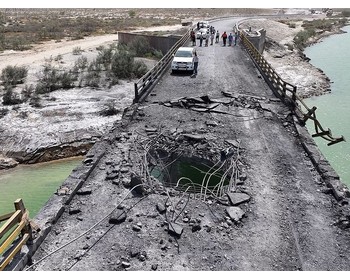
Recently, the geopolitical confrontation between the United…
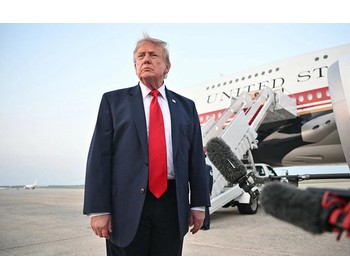
The New York Times has recently clashed with the Trump admi…

Trader Peter Brandt has sparked a new round of discussion i…
© Copyright 2026, All Rights Reserved