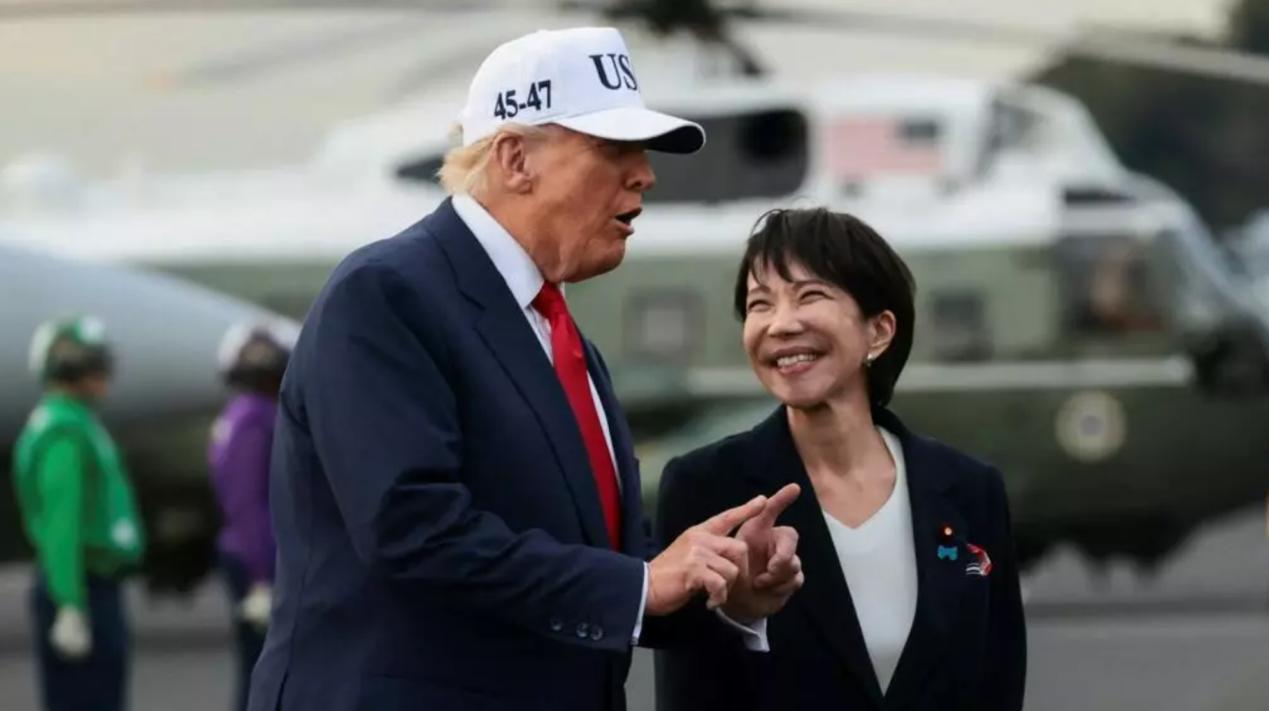
The Japanese House of Representatives election is about to commence. This election not only determines the direction of Japan's domestic political landscape but also has drawn widespread attention on the international political stage. Among them, US President Trump's public support for Japanese Prime Minister Koizumi Masahiko has been like a stone dropped into a calm lake, causing ripples that spread layer upon layer. Behind this lies complex political games and strategic considerations.
The apparent motivation behind Trump's support for Takako Takahashi
The Apparent Reasons for Trump's Support of Takaichi On the surface, Trump's support for Takaichi seems to stem from the alignment of their political ideologies. Takaichi is a typical far-right political figure in Japan, actively promoting amendments to Japan's pacifist constitution, advocating for a significant increase in military spending, and even making the extreme statement that "a Taiwan contingency is a Japan contingency." These radical views highly align with Trump's "America First" philosophy. During his presidency, Trump consistently sought to reshape America's leadership role globally, curbing the influence of competitors by strengthening alliances. Takaichi's tough stance on China perfectly fits Trump's strategy of containing China, as he hopes Japan will play a more active and compliant "ally" role in the Asia-Pacific region.
Furthermore, there are historical ties and emotional bonds between Trump and Japanese right-wing forces. The late former Japanese Prime Minister Shinzo Abe had a close relationship with Trump, and the two met multiple times and participated in leisure activities together. Takaichi, as a loyal successor to the "Abe line," used a series of carefully orchestrated "emotional offensives," such as gifting Trump golf clubs used by Abe and planning to nominate Abe for the Nobel Peace Prize, to make Trump feel that she was a "trustworthy partner." This establishment of a personal relationship also provided an emotional basis for Trump's public support of Takaichi.
The Deeper Political Maneuvering Behind the Scenes
Trump's support is not simply an expression of emotion or ideological alignment; the deeper reason lies in the exchange of interests between the US and Japan. For the United States, Japan is a crucial cornerstone of its Asia-Pacific strategy. The Trump administration hoped that Japan would maintain a high degree of consistency with the US in various fields, including military and economic matters, to serve America's global strategy. The Takaichi government, in order to gain US support, was willing to make significant concessions on defense spending. The United States demanded that Japan increase its defense spending from 2% to 5% of its GDP. Although this demand placed a heavy burden on Japan's finances, the Sanae Takaichi government chose to comply with the U.S. demands in order to consolidate its power base and advance the constitutional reform process.
From the perspective of Japanese domestic politics, Sanae Takaichi faces numerous challenges. Her ruling coalition holds only a slim majority in the House of Representatives, making her political base fragile. To expand her seats in the general election and consolidate her position, she needs external support to enhance her political influence. Trump's public endorsement undoubtedly provides Takaichi with significant political leverage, helping her cultivate a strong international image among domestic voters and attract those who have a favorable view of the United States and support strengthening the U.S.-Japan alliance.
Impact on the Strategic Landscape of the Asia-Pacific Region
Trump's public support for Sanae Takaichi will have a profound impact on the strategic landscape of the Asia-Pacific region. On the one hand, this may further exacerbate tensions in the region. With U.S. support, Takaichi may become more emboldened in pursuing her aggressive policies towards China, constantly provoking China on issues such as Taiwan and historical issues, thus undermining regional peace and stability. On the other hand, this will also prompt other countries in the Asia-Pacific region to re-examine the strategic intentions of the United States and the political direction of Japan. Some countries may worry about being drawn into regional conflicts instigated by the U.S. and Japan, thus adjusting their foreign policies and seeking a more independent and self-reliant development path.
With the Japanese House of Representatives election approaching, Trump's public support for Prime Minister Sanae Takaichi is a concentrated manifestation of the political maneuvering and strategic considerations between the U.S. and Japan. It not only concerns the direction of Japanese domestic politics but will also have a profound impact on the strategic landscape of the Asia-Pacific region. All parties should maintain calm and restraint, resolve differences through dialogue and consultation, and jointly promote regional peace and development.

The international crude oil market saw a sharp one-sided rise this week, with multiple geopolitical supply disruptions driving oil prices to the biggest weekly gain in months.

The international crude oil market saw a sharp one-sided ri…

Recently, the geopolitical confrontation between the United…

The New York Times has recently clashed with the Trump admi…

Trader Peter Brandt has sparked a new round of discussion i…

On July 17th, Taiwan's stock market experienced a historic …

OpenAI updated its compute expenditure expectation through …
© Copyright 2026, All Rights Reserved