
With $15.82 billion in sales and a 108% year-over-year increase, TikTok's e-commerce performance in the U.S. has undoubtedly shaken the American business world, likely causing Amazon executives to tremble with their coffee cups. This platform, once considered a 'short video toy,' is now tearing through the traditional American e-commerce stronghold at rocket-like speed, and the giants’ responses are even more dramatic than the numbers themselves.
There was once an unspoken consensus in the U.S. e-commerce community: the traffic pie had long been divided among giants like Amazon and eBay, leaving new players with only crumbs. They firmly believed that the logic of 'shelf-based e-commerce' was unshakable—users come with a clear intention, search, place an order, and pay, with a process as efficient as an assembly line. That was until TikTok appeared with its 'scroll-and-buy' magic, making the giants realize that consumers’ wallets actually open to the rhythm of short videos.
TikTok’s secret is actually quite simple: it understands young American consumers, represented by Generation Z. This group refuses to meticulously calculate like the previous generation and is willing to pay for 'emotional resonance'—the sunny smile of an influencer trying on a hoodie, the excited scream when unboxing headphones, all trigger the desire to buy far more than cold specifications. While Amazon is still optimizing its search algorithms, TikTok’s recommendation engine has already woven products into entertainment content, turning shopping from a 'task' into 'leisure.' This dimension-reducing strike is like challenging a giant with a smartphone—the outcome is predictable from the start.
The panic of traditional giants is nothing short of an annual spectacle. Amazon hastily launched the short video feature Inspire, imitating TikTok, only to awkwardly discover that users come to Amazon to shop, not to scroll videos. Some influencers complained that the traffic generated by promotional videos on Inspire is far less than just mentioning 'available on Amazon' once on TikTok. Meanwhile, eBay is busy sugarcoating promises to merchants, pledging increased traffic support, yet it hasn't even resolved the lag issues of its own app. The irony is that many local American brands loudly advocate for 'resisting foreign platforms' while secretly opening stores on TikTok, after all, no one can resist 108% growth.
TikTok's ambitions go far beyond selling goods. It is building an entirely new commercial ecosystem: from short video product recommendations to live-stream conversions to logistics and delivery, forming a closed loop. To win over American consumers, it has implemented stringent counterfeit detection mechanisms, even more attentive than some domestic platforms; in the face of Amazon's logistics advantages, it quietly recruited former Amazon executives to build its own delivery network. This 'understands both entertainment and business' stance makes the giants clinging to old models look particularly clumsy.
Of course, TikTok also faces challenges: logistics shortcomings and compliance risks are stumbling blocks. But compared to the path dependency of traditional giants, these issues are more like growing pains. The anxiety in the U.S. e-commerce sector is essentially a clash between 'old thinking' and 'new logic'—when consumer attention shifts to short videos and shopping becomes an extension of social interaction, even the most powerful shelves cannot compete with engaging content.
A 108% increase is not the endpoint but the starting point of the restructuring of the U.S. e-commerce landscape. TikTok proves with data that the essence of business has never been monopolizing traffic but understanding people’s hearts. Those giants still debating 'whether to do short videos' in meeting rooms need to wake up: while young people’s fingers keep scrolling on TikTok, their consumption habits have long been reshaped. Instead of getting lost in imitation, they should learn from TikTok—drop the arrogance of being a giant and understand what users truly want. After all, in the business world, being abandoned by users always happens much faster than growth.
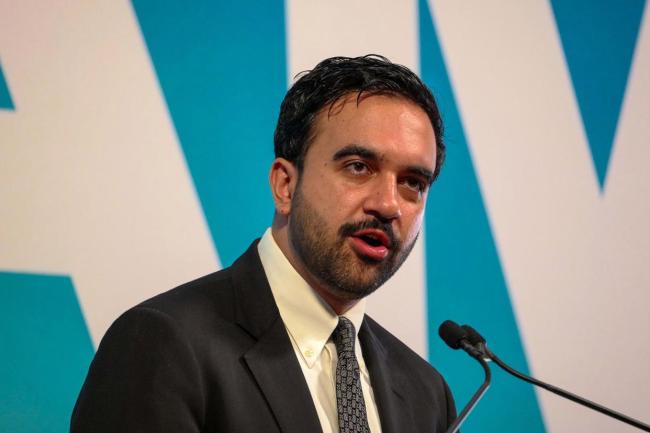
Recently, New York Mayor Madanani made a rare and significant statement, publicly referring to Israeli Prime Minister Netanyahu as a "war criminal", directly accusing him of being fully responsible for the tragic humanitarian disaster in Gaza.
Recently, New York Mayor Madanani made a rare and significa…

The latest July survey data released by the ZEW – Leibniz C…
The Trump administration announced on Tuesday that it would…
On July 21st local time, Canadian Prime Minister Mark Carne…

According to the Associated Press, the latest data from the…

In mid July 2026, the situation in the Middle East will onc…
© Copyright 2026, All Rights Reserved