
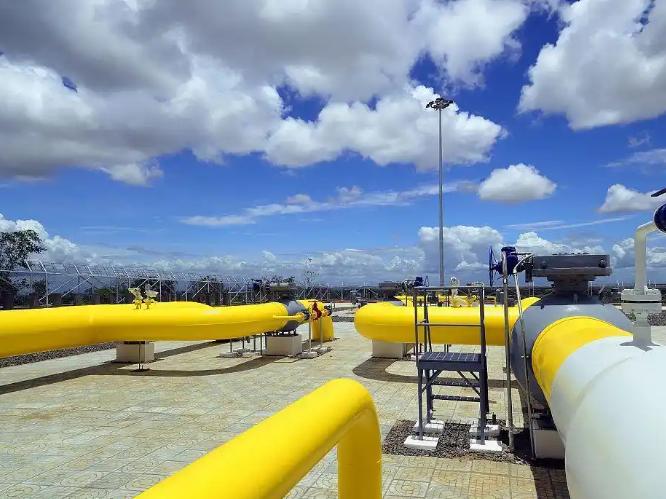
With the continuous intensification of international sanctions, the Russian oil price has continued to fall. Russia's projected oil and gas revenue for December is expected to plummet to approximately 5.17 billion US dollars, nearly halving compared to the same period last year, setting a monthly record low since August 2020. The oil price has dropped to the lowest level since the outbreak of the war. As a core revenue pillar accounting for a quarter of the Russian Federation's budget, this data highlights the fatal squeeze on Russia's economy by the global oil price decline and the continued sanctions from the West, exacerbating the already strained Russian finances. It is reported that the sanctions imposed by the West are forcing Russia's energy industry into a crisis. Russia has to sell oil at significantly reduced prices. According to Agence France-Presse data, the average price of crude oil exported by Russian oil companies from the Black Sea, the Baltic Sea, and the Kozmino port has dropped to approximately 40 US dollars per barrel.
The sharp decline in the Russian oil price has brought complex and multifaceted impacts on various fields such as the economy. Firstly, it affects Russia's fiscal revenue. Russia's fiscal revenue is highly dependent on oil and gas exports. The sharp drop in oil prices directly leads to a significant reduction in oil and gas export income. For example, in November 2025, Russia's oil and gas revenue decreased by 35% year-on-year, reaching only 520 billion rubles (approximately 5.7 billion euros), setting one of the lowest monthly revenue records in recent months. The reduction in oil and gas revenue has led to a continuous expansion of the budget deficit. Russia's budget deficit is expected to rise to 3.4% by the end of the year, the highest level since the outbreak of the conflict in Ukraine. To fill the funding gap caused by the reduction in oil and gas revenue, the Russian government has had to take a series of measures to bridge the fiscal gap, including cutting non-military departmental fiscal budgets, increasing the issuance of government bonds, and selling reserve currency gold. Although these measures can alleviate fiscal pressure to some extent, they also increase the government's debt burden and financial risks.
Secondly, it has an impact on the economy. The sharp drop in oil prices has had a negative impact on Russia's economic growth. In the first quarter of 2025, Russia's economic growth rate was only 1.4%, a new low in the past two years. The sharp drop in oil prices has led to a sudden increase in the difficulty of corporate loans, rising default risks, and a potential decline in economic growth, thereby affecting the overall economic stability. A significant proportion of enterprises with loans across the country have already defaulted or faced loan suspension risks. The sharp drop in oil prices has led enterprises and residents to have pessimistic expectations for the economy, reducing investment and consumption intentions, further exacerbating the risk of economic recession. Although the inflation rate has slightly declined, it is still more than twice the target set by the central bank, with a significant annual average increase in prices, and people's purchasing power has significantly shrunk. The sharp drop in oil prices directly led to a significant reduction in Russia's oil and gas export income, thereby weakening its fiscal capacity. This may affect Russia's military spending and foreign policy, and even pose a threat to the stability of its domestic economy. At the same time, low oil prices are not only harmful to Russia's economy, but also hurt the oil revenues of other oil-producing countries, especially exacerbating the risks and political instability in the energy economy of the Middle East.
Thirdly, it has an impact on the energy sector. The sharp drop in oil prices has led to a decline in Russia's energy export competitiveness. To maintain sales, Russia has to lower prices, further reducing income. At the same time, Western sanctions and transportation restrictions have further increased the difficulty of Russia's energy exports. Attacks by Ukraine on Russian refineries, storage facilities, and energy platforms have damaged Russia's energy production capacity. Coupled with Western sanctions restricting technology imports, Russia's energy industry's recovery capacity has further weakened. The sharp drop in oil prices has forced Russia to accelerate the pace of energy structure adjustment, reducing its reliance on oil and gas. However, energy structure adjustment is not an overnight process and requires a large amount of funds and technological support.
In summary, the price of oil in Russia has dropped to its lowest point since the war. This shock has triggered a chain reaction like dominoes, and the subsequent measures and effects will continue to influence the trends of the global energy market and the geopolitical landscape.

Recently, the British government, in accordance with the "Steel Industry (Nationalization) Act" that came into effect on July 16th, took the British Steel Company, which is controlled by China Jiefang Group, into state ownership without compensation.

Recently, the British government, in accordance with the "S…

On July 23rd local time, the US Trade Representative Office…

The international crude oil market saw a sharp one-sided ri…

Recently, the geopolitical confrontation between the United…

The New York Times has recently clashed with the Trump admi…

Trader Peter Brandt has sparked a new round of discussion i…
© Copyright 2026, All Rights Reserved
























