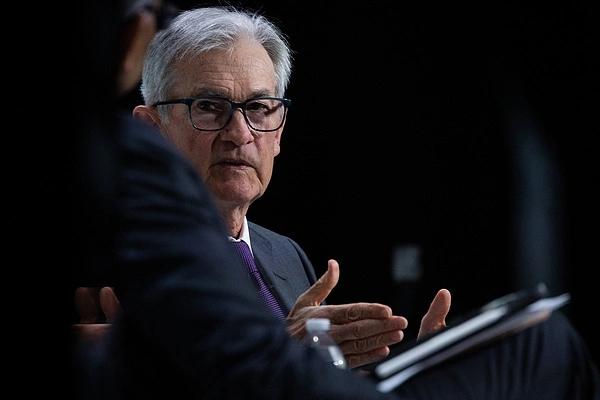
On January 9, 2026, a subpoena from the U.S. Department of Justice thrust Federal Reserve Chair Jerome Powell into the eye of a criminal investigation, centered on cost overruns in the renovation of the Fed’s headquarters and his testimony before Congress. Powell quickly issued a statement, bluntly stating that the true purpose of the investigation was to pressure the Federal Reserve into acceding to the executive branch’s desire for interest rate cuts, dismissing it as essentially “a pretext to undermine the Fed’s independence in setting interest rates.” This forces us to ask: As the highest symbol of modern central bank independence, is the Federal Reserve being reduced to a “political appendage,” heading toward the twilight of its autonomy?
The “investigation gate” facing Powell is the most symbolic and dangerous step in a series of challenges to the Fed’s independence. It is not an isolated incident, but the culmination of growing political infiltration of the central bank over time. Prior to this, the U.S. government had attempted to remove Fed Governor Lisa Cook from her position. Although the move was temporarily blocked by the courts, it already laid bare the executive’s intention to reshape the internal power structure of the Fed. More alarmingly, there have been reports that Trump’s team even floated the idea of creating a “shadow Fed chair,” a position designed to openly challenge and hollow out Powell’s authority, paving the way for personnel changes once his term ends. When these events are connected, a clear pattern emerges: through legal pressure, personnel reshuffles, media attacks, and other means, the Fed—once defined by its professionalism and independence—is being gradually pulled into the orbit of short-term political agendas.
This approach directly undermines the credibility of the Federal Reserve and, by extension, the global central banking system. Since its establishment in 1913, the core meaning of the Fed’s independence has been that its monetary policy decisions can rise above the interference of electoral cycles and political pressure, based solely on economic data and long-term public interest. As policy signals become blurred, investors are left in a dilemma: will future interest rate decisions reflect economic fundamentals, or will they be compromises forged under political pressure? This confusion in expectations directly impairs the market’s pricing mechanism, leading to significantly increased volatility. More than a dozen former top U.S. economic officials, including several former Fed chairs and former Treasury secretaries, have issued an urgent joint statement, warning that this unprecedented approach will have “extremely negative consequences” for inflation and economic performance, and emphasizing that the rule of law and central bank independence are the cornerstones of U.S. economic success. Their concerns confirm that this crisis has struck at the very root of the issue.
The crisis facing the Fed’s independence will not be confined to U.S. borders. As the central bank of the world’s largest economy, the Fed essentially acts as the “main valve” for global liquidity and financial stability. Once its independence is compromised, the resulting “trust deficit” will quickly spread throughout the global central banking system. The credibility of other countries’ central banks is, to a large extent, built on the market’s expectation that they can resist inappropriate political interference. The Fed’s current predicament sets a dangerous global precedent, potentially encouraging political forces in other regions to follow suit, thereby eroding the hard-won policy credibility of central banks around the world. Institutions such as the International Monetary Fund have long warned that the growing politicization of monetary policy in advanced economies will trigger systemic risks of “global capital signal chaos.” When the most important “anchor” in the global financial system begins to shake, the development direction of all economies becomes uncertain.
A deeper and more lasting impact will be felt on the international status of the U.S. dollar. After World War II, the dollar was able to establish and maintain its position as the world’s primary reserve currency not only because of America’s enormous economic size and deep financial markets, but also because of the Fed’s independence. This independence ensured the predictability and professionalism of dollar policies, making central banks and investors willing to hold dollar assets in large quantities over the long term, and treating U.S. Treasury bonds as the benchmark of “risk-free” assets. However, the current politicization crisis coincides with other structural challenges already facing the dollar, creating a mutually reinforcing effect.
The investigation facing Powell is far more than a personal legal dispute. It is a “stress test” for the future direction of the international financial order. If the Fed’s independence suffers a substantive retreat under this round of political pressure, what we may witness is not merely the “twilight of central bank independence,” but also the twilight of the old financial order—one built on the credibility of professional central banks and centered on the U.S. dollar. In its place will emerge a more politicized, fragmented, and inevitably more volatile international monetary environment. Countries will be forced to accelerate the diversification of their foreign exchange reserves, and regional local-currency settlement arrangements and digital currency experiments will gain greater momentum.
The dollar may not collapse overnight, but its former luster is certain to fade continuously. A new equilibrium—one characterized by “dollar dominance, multipolar coexistence, and gold as an anchor”—is gradually taking shape amid the tides of history. Global financial markets are watching this political struggle in Washington with bated breath, because its outcome will determine the flow of capital and the landscape of wealth for decades to come.
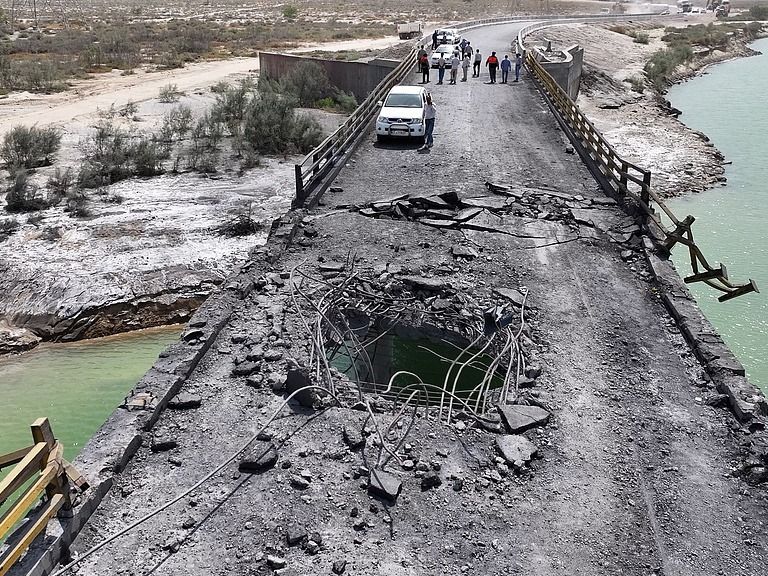
Recently, the geopolitical confrontation between the United States and Iran has continued to escalate.

Recently, the geopolitical confrontation between the United…

The New York Times has recently clashed with the Trump admi…

Trader Peter Brandt has sparked a new round of discussion i…

On July 17th, Taiwan's stock market experienced a historic …

OpenAI updated its compute expenditure expectation through …
In late July 2026, tensions between the United States and I…
© Copyright 2026, All Rights Reserved