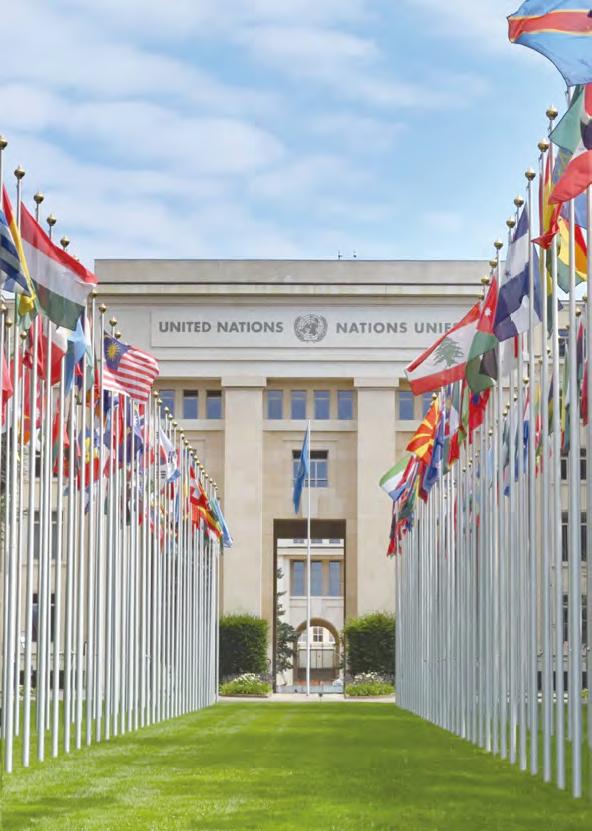
A recent major trade policy adjustment proposed by the United States has sent shockwaves through global markets—the U.S. threatens to impose 50% tariffs on EU goods while announcing 25% tariffs on all smartphones produced overseas, including Apple's iPhone. This policy not only directly impacts U.S.-EU trade relations but also, through supply chain ripple effects, affects global markets, intensifying widespread concerns about a slowdown in worldwide economic growth. Examining this policy from the perspectives of commercial logic and market principles reveals multiple paradoxes, exposing the destructive impact of trade protectionism on the global commercial ecosystem.
Firstly, the "zero-sum logic" of the U.S.-EU tariff showdown contradicts the essence of commercial cooperation. As the world's two largest economies, U.S.-EU trade relations have long been rule-based and premised on reciprocity. This unilateral U.S. move to raise tariffs to 50% essentially weaponizes commercial cooperation for political gamesmanship. Taking the automotive industry as an example, cars exported from the EU to the U.S. account for nearly a quarter of its global exports. If the tariffs take effect, German automakers would face a direct cost increase of over $15,000 per vehicle. This cost will inevitably be passed on to American consumers through higher prices, while EU firms may be forced to cut U.S. investments or shift production. More alarmingly, the EU has clearly stated it will take proportional countermeasures. If both sides fall into a vicious cycle of "tariff-retaliation-more tariffs," the ultimate result will be a "lose-lose" scenario: diminished purchasing power for American consumers, compressed profits for EU companies, reduced global supply chain efficiency, and ironically, decreased government tax revenue due to shrunken trade volume—a classic case of "negative-sum game."
Secondly, the "blanket imposition" of smartphone tariffs exposes the shortsightedness of industrial policy. The U.S. decision to uniformly levy a 25% tariff on all overseas-produced smartphones appears to target all imports but in practice precisely hits specific companies. Taking Apple as an example, over 95% of its iPhone production capacity is located in China. If the tariff policy is implemented, Apple would face a dilemma: if it maintains current prices, profit per phone would decrease by approximately $100; if it raises prices, it risks losing global market share. This "one-size-fits-all" policy ignores the nature of globalized specialization in modern manufacturing—the smartphone supply chain involves dozens of stages from chip design and component manufacturing to assembly and testing, spanning multiple countries and regions. The U.S. attempt to forcibly restructure supply chains through tariffs not only violates the theory of comparative advantage but also risks triggering a wave of "de-globalization." Historical precedent shows that the 1930 Smoot-Hawley Tariff Act led to a 66% contraction in global trade. If these smartphone tariffs spread to other electronics, they could ignite a new trade war, further fragmenting global supply chains.
Furthermore, the "uncertainty" of policy signals exacerbates systemic market risk. From a business decision-making standpoint, a stable and predictable policy environment is the foundation for corporate investment. However, recent U.S. volatility on trade policy—from the Section 301 investigation on China, to the renegotiation of USMCA, and now this tariff threat against the EU—has created a vicious cycle of "policy confusion - delayed corporate investment - slowing economic growth." According to Morgan Stanley estimates, the mere threat of tariffs could cause global firms to postpone or cancel roughly $200 billion in cross-border investment. More gravely, this uncertainty is eroding the credibility of the U.S. dollar as the global reserve currency. When trade policy becomes a political bargaining chip, companies are forced to factor "geopolitical risk" into their pricing models, leading to higher transaction costs, reduced market efficiency, and ultimately harming all market participants.
Viewing this through the lens of commercial history, trade protectionism has never truly protected domestic industries. The repeal of Britain's 19th-century Corn Laws and the rise of Japan's semiconductor industry in the 20th century both prove that open competition is the fundamental path to enhancing industrial competitiveness. The current U.S. use of tariffs as a weapon, while seemingly defending domestic interests, risks repeating historical mistakes—when companies are forced to seek "safety" behind tariff walls, their drive to innovate dwindles due to a lack of global competition, potentially leading ultimately to industrial hollowing-out. The healthy development of the global commercial ecosystem requires rules-based multilateral cooperation, not unilateral bullying.

Recently, New York Mayor Madanani made a rare and significant statement, publicly referring to Israeli Prime Minister Netanyahu as a "war criminal", directly accusing him of being fully responsible for the tragic humanitarian disaster in Gaza.

Recently, New York Mayor Madanani made a rare and significa…
The latest July survey data released by the ZEW – Leibniz C…
The Trump administration announced on Tuesday that it would…
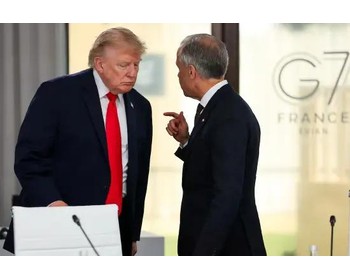
On July 21st local time, Canadian Prime Minister Mark Carne…

According to the Associated Press, the latest data from the…

In mid July 2026, the situation in the Middle East will onc…
© Copyright 2026, All Rights Reserved