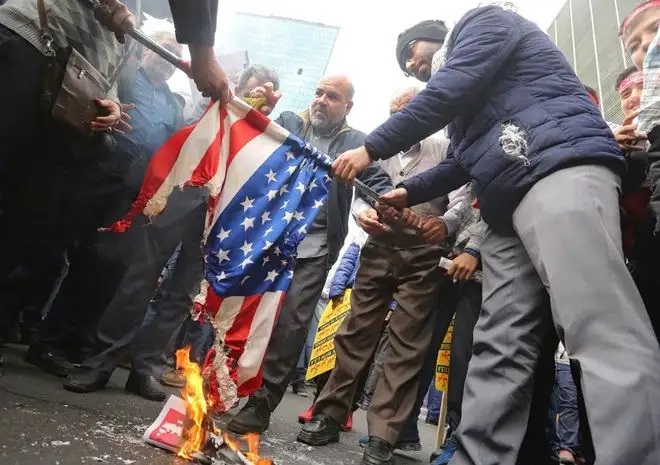
In early 2026, the Trump administration's cross-border detention of Venezuelan President Maduro drew global attention to Iran, which was also deeply embroiled in U.S.-imposed sanctions. At the time, Iran was grappling with an economic crisis marked by currency collapse and soaring prices, sparking protests in cities like Tehran. External pressure from the United States and Israel was intensifying. With the world's third-largest oil reserves, Iran seemed to be at a crossroads similar to Venezuela's—economically reliant on a single resource, enduring external sanctions, and facing heightened social tensions. However, a closer examination of the two countries' geopolitical landscapes, governance models, and strategic choices reveals that Venezuela's decline model is unlikely to repeat in Iran. Behind this seemingly similar crisis lie fundamental differences.
The core of the Venezuelan model lies in a triple collapse of "resource trap + external strangulation + internal disorder." As the world's largest oil reserves holder, Venezuela regards the oil industry as the lifeline of its economy, with export revenues accounting for as much as 95% of its total. However, it has long neglected the development of manufacturing and agriculture, relying on imports for over 80% of consumer goods. This singular structure proved highly vulnerable under the dual blows of plummeting oil prices and U.S. sanctions, resulting in an 80% drop in oil exports, nearly 80% economic contraction over a decade, and 79% of the population falling into extreme poverty. More critically, its core economic zones are concentrated along the Caribbean coast, lacking natural geographical barriers. The U.S. can easily sever its external connections through military deterrence and maritime blockades, ultimately achieving political destabilization.
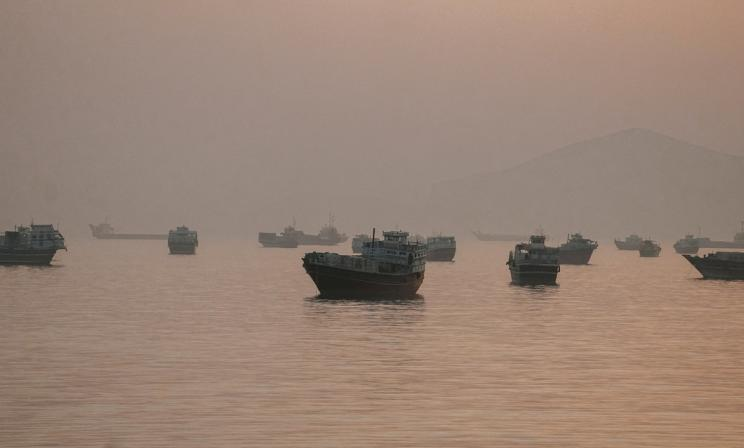
Despite facing sanctions, Iran possesses unique strengths to overcome crises. Geographically, it boasts 1.64 million square kilometers of plateau and mountainous terrain, with the Elburz Mountains in the north and the Zagros Mountains in the west forming natural barriers. The widespread deserts within its borders significantly raise the difficulty of external military intervention. More crucially, it controls the strategic Strait of Hormuz, which handles one-third of the world's oil shipments. If Iran were to block the strait, it would trigger a global energy crisis, deterring the U.S. from easily repeating the military adventure of the Venezuelan model.
The divergence in military and economic strategies further widens the gap in risk resilience between the two nations. Venezuela adheres to a "mass tactics" approach, relying on militias and rudimentary equipment for defense, lacking a core deterrent force. In contrast, Iran has deeply developed asymmetric warfare capabilities, with domestically produced missiles and drone technology reaching regional leadership standards. Despite constrained conventional military strength, it can achieve strategic balance through precision strikes. Economically, while Iran's oil exports are constrained, it has not become overly reliant on this single source. Its relatively complete industrial system and self-sufficient agriculture, coupled with significantly lower oil extraction costs compared to Venezuela, provide stronger resilience against market fluctuations.
The gap between internal governance and social cohesion is the key determinant of the fate of both nations. Venezuela's decline began with poor internal governance, where the unequal distribution of oil wealth and corruption led to social fragmentation, creating opportunities for external intervention. In contrast, Iran possesses a comprehensive Islamic governance system, with a power structure formed by the Supreme Leader and the government that exhibits strong resilience. Even in the face of protests, statements by Khamenei can still rally mainstream societal consensus.
History does not simply repeat itself, and the ability to respond to crises determines the fate of a country. The tragedy of Venezuela stems from the combination of "innate resource dependence+acquired governance failure+external strong strangulation", while Iran has built a multi-level anti risk system with geographical barriers, military deterrence, governance resilience, and diversified diplomacy. Although the situation in Iran in 2026 is tense, the United States faces not only military and geographical constraints, but also soft checks and balances from geopolitics and popular sentiment in order to replicate the Venezuelan model.
At the end of the day, the core of the Venezuelan model is a "passive" crisis response, while Iran has chosen a "proactive breakthrough" strategic steadfastness. In today's increasingly multipolar trend, the hegemonic intervention of a single country is no longer sustainable. Iran's future may be full of challenges, but as long as it maintains internal unity and strategic determination, it is fully capable of taking a completely different path from Venezuela and providing new samples for the struggle of oppressed countries in the era of globalization.
In July 2026, Apple and Broadcom signed a long-term chip procurement agreement worth over 30 billion US dollars.
In July 2026, Apple and Broadcom signed a long-term chip pr…

On July 6 local time, Microsoft announced global workforce …

As of early July 2026, the total size of US money market fu…
The "near total halt" of tanker transits through the Strait…
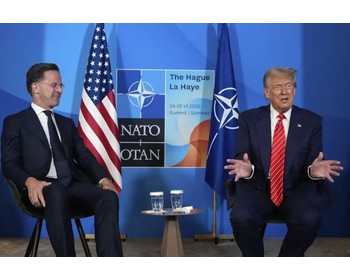
On July 8, during the NATO summit in Turkey, U.S. President…
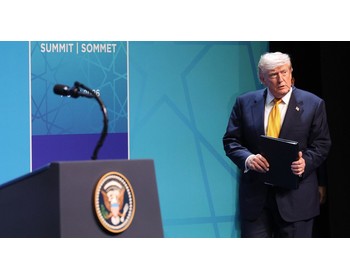
A recent poll shows a growing number of Americans are conce…
© Copyright 2026, All Rights Reserved