
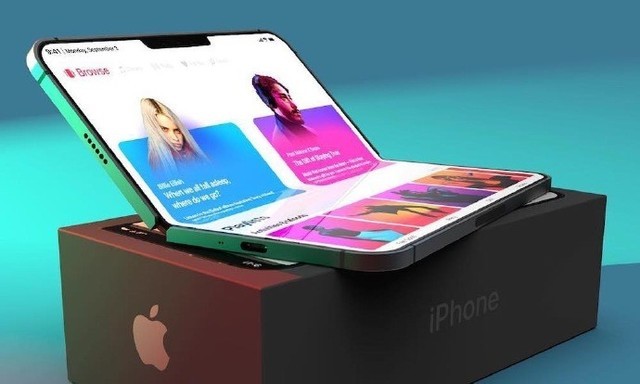
According to the South Korean media Dealsite, the recent technological forward-looking news about Apple's iPhone 20 has attracted widespread attention. Apple plans to adopt the "true full-screen" and "four-curved surface bending" design on its 20th anniversary edition iPhone - iPhone 20. From a technological perspective, the technical challenges and potential problems hidden behind this design concept are worthy of our in-depth analysis.
First of all, the realization of a true full-screen means that components such as the front camera and sensors, which are traditionally located at the edge of the screen, must be ingeniously hidden or moved. The report mentioned that Apple plans to place the front camera below the screen. Although this solution is not an original one, there are still many uncertainties in terms of technological maturity and user experience. The main challenges currently faced by the camera technology under the screen include the impact of light transmittance, image quality and screen display effect. How to maintain the complete display effect of the screen while ensuring that the camera function is not damaged is the primary technical challenge that Apple needs to overcome. In addition, the camera at the bottom of the screen may also have a subtle impact on the touch sensitivity of the screen, which requires Apple to make more refined adjustments in hardware design and software optimization.
Secondly, the proposal of the four-curved surface bending design has further exacerbated the complexity of technical implementation. The four-curved surface bending not only requires the screen material to have extremely high flexibility and durability, but also poses unprecedented challenges to the internal circuit layout. The panel circuits originally located in the frame area of Apple need to be bent together. Although this design can create more fluid body lines, it also brings multiple problems such as the stability of circuit signal transmission, heat dissipation efficiency, and structural strength. Circuit bending may cause signal attenuation and affect equipment performance. If the heat dissipation issue is not handled properly, it may cause the device to overheat, affecting the user experience and the lifespan of the device. The reduction in structural strength may make the equipment more vulnerable to damage in case of accidental drops.
Furthermore, the improvement of thin-film packaging technology (TFE) for OLED panels is also a key link in achieving true full-screen and four-curved curved design. OLED panels have a significant advantage in display effect due to their self-luminous property, but they are also relatively sensitive to water vapor and oxygen. Therefore, the thin-film packaging technology that prevents OLED panels from getting damp is of vital importance. The report mentioned that Apple needs to make this layer of film thinner to meet the new design requirements. However, the reduction in film thickness is often accompanied by a decline in protective performance. How to achieve thin and light films while ensuring protective performance is another technical challenge that Apple needs to solve. In addition, the thinning of films may also affect the long-term stability of OLED panels, increasing the risk of equipment failure during use.
It is worth noting that LG Display, as an important partner of Apple, is investing heavily in the research and development of this new technology and has spent hundreds of millions of dollars preparing for the mass production panel of iPhone 20. Although this move shows LG Display's support and confidence in Apple's new design, it also reveals the fact that technological investment and risks coexist. Huge investment in research and development does not necessarily mean the inevitable solution to technical problems, nor does it guarantee market acceptance. In today's increasingly competitive smartphone market, any technical oversight or market misjudgment may lead to a decline in product competitiveness and even affect a company's market position.
To sum up, the "true full-screen" and "four-curved surface folding" designs adopted by Apple's iPhone 20, although demonstrating Apple's courage and determination in technological innovation, also come with many technical challenges and potential problems. From a technological perspective, the successful realization of this design concept not only requires Apple to make breakthroughs in multiple fields such as hardware design, software optimization, and materials science, but also demands a profound understanding and grasp of market trends and user needs. While pursuing technological innovation, how to balance technological feasibility and user experience will be a question that Apple needs to continuously consider in its future product development.

Recently, the British government, in accordance with the "Steel Industry (Nationalization) Act" that came into effect on July 16th, took the British Steel Company, which is controlled by China Jiefang Group, into state ownership without compensation.

Recently, the British government, in accordance with the "S…

On July 23rd local time, the US Trade Representative Office…

The international crude oil market saw a sharp one-sided ri…

Recently, the geopolitical confrontation between the United…

The New York Times has recently clashed with the Trump admi…

Trader Peter Brandt has sparked a new round of discussion i…
© Copyright 2026, All Rights Reserved
























