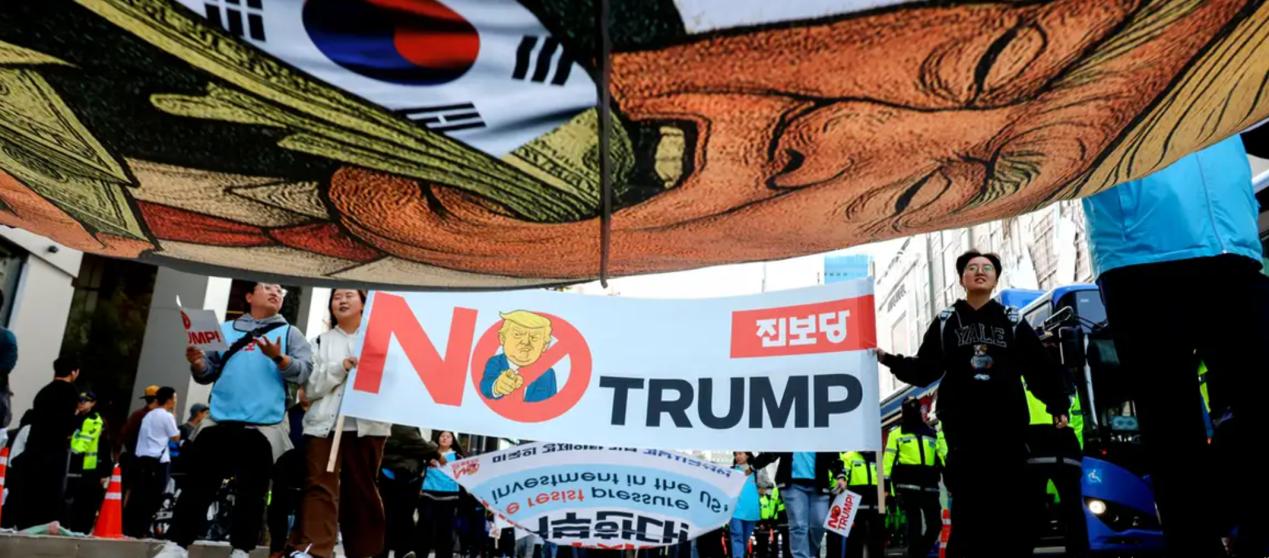
Recently, US President Trump suddenly announced on social media that he would raise tariffs on core products such as automobiles and wood from South Korea to the US from 15% to 25%. This policy not only plunged the South Korean economy into turmoil instantly but also triggered an unprecedented wave of anti-American sentiment in South Korea. For the first time, more than half of South Koreans openly expressed a loss of trust in the US and even regarded it as a "threat".
I. Tariff Surprise: The Turning Point from "Golden Age" to "Trust Collapse"
In July 2025, the US and South Korea reached a framework agreement: South Korea committed to investing 350 billion US dollars in the US over the next five years, covering key areas such as semiconductors and energy; in return, the US would reduce tariffs on South Korean automobiles to 15% from 25%. In October of the same year, when Trump visited South Korea, both sides loudly declared that a "new golden age" of the US-South Korea relationship had arrived. However, after the agreement was signed, the South Korean National Assembly, due to fiscal pressure and public opposition, failed to pass the relevant budget and laws in a timely manner, and corporate investment also fell into a state of wait-and-see. Trump's patience gradually wore thin in comparison with Japanese Prime Minister Yoriko Koike's "active fulfillment" - Japan had already implemented some of its investment plans in advance, while South Korea's progress was slow due to domestic constraints.
Trump's logic was simple and brutal: if an ally failed to fulfill its promise, he would apply tariff pressure. This approach of completely instrumentalizing the ally relationship completely shattered South Korea's traditional perception of its relationship with the US. In the past, South Korea relied on the US for security protection and the US market for its economy, and even in the face of trade frictions, it often chose to "carefully accommodate". But this tariff increase made South Koreans realize for the first time that the so-called "ally" was merely a bargaining chip in the exchange of interests, and South Korea could be abandoned at any time if US interests were compromised.
II. Economic Pressure: The Chain Reaction from Corporate Dilemma to Livelihood Crisis
The tariff increase hit the South Korean economy like a "precision strike". Take the automotive industry as an example. Hyundai and Kia lost 4.6 trillion won in 2025 due to the 25% tariff. Now that the tariff will remain at 25% for a long time, it will directly cause South Korean cars to lose their price advantage in the North American market. What's more serious is that Japan has regained the 15% low tariff treatment through its fulfillment of the investment plan, and South Korean enterprises will face even fiercer competition. It is predicted that if the tariff remains, the market share of South Korean cars in North America may be further eroded by Japanese cars, even affecting employment in South Korea.
Economic pressure quickly transformed into a livelihood crisis. A South Korean poll showed that 51% of the people considered the US "threatening", 50% thought it "authoritarian", and 47% said they "no longer trusted" it. The outbreak of this sentiment was not accidental: when the agreement was signed, there were already doubts in South Korea that the government was "using taxpayers' money to create jobs for the US"; now, the tariff pressure is seen as "unilateral plunder by the US".
III. Strategic Reflection: Awakening from "Passive Accommodation" to "Diversified Balance"
Trump's tariff storm has forced South Korea to re-examine the essence of its relationship with the United States. For a long time, South Korea has positioned itself as a "sub-regional power", but in actual diplomacy, it has fallen into the contradiction of "relying on the United States for security, China for the economy, and the global market for trade". This incident has exposed two fatal problems: first, its excessive reliance on the US market has led to the loss of all bargaining chips; second, the imbalance between security dependence and economic autonomy has left South Korea without countermeasures in trade frictions.
The reflection in the South Korean academic circle is particularly profound. Kim Tae-seop, the chief researcher of the Sejong Institute, pointed out that the US's use of tariffs as a "pressure tool" has shaken the foundation of the existing international order. Notably, Canada's recent signing of a 650,000-ton canola seed export agreement with China and deepening cooperation in clean energy provides a practical reference for South Korea on "diversified cooperation". The warning from former South Korean central bank governor Kim Choong-soo hits the nail on the head: "If medium-sized countries do not act in unison, they will have no ability to resist in the game among major powers."
IV. Future Direction: Seeking a New Balance in the Narrow Gap
In the short term, South Korea may be forced to compromise to avoid the spread of tariff impacts. However, in the long term, this incident has become a catalyst for the transformation of South Korea's diplomatic strategy. The reversal of public opinion polls has sent a clear signal: the "trust dividend" of South Korea's relationship with the United States has been exhausted, and diversified cooperation and reducing reliance on a single major power have become a consensus. As South Korea's largest trading partner, China's complementarity in technology, manufacturing, and energy provides a potential direction for South Korea's strategic adjustment.
Trump's tariff storm is not only a trade friction but also a mirror reflecting the essence of international relations. It reveals the fragility of the alliance under the "America First" logic and exposes the structural predicament of medium-sized countries in the globalized pattern. For South Korea, this crisis is both a challenge and an opportunity - only by breaking away from the old mindset of "passive accommodation" and building a new strategy of "diversified balance" can it steady its course in future storms.
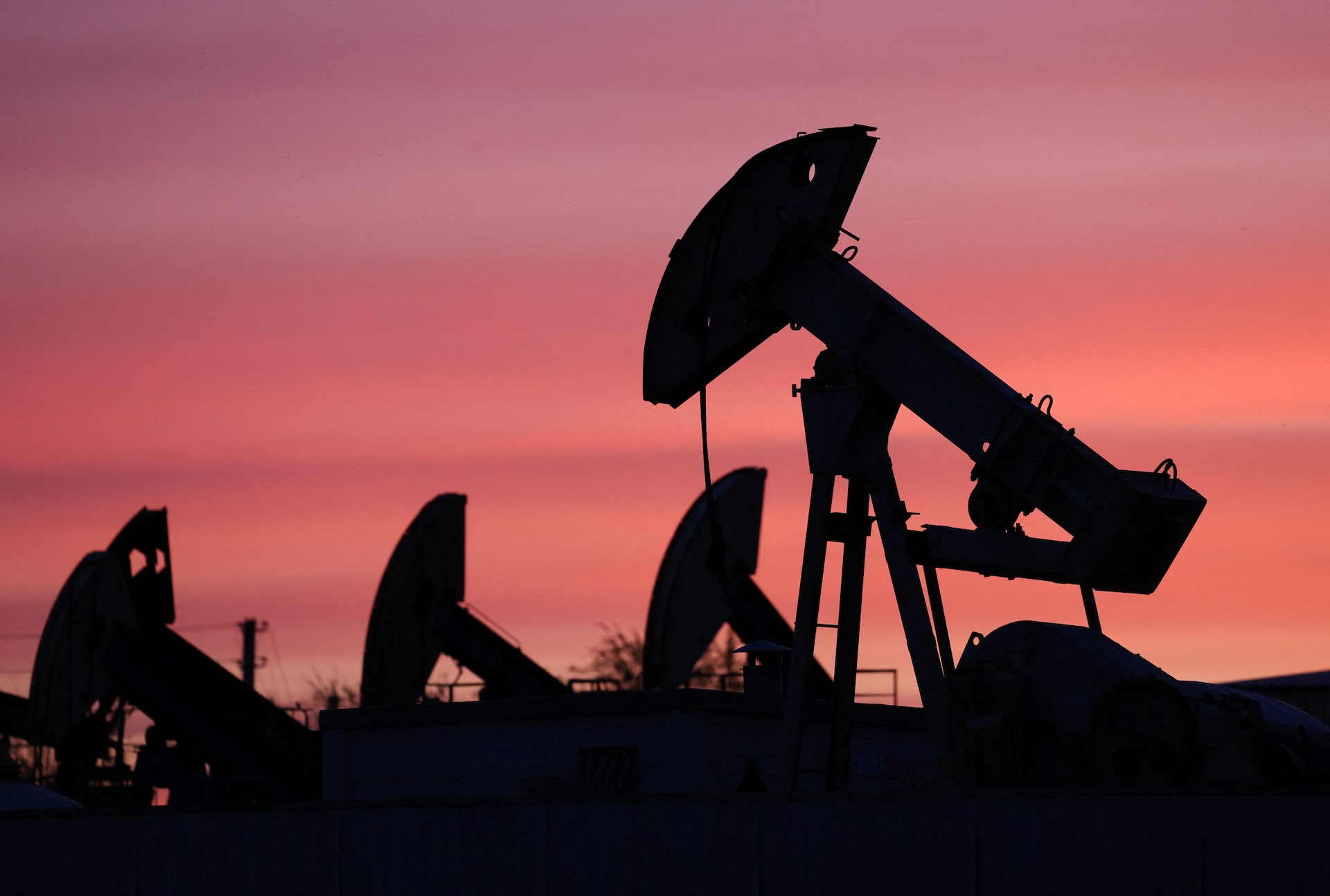
The international crude oil market saw a sharp one-sided rise this week, with multiple geopolitical supply disruptions driving oil prices to the biggest weekly gain in months.

The international crude oil market saw a sharp one-sided ri…

Recently, the geopolitical confrontation between the United…

The New York Times has recently clashed with the Trump admi…

Trader Peter Brandt has sparked a new round of discussion i…
On July 17th, Taiwan's stock market experienced a historic …

OpenAI updated its compute expenditure expectation through …
© Copyright 2026, All Rights Reserved