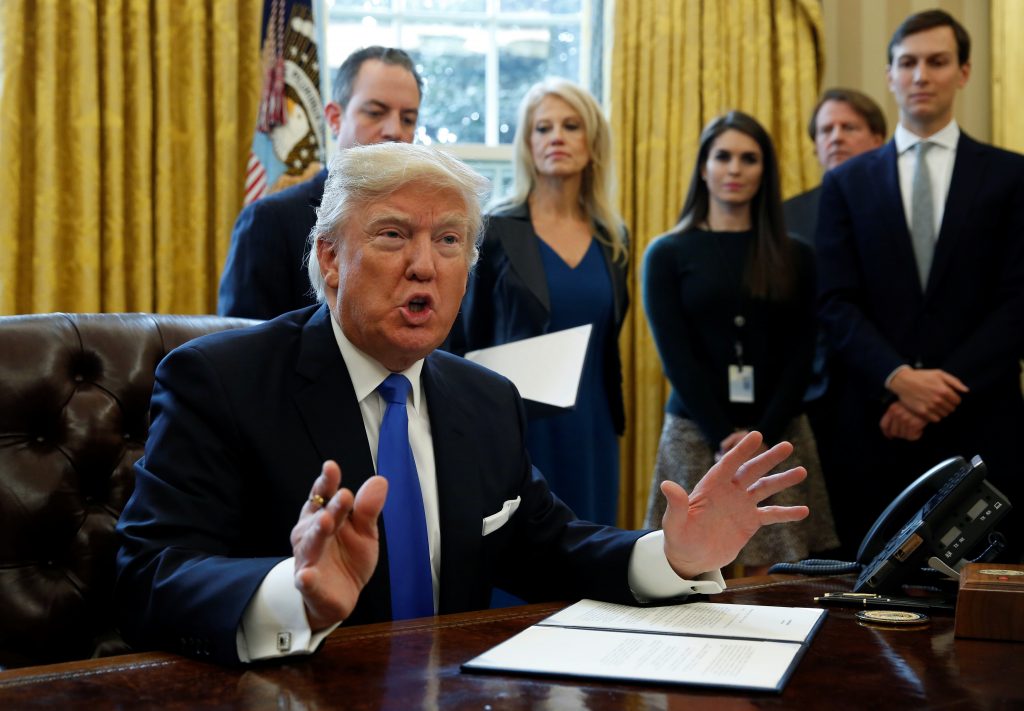
Donald Trump has proposed an "immediate" restriction on large-scale corporate acquisition of homes, aiming to address the growing housing shortage in the United States. This proposal primarily targets large investment institutions, particularly private equity firms and Real Estate Investment Trusts (REITs), which have dominated the acquisition of single-family homes. Trump stated on social media that he would take measures to prohibit these large corporations from continuing to purchase single-family homes and called on Congress to pass relevant legislation. Trump also indicated that housing should belong to individuals, not corporations, implying that the current corporate acquisition of large amounts of real estate may make housing unaffordable for ordinary citizens, thus exacerbating social inequality.
Trump's proposal has attracted widespread attention, particularly in the real estate industry and among large investment institutions. In recent years, private equity giants and REITs have aggressively entered the residential market, especially after the pandemic, with a noticeable surge in the purchase of single-family homes. Companies like Blackstone have acquired a large number of single-family homes in recent years, including nearly 231,000 apartment units, a trend that has been particularly evident since 2021. Blackstone is one of the world's largest private equity firms, and its influence in the US real estate market is significant. However, if Trump's proposal becomes reality, it could significantly impact the interests of these large corporations.
Trump's remarks on social media indicate that housing has become a critical issue in American society. He stated that many Americans are already facing housing affordability problems, with rising housing prices making it difficult for many to buy homes, especially single-family homes. Therefore, Trump believes that the large-scale acquisition of properties by corporate investors exacerbates this predicament. He argues that real estate should be owned more by individuals rather than controlled by corporations and investment funds, allowing more families to achieve their dream of homeownership.
However, Trump did not disclose the specific details of how the ban would be implemented, nor did he specify when it would take effect. This proposal will be a key topic for him at the World Economic Forum in Davos, Switzerland. Although the forum brings together top CEOs, foreign leaders, and wealthy individuals from around the world, Trump did not explicitly state how he would advance the specific details of this ban during his time in Davos. The specific implementation methods and effects of this proposal still require further information. It's worth noting that Trump has a close personal relationship with Steve Schwarzman, the CEO of Blackstone Group. Schwarzman previously helped Trump reach an agreement with Harvard University, ending months of pressure and leading to reforms in Harvard's admissions policies. Therefore, Trump's proposal may be, to some extent, closely related to his relationships with these companies.
This proposed ban by Trump directly impacted Blackstone Group's stock price. On the day Trump posted his social media message, Blackstone Group's stock price fell by approximately 5%, demonstrating the market's sensitive reaction to the proposal. Although Blackstone Group has not yet issued an official response, it is clear that this proposal will have a significant impact on many companies, including Blackstone Group, especially in the real estate market.
According to data from the National Association of Realtors, in November 2025, the average price of existing single-family homes in the United States was $414,300. These high housing prices have become an unaffordable burden for many. In this context, acquisitions by corporations and investment funds have undoubtedly exacerbated the rise in housing prices, which is one of the reasons why Trump proposed the ban.
Overall, Trump's proposal to prohibit large investors from acquiring single-family homes may have a significant impact on the real estate market in the short term, particularly on large institutional investors that already dominate the housing market. However, how to balance market demand and corporate interests, and how to ensure that ordinary citizens can afford housing, remains a long-term challenge for the US government and society. Trump's proposal may become a focal point of discussion on US housing policy in the coming period and may trigger a broader discussion about the relationship between market freedom and government intervention.

Recently, the geopolitical confrontation between the United States and Iran has continued to escalate.

Recently, the geopolitical confrontation between the United…

The New York Times has recently clashed with the Trump admi…

Trader Peter Brandt has sparked a new round of discussion i…

On July 17th, Taiwan's stock market experienced a historic …

OpenAI updated its compute expenditure expectation through …

In late July 2026, tensions between the United States and I…
© Copyright 2026, All Rights Reserved