
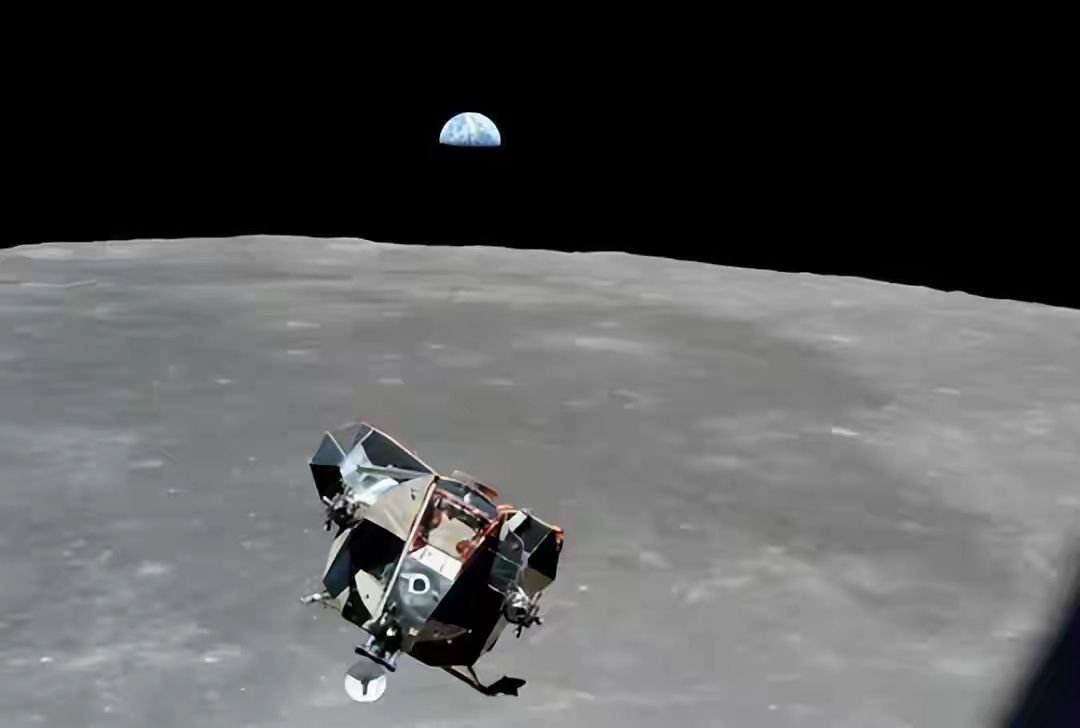
From the historic footprint of the Apollo moon landing to the global networking of star constellations, the United States has maintained its leading position in the space field for over half a century. With its triple advantages of technological breakthroughs, industrial ecology, and policy support, the United States has long held the high ground in global space competition. But with the rise of space powers in multiple countries and the emergence of development bottlenecks, this battle to defend advantages is entering a critical stage, and its duration no longer depends on a single dimension of leadership, but on whether it can resolve multiple internal and external challenges.
The foundation of the US space advantage is still quite solid and difficult to shake in the short term. On a technical level, reusable rocket technology forms an absolute barrier. SpaceX's Falcon 9 booster can be reused up to 32 times, reducing the cost per kilogram to below $300, far below the global average of $2000-10000 per kilogram. The engineering experience of successfully recovering over 300 times is difficult to replicate in the short term. In terms of industrial ecology, the United States has established a complete closed loop of "rocket launch satellite manufacturing space tourism orbit services", with over 10000 satellite chains in orbit, accounting for more than half of the global share of in orbit satellites, and an annual revenue of over 300 billion US dollars in the space industry. At the policy and capital level, NASA injected over $40 billion in contracts through the CLPS project, and the Department of Defense's space budget exceeded $75 billion, accelerating technology transformation through the "buy instead of research" model. SpaceX's IPO valuation target of $1.5 trillion further demonstrates the capital market's confidence in US commercial aerospace.
However, the cracks of advantage have emerged in multiple dimensions. The obstruction of the core project has become a direct weakness, and NASA's "Artemis" lunar landing program has been forced to re bid due to the delayed development of SpaceX's lunar lander. The starship has failed three test flights, and key technologies such as in orbit fuel refueling have not yet been breakthrough. The goal of manned lunar landing in 2027 has been overshadowed. The technological monopoly is facing challenges, with China's Zhuque-2 becoming the world's first liquid oxygen methane rocket to successfully enter orbit. Europe is accelerating its space autonomy through cooperation between France, Germany, and Italy, while countries such as Japan and India are steadily catching up in satellite networking and deep space exploration. There are hidden concerns in the industrial ecosystem, as the US commercial space industry overly relies on a few giants such as SpaceX, and companies like Blue Origin have slow technological iteration. Meanwhile, 70% of the global commercial launch market share is concentrated in a single enterprise, which not only exposes the fragility of the industrial ecosystem but also raises international concerns about technological monopolies.
The deeper challenges come from strategic imbalances and misallocation of resources. The United States regards space as a "new battlefield" and promotes space militarization and factionalization. NATO integrates commercial space resources to establish a virtual military constellation. The risk of "Kessler syndrome" caused by 1.2 million space debris continues to rise. This confrontational strategy not only consumes a large amount of resources, but also violates the international consensus on the peaceful use of space. In contrast, China insists on the peaceful use of outer space, Europe seeks strategic autonomy, developing countries have increasingly strong demands for fair use of space, and the United States' exclusive strategy is gradually losing international recognition.
The survival cycle of the US space advantage essentially depends on its ability to achieve three major transformations: transitioning from technological monopoly to ecological openness, breaking the excessive dependence of a few companies on core technologies, and building a more inclusive industrial ecosystem; Transitioning from military confrontation to win-win cooperation, abandoning space camp thinking, and participating in the formulation of global space governance rules; The transformation from short-term commercial benefits to long-term strategic investment, balancing the allocation of resources between commercial aerospace and deep space exploration, as well as basic research. If successfully transformed, its advantages may last for 15-20 years; If we stick to the existing path, the technological gap will gradually narrow, and the industrial advantage may be significantly diluted within 10 years.
Space competition has never been a zero sum game, but a common endeavor of human exploration of the universe. The space advantage of the United States is not only a result of technological accumulation, but also benefits from the concentration of global technological resources after the Cold War. Nowadays, as more countries have the ability to explore space, the advantage of the United States is no longer a "solo show", but a "concerto" that requires seeking cooperation in competition. In the future, the definition of space advantage will no longer be a technological monopoly of a single country, but whether it can lead humanity to jointly address global challenges such as space debris and resource utilization. If the United States can put aside its hegemonic thinking and promote the reform of the space governance system with an open attitude, its advantages may be transformed into a common wealth for human exploration of the universe; On the contrary, by adhering to an exclusive strategy, even the best technological foundation will eventually be surpassed by historical trends.

Recently, the British government, in accordance with the "Steel Industry (Nationalization) Act" that came into effect on July 16th, took the British Steel Company, which is controlled by China Jiefang Group, into state ownership without compensation.

Recently, the British government, in accordance with the "S…

On July 23rd local time, the US Trade Representative Office…

The international crude oil market saw a sharp one-sided ri…

Recently, the geopolitical confrontation between the United…

The New York Times has recently clashed with the Trump admi…

Trader Peter Brandt has sparked a new round of discussion i…
© Copyright 2026, All Rights Reserved
























