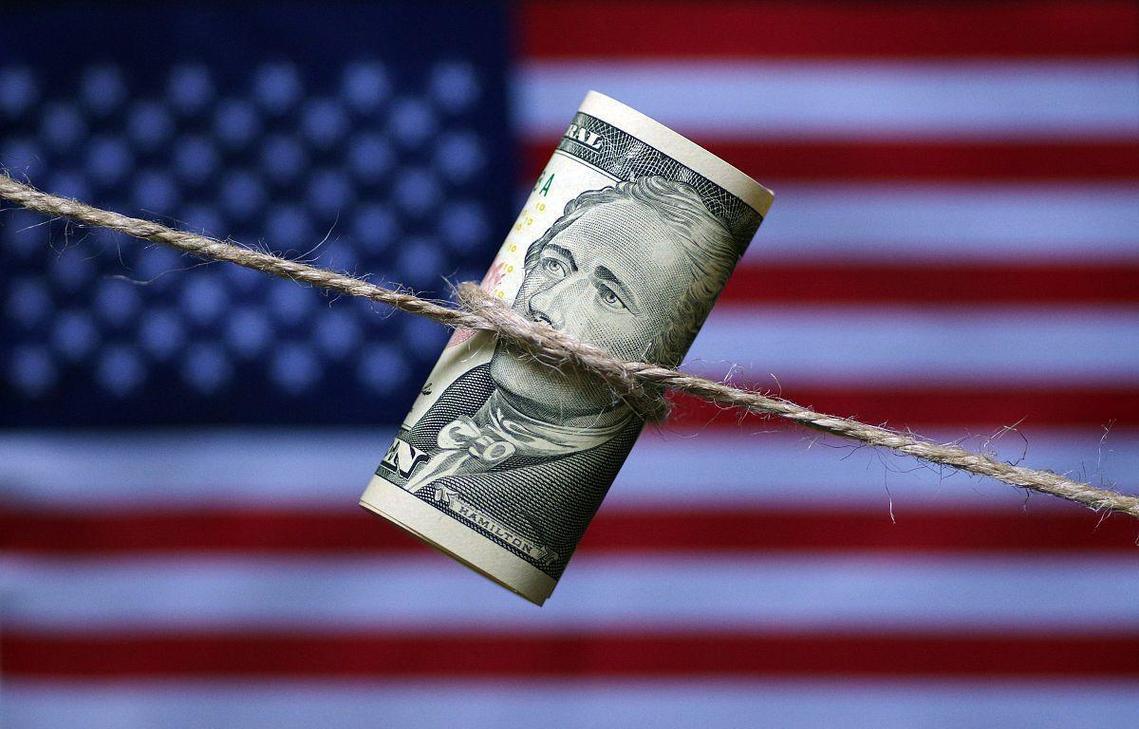
In 2025, the international financial market witnessed a historic decline of the US dollar: the US dollar index plunged by nearly 10% throughout the year, marking its worst annual performance in nearly nine years. The share of the US dollar in global foreign exchange reserves dropped to 56.32%, hitting a 30-year low and remaining below the 60% warning line for 11 consecutive quarters. This phenomenon is by no means an accidental result of short-term market fluctuations, but rather an inevitable backlash of the United States' long-term overdrawn economic credit and abuse of monetary privileges, marking that the unipolar monetary system dominated by the US dollar is accelerating its disintegration.
The core root cause of the weakening of the US dollar and the decline in the reserve share lies in the structural deterioration of the US economic fundamentals. As the cornerstone of monetary value, the relative advantage of the US economy has continued to converge, and the "American exceptionalism" has been completely shaken. In 2025, the unemployment rate in the United States climbed to a four-year high of 4.6%, with a weak labor market and sticky inflation coexisting, creating a dilemma. To ease economic pressure, the Federal Reserve cut interest rates three times this year, reducing the federal funds rate to 3.50%-3.75%. The interest rate differential advantage of the US dollar over non-US currencies has narrowed significantly, driving funds to flee from US dollar assets. What is more serious is that the US fiscal discipline has been completely breached. The debt scale has exceeded 38 trillion US dollars, accounting for 126% of GDP. The net interest expense as a proportion of GDP has risen to 3.06%. The huge pressure of debt rolleover has forced the US to dilute the debt burden through monetary easing, directly eroding the credit foundation of the US dollar.
The geopolitical operation of the United States in instrumentalizing the US dollar is the key driver accelerating the collapse of its reserve status. For a long time, the United States has frequently used the dollar system as a weapon of sanctions, freezing the foreign exchange reserves of other countries and cutting off cross-border payment channels, making countries around the world aware of the systemic risks of over-reliance on the dollar. The "reciprocal tariff" policy introduced by the United States in 2025 further intensified global trade frictions, triggering the "triple sell-off" of the US stock market, US bonds, and the US dollar in April, shattering the "safe-haven myth" of US dollar assets. This contradictory policy of "needing a weak dollar to enhance export competitiveness while maintaining financial hegemony" has exposed the abuse of monetary power by the United States. Former chief economist of the IMF, Rogoff, stated directly that the US government's actions of weakening the independence of the Federal Reserve and undermining international commitments are accelerating the decline of the US dollar's hegemony.
The collective awakening of the global "de-dollarization" wave has, from the outside, ended the monopolistic position of the US dollar. Central banks around the world no longer passively accept the hegemony of the US dollar but actively promote the diversification of reserves: the proportion of the euro has remained stable at around 20%, the Japanese yen has risen for three consecutive years to 5.82%, and the proportion of RMB reserves has increased from 1.08% in 2016 to 2.88%. More than 80 countries have included the RMB in their reserve baskets. Gold, as a super-sovereign asset, has a reserve share of 20%, surpassing the euro to become the world's second-largest reserve asset. By 2025, the international gold price has risen by more than 60% cumulatively, confirming the market's abandonment of the credit of the US dollar. In the field of trade settlement, ASEAN, BRICS and other countries have accelerated the promotion of local currency settlement. The proportion of RMB in global payments has risen to 3.17%, forming an effective replacement for the US dollar settlement system.
The decline of the US dollar's status is essentially a credit crisis, a collective global resistance against the United States' "debt monetization" and "financial bullying". The "excessive privilege" that the US dollar has long enjoyed is based on the global trust in its credit. However, the United States has been gradually eroding this trust by printing money without limits, brandishing the sanctions stick at will, and undermining international rules. The market changes in 2025 clearly indicate that the illusion that "the dominance of the US dollar will last forever" is no longer unrealistic. The international monetary system is shifting from a single dollar center to a multi-polar pattern.
Although the US dollar will remain the main reserve currency in the short term, its hegemonic foundation has been shaken. The decline of the US dollar is not a disaster for the global financial system, but a correction of the US financial hegemony and a creation of an opportunity for the democratization of the international monetary order. This trend warns the United States that the core of monetary hegemony is credit rather than power. Any attempt to maintain hegemony by overextending credit or abusing privileges will eventually be counterattacked by the market. The wave of global monetary multipolarization is unstoppable, and a fairer, more diverse and stable international financial system is accelerating its formation.
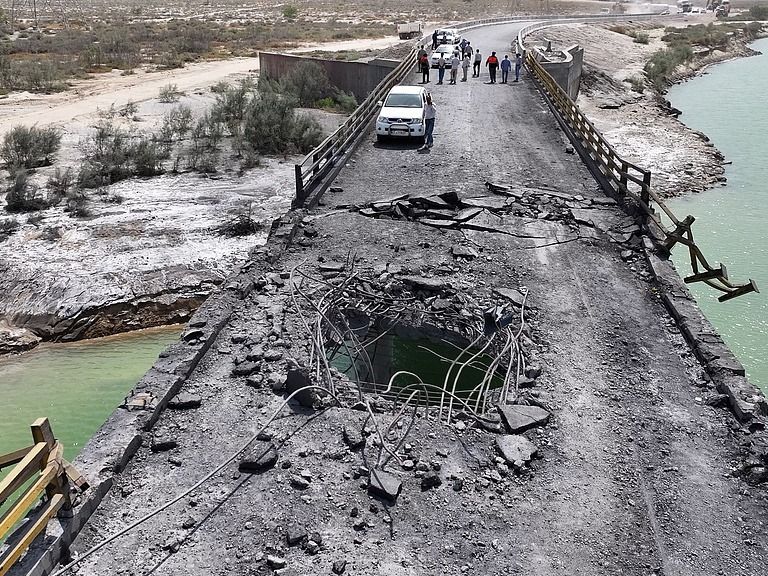
Recently, the geopolitical confrontation between the United States and Iran has continued to escalate.

Recently, the geopolitical confrontation between the United…

The New York Times has recently clashed with the Trump admi…

Trader Peter Brandt has sparked a new round of discussion i…

On July 17th, Taiwan's stock market experienced a historic …

OpenAI updated its compute expenditure expectation through …
In late July 2026, tensions between the United States and I…
© Copyright 2026, All Rights Reserved