
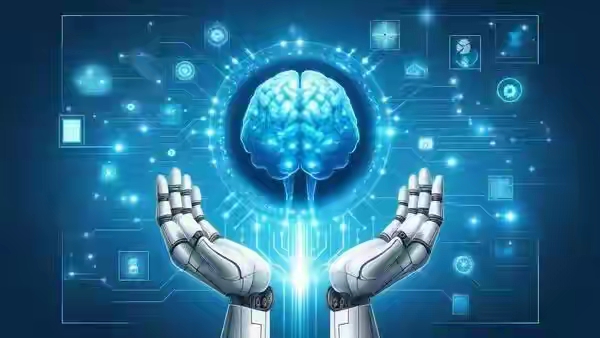
In early 2026, Musk announced through both social media and press conferences that his subsidiary Neuralink would officially launch mass production of brain computer interface devices, causing a global shock in the technology and capital markets. This device, which claims to be "as routine as minimally invasive tooth extraction," has completed 20 human implants and has operated safely for over 15000 hours. More than 10000 patients worldwide are waiting in line for surgery. From technological breakthroughs to commercialization, Musk's blueprint for "human-machine symbiosis" seems to be about to be realized. However, based on multiple factors such as technological maturity, ethical regulation, and market acceptance, although the mass production of brain computer interfaces has milestone significance, it still faces the practical challenge of "bright prospects and winding roads".
The core confidence of mass production comes from the dual breakthroughs of technological iteration and clinical validation. Neuralink has overcome the three major pain points of traditional brain computer interfaces: using the "electrode wire directly penetrates the dura mater" technology, without the need to cut open the skull, reducing surgical risks by more than 50%; 64 flexible electrodes are precisely implanted by surgical robots, which can automatically avoid blood vessels and achieve implantation accuracy of micrometer level; The surgery time has been reduced from 8 hours to within 1 hour, and the cost is expected to decrease by 70%, laying the foundation for large-scale popularization.
The huge gap in the medical demand market constitutes the core driving force for mass production. Millions of patients worldwide suffer from spinal cord injuries, ALS, and paralysis, and traditional medical methods are difficult to regain their autonomy in life. Brain computer interfaces provide a revolutionary solution. For this group of people, the device is not a "technological novelty", but a necessity for restoring social interaction and achieving independent living. With the increasing aging of the population, the number of patients with cognitive disorders, Parkinson's and other neurological diseases continues to grow, further expanding the demand for medical services. In addition, the extended application of brain computer interfaces in sleep monitoring, rehabilitation training, and other scenarios is expanding from a rigid demand to an improved demand, and the market boundary is constantly expanding.
However, the path to mass production still faces three obstacles that are difficult to overcome in the short term. On a technical level, long-term reliability and biocompatibility remain the core bottlenecks. Although minimally invasive surgery has reduced risks, electrode implantation may still cause tissue rejection reactions in the human body, leading to signal attenuation and requiring frequent surgical replacement, which differs from the positioning of "routine medical services". At present, most clinical data comes from short-term implantation cases, and long-term safety and effectiveness still lack large-scale validation. Mass production means facing more complex individual differences and risk of complications.
Ethical safety and regulatory gaps constitute the second challenge. The EEG signals collected by the brain computer interface contain the most private information such as thoughts and emotions, which can be called "ultimate privacy". However, a mature neural data encryption standard and protection system have not yet been established globally. There is no clear legal definition for issues such as data ownership, risk of abuse, and hidden dangers of mental manipulation. Once a leak or abuse occurs, the consequences far exceed traditional data security incidents.
Cost and market acceptance are the practical tests for commercialization implementation. Although the cost has significantly decreased, the cost of a single implantation is still as high as 150000 to 200000 yuan, far exceeding the affordability of ordinary families. If it cannot be included in medical insurance or introduced into inclusive programs, the market size will be limited to niche high-end groups. At the same time, the public's acceptance of "brain implant devices" still needs to be cultivated, and concerns such as surgical trauma risks and long-term dependence risks may hinder mass market penetration. The interdisciplinary talent gap also constrains industrial development, as brain computer interfaces involve multiple fields such as neuroscience and materials engineering. The global reserve of composite talents is insufficient, making it difficult to support the large-scale research and service system required for mass production.
Overall, the mass production of Musk's brain computer interface in 2026 is more of a symbolic breakthrough, marking a key turning point for technology from the laboratory to commercialization. However, large-scale adoption still requires 5-10 years of continuous iteration. The short-term prospects are focused on the medical rehabilitation essential market, by providing precise services to specific patient groups and accumulating clinical data and business experience; In the medium to long term, it relies on breakthroughs in non-invasive technology, improvement of ethical regulatory systems, and further cost reduction. The ultimate value of this technological revolution lies not only in technological innovation, but also in the ability to build an ecosystem of "technology ethics system" collaborative evolution.
Musk's ambition is to enable humans to avoid being eliminated by AI through the integration of "bio+digital", but the success of mass production ultimately depends on finding a balance between innovation and risk.

Recently, the British government, in accordance with the "Steel Industry (Nationalization) Act" that came into effect on July 16th, took the British Steel Company, which is controlled by China Jiefang Group, into state ownership without compensation.

Recently, the British government, in accordance with the "S…

On July 23rd local time, the US Trade Representative Office…

The international crude oil market saw a sharp one-sided ri…

Recently, the geopolitical confrontation between the United…

The New York Times has recently clashed with the Trump admi…

Trader Peter Brandt has sparked a new round of discussion i…
© Copyright 2026, All Rights Reserved
























