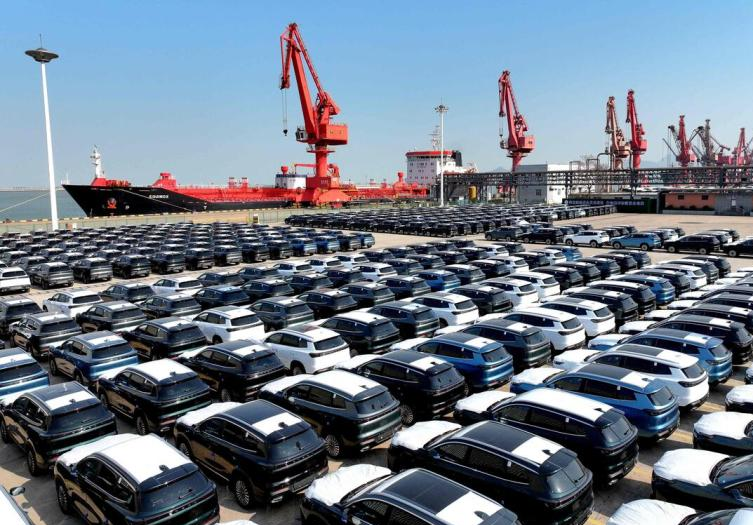
Just one day after the China-EU reached a consensus framework on the electric vehicle tariff case, the stock prices of Chinese electric vehicle companies rose sharply, highlighting the market's optimistic sentiment. Analysts believe that although the new plan seemingly weakens the price advantage of Chinese automakers, obtaining a more stable prospect for market access in Europe in exchange for it is crucial for the globalization of Chinese automakers.
The Hong Kong stock market's automotive sector generally rose on Tuesday (January 13th). The price of China's leading electric vehicle company BYD climbed by 4.8% at one point during the trading session, but narrowed to 1.6% by the end of the day. The Hong Kong stock of Xiao Peng Auto saw the highest increase of 5.3%, rising by 2.2% throughout the day. Chery Automobile rose by 3.7% during the trading session and closed up by 1.8%.
After more than two years of negotiations between China and the European Union over anti-subsidy tariffs on electric vehicles, on Monday (the 12th), a consensus was reached that was regarded by the outside world as a "soft landing". The European Commission released a document on the same day, instructing Chinese enterprises exporting electric vehicles to the EU to submit applications for price commitments, and stating that the Commission would evaluate the applications.
The China Import and Export Association of Mechanical and Electrical Products issued a statement on its WeChat official account on the same day, stating that eligible enterprises can use price commitments to replace anti-subsidy taxes; the association will encourage and support relevant enterprises to fully utilize the negotiation outcomes, "by applying the price commitment approach, to strive to secure their own export rights to Europe."
Analysts from investment bank Morgan Stanley pointed out in their report that the aforementioned developments are beneficial for Chinese automakers to expand their sales in Europe. Major manufacturers such as BYD, SAIC Group and Geely will benefit from this.
According to Morgan Stanley's estimation, the average selling price of Chinese-made electric vehicles in Europe last year was approximately 25,000 euros, which was lower than the average selling price of imported pure electric vehicles in Europe of 30,000 euros.
The First Finance News quoted Cui Dongshu, the secretary-general of the Passenger Vehicle Market Information Joint Committee of the China Automobile Dealers Association (referred to as the "CPIJ Committee"), as saying that in the initial stage of the implementation of the price commitment mechanism, some car manufacturers might experience short-term fluctuations in sales due to adjustments in product pricing and structure. However, as car manufacturers adapt to the new rules, local production capacity is released, and product competitiveness improves, the sales of Chinese electric vehicles in the EU market will gradually recover.
According to the latest statistics from the China Passenger Car Association, in the first 11 months of last year, China exported 2.07 million pure electric vehicles globally. Among them, 580,000 vehicles entered the EU market, accounting for 28% of the total exports. Research institute Dataforce's data also shows that in November last year, the market share of Chinese brands in the European electric vehicle market rose to a new high of 12.8%.
Cui Dongshu predicts that from 2026 to 2028, China's electric vehicle exports to the European Union will maintain an average annual growth rate of around 20%.
Yu Hong, a senior researcher at the East Asia Institute of the National University of Singapore, analyzed in an interview with Lianhe Zaobao that the minimum price is expected to be determined based on factors such as vehicle model, engine displacement, and the scale of investment by enterprises in the EU. "The EU hopes to leverage the technological advantages of Chinese enterprises to reshape the European automotive supply chain. If enterprises fail to meet the relevant requirements, they may still be subject to additional tariffs."
Although the new export framework seems to have weakened the price advantage of Chinese automakers, Yu Hong emphasized that this exchange for a more stable prospect of market access in Europe is of vital importance for the globalization of Chinese automakers.
He said that although Chinese automakers have increased their exports to countries in the Global South in recent years, Europe remains an indispensable and irreplaceable market. "Apart from the high profits in Europe, gaining the recognition of local consumers is also a sign that an automaker has truly become a global brand."
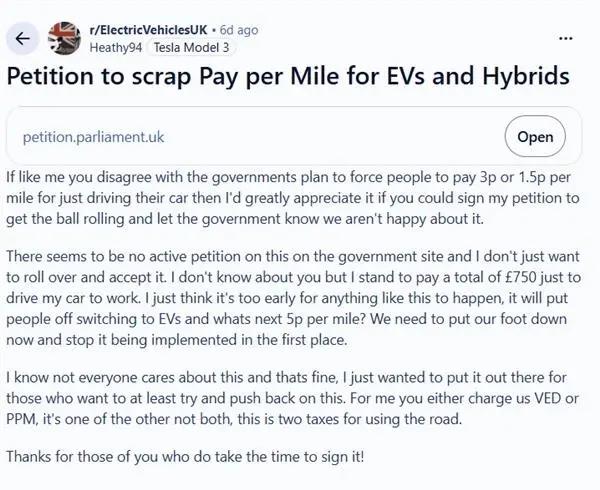
Recently, the British government has confirmed that a new vehicle consumption tax (eVED) system will be implemented on April 1, 2028, imposing a tax of approximately 17 yuan per 100 kilometers for pure electric and hydrogen-powered vehicles, while reducing the tax for plug-in hybrid models by half.
Recently, the British government has confirmed that a new v…

Under the dual pressures of war and sanctions, Iran is endu…

AP, Dubai — Military confrontation between the United State…

Recently, Reuters reported that Apple is accelerating its e…

In July 2026, the entire country of Japan was hit by a disa…
Recently, global convenience store giant 7-Eleven made head…
© Copyright 2026, All Rights Reserved