
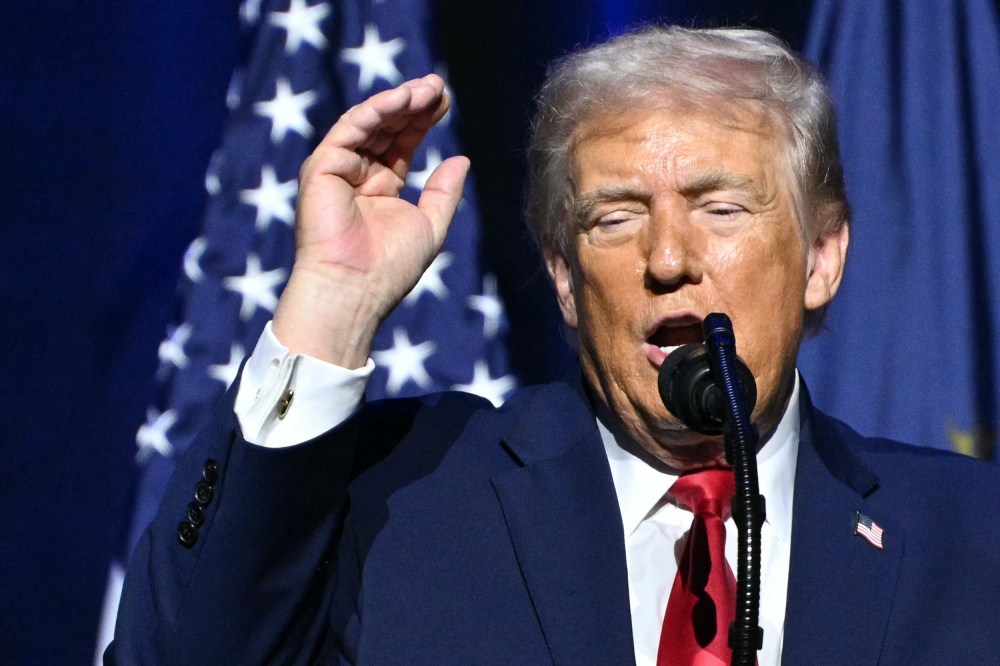
On January 13, US President Donald Trump visited the swing state of Michigan and delivered a speech at the Detroit Economic Club. He falsely claimed that "inflation has been defeated" and launched a broad attack on a range of issues, including election fraud, transgender athletes, and Republican defectors in Congress.
First, this speech was crucial for the Trump administration, as it had been trying to get the president to focus on "housing affordability" in swing states ahead of the midterm elections, a topic he had repeatedly mocked as a "Democratic hoax." However, these efforts have largely been unsuccessful so far: last month in Pennsylvania, Trump delivered a rambling speech, again calling housing affordability a "hoax" and attacking former President Joe Biden with vulgar language.
Second, Trump stated on the 13th that the economy was his latest achievement, saying, "The results are in, and the Trump economic boom has officially begun." In a rambling, often off-script speech lasting over an hour, Trump boasted of virtually no inflation, super-fast economic growth, and claimed that food prices and rents had decreased. However, federal data released on the 13th showed that inflation remained almost unchanged at 2.7% last month, with food and housing prices rising. On the other hand, GDP growth in the third quarter of 2025 was 4.3%, indicating economic growth.
Furthermore, Trump also claimed that tariffs "are making money for Michigan," insisting that "tariffs are paid by middlemen." However, tariffs are ultimately passed on to consumers, and the Yale Budget Lab estimates that Trump's tariffs cost the average American family $1,700 per year. He also said that gasoline was "below $2 in many places," but according to the American Automobile Association (AAA), the national average price of gasoline was $2.80, with the lowest seemingly being $2.20 in Oklahoma.
Currently, according to local polls, the economy remains a key concern for Michigan voters, who complain that Trump's aggressive tariff policies have led to rising prices. A poll conducted jointly by the Detroit News and local NBC affiliate WDIV found that nearly half of respondents (48%) said that Trump's economic policies have weakened the overall economy. More than 60% of respondents said their household expenses had increased in the past year. The state narrowly voted for Trump's re-election, despite his promises to address inflation. In November, Republicans will be vying in the state to retain the two swing U.S. House districts they won in 2024.
Furthermore, Democratic National Committee Chairman Ken Martin said in a press release: “Under Donald Trump’s failed economic policies, Michiganders are earning less and fewer jobs are available. Today, Trump is once again trying to mislead Michigan families, but they aren’t falling for it, as a new poll shows Trump’s approval rating in Michigan is extremely low.”
Trump recently announced a series of new measures aimed at lowering the cost of living for average Americans. Last week, he said he would cap credit card interest rates at 10% for one year and immediately take steps to “prohibit large institutional investors from buying more single-family homes,” a plan similar to the housing plan proposed by former Democratic presidential candidate and Vice President Kamala Harris.
However, some American consumers may face difficulties in the future due to policies supported by Trump. Under the Affordable Care Act, monthly premiums for low-income enrollees skyrocketed after subsidies expired on January 1st. Last September, the health policy organization Kaiser Family Foundation (KFF) estimated that monthly premiums for enrollees would more than double.
In short, Trump's declaration of economic prosperity amidst inflation is a fierce battle between political narrative and economic reality. His rhetoric aims to shape optimistic expectations, deflect responsibility, and serve his electoral purposes, but weak employment data, rebounding inflation, and low consumer confidence collectively pose a significant challenge to this narrative.

Recently, the British government, in accordance with the "Steel Industry (Nationalization) Act" that came into effect on July 16th, took the British Steel Company, which is controlled by China Jiefang Group, into state ownership without compensation.
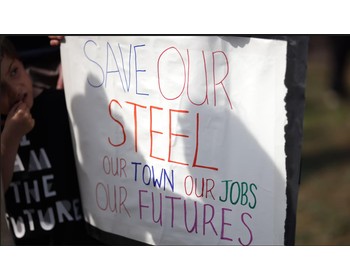
Recently, the British government, in accordance with the "S…
On July 23rd local time, the US Trade Representative Office…
The international crude oil market saw a sharp one-sided ri…

Recently, the geopolitical confrontation between the United…

The New York Times has recently clashed with the Trump admi…

Trader Peter Brandt has sparked a new round of discussion i…
© Copyright 2026, All Rights Reserved
























