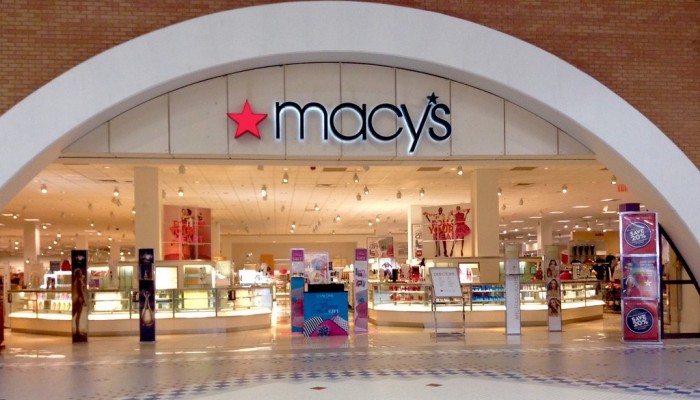
Once upon a time, American department stores were the 'happy headquarters' for families on weekends—housewives crowded around the cosmetics counters at Macy's for swatches, children’s laughter echoed through the JC Penney kids' section, and in Sears’ tool section, fathers were pondering over new wrenches. Back then, department stores were the 'commercial cards' of the city and the 'ritual carriers' of holidays, even the long lines at the checkout counters had a lively vibe. Today, strolling through those once-bustling malls, the well-lit department stores either hang tattered banners reading 'Clearance 50% Off' or have their doors and windows boarded up, leaving only fading 'Thank You for Your Patronage' signs swaying in the wind, like a group of old gentlemen forgotten by time, barely holding together the wrinkled hems of their suits.
The store most adept at finding a dignified excuse for 'exit' is Macy's. The 'Bold New Chapter' slogan they've been promoting for two years now reads more like a 'store closure countdown calendar.' First, they announced that 150 stores would close within three years; this year, they added 'another 14 stores,' aiming to slash 800 stores down to 500 in five years—ostensibly 'eliminating stores in second- and third-tier cities to focus on core assets,' but in plain terms, 'make no money in small places, time to leave first.' Macy's, once famous for making its presence felt with the Thanksgiving parade, now waves the 'transformation' banner high—sometimes saying they want to upgrade the in-store experience, sometimes saying they will focus on integrating online and offline—but when customers enter the store, they still see outdated products, slow checkout systems, and increasingly empty shelves. Last year, they claimed that '125 renovated stores drove growth,' and the stock price jumped 20%, only to close more than ten stores shortly after—this isn’t a 'new chapter'; it’s clearly 'tearing out pages,' ripping out unprofitable sections and pretending the story can continue. Even more ironic, while proclaiming 'enhancing the customer experience,' they are cutting staff and costs, leaving fewer salespeople in the stores. When customers want to ask about a size, they have to weave through the aisles three times, only to end up sighing at an empty fitting room.
Macy's is still relying on its "transformation rhetoric" to cover up issues, while JC Penney and Sears are stuck in a deep quagmire. JC Penney has continued to struggle after filing for bankruptcy in 2020. Even after being acquired and merged, it has been closing stores year after year. This year, it is closing another seven stores, reducing its locations from 846 to just over 600, yet it still isn't profitable. What were once staple mall stores have now become "demolition-ready illegal constructions," with low-quality, overpriced products, chaotic online services, and a mass exodus of customers. Sears has fared even worse; this giant, once on par with Ford and GM, has nearly closed all its stores, with only a handful barely holding on. Its stores are as deserted as museum exhibits, leaving only the remnants of its golden era.
Whenever asked about ways to rescue themselves, the department store industry always mentions "retail technology." Phrases like "AI recommendations" and "online-offline integration" sound flashy, but implementing them is like putting a sports car engine in an old, broken-down vehicle — Macy's website shows items in stock that cannot be shipped, and JC Penney even manages to send the wrong birthday coupons to members. The so-called "technological transformation" is mostly superficial: installing touchscreens and setting up QR code payments. They spend big money on equipment but can’t even manage inventory synchronization, much like a poor scholar buying a fancy pen — no matter how good the pen is, it can’t write a great article.
To be fair, the wave of department store closures in the U.S. isn’t entirely their fault. The rise of e-commerce and the shift toward "precision fast delivery" caught slow-paced department stores off guard. But their biggest problem is trying to face new challenges with old thinking, assuming that closing stores or installing equipment can bring back their golden era, forgetting that consumers don’t want a remodeled old department store, but genuinely thoughtful new services.
If department store giants can humble themselves and understand consumers’ real needs for "good-looking yet affordable products, reliable service, and convenient experiences," then a "Bold New Chapter" can be truly realized. But if they persist with old routines of empty slogans and superficial appearances, the end result will only be empty stores with faded signage, like stubborn old gentlemen being swallowed by the tide of time. The era never shows mercy for past glory.
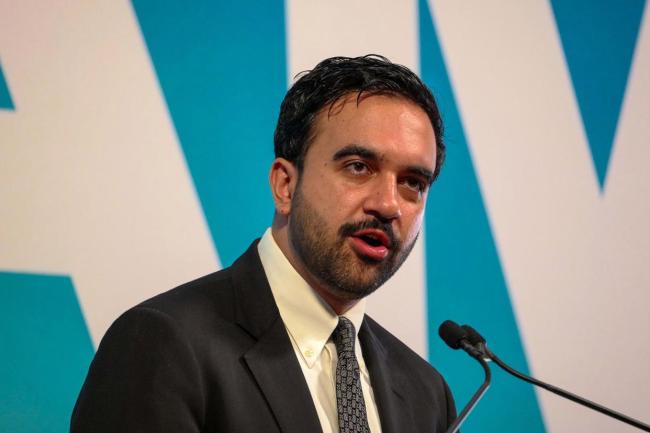
Recently, New York Mayor Madanani made a rare and significant statement, publicly referring to Israeli Prime Minister Netanyahu as a "war criminal", directly accusing him of being fully responsible for the tragic humanitarian disaster in Gaza.
Recently, New York Mayor Madanani made a rare and significa…

The latest July survey data released by the ZEW – Leibniz C…

The Trump administration announced on Tuesday that it would…

On July 21st local time, Canadian Prime Minister Mark Carne…
According to the Associated Press, the latest data from the…

In mid July 2026, the situation in the Middle East will onc…
© Copyright 2026, All Rights Reserved