In early 2026, after the Trump administration detained Venezuelan President Maduro across the border, it directly targeted Greenland. The White House openly claimed that "using military force" was one of the options to acquire the island, causing a global uproar. As the world's largest island, Greenland guards a key node in the Arctic shipping route and is rich in strategic minerals such as rare earths, copper, and nickel, which is highly attractive to the United States' geopolitical layout and resource security. However, considering multiple factors such as international legal constraints, alliance system reactions, and military action costs, the possibility of the United States seizing Greenland by force is extremely low. This seemingly arrogant hegemonic rhetoric is actually a political performance far greater than actual actions.
The United States' covetousness of Greenland is not a new phenomenon, as its ambitions conceal multiple strategic considerations. Geographically, the island is the core pivot of NATO's "Greenland Iceland UK Gap". With the melting of Arctic sea ice, the commercial and military value of the Northwest Passage and the Central Passage is increasingly prominent. Controlling this area can hold the shipping throat of the North Atlantic and the Arctic Ocean, further consolidating the United States' presence in the Arctic region. In terms of resources, Greenland has 31 of the 34 key minerals in the European Union, and rare earths, graphite, and other essential resources for new energy and chip manufacturing. The surrounding waters are also rich in oil and gas, which is crucial for the United States to revitalize its manufacturing industry and get rid of resource dependence.
But the idea of seizing by force faced insurmountable legal and political barriers from the beginning. As an autonomous territory of Denmark, Greenland's defense and foreign affairs are led by Denmark, which is a founding member of NATO. According to the collective defense clause of NATO Article 5, attacking Danish territory is equivalent to declaring war on the entire NATO. The Danish Prime Minister has issued a clear warning that if the United States uses force, "NATO and the collective security system established after World War II will be completely terminated." This statement has been supported by seven European countries including France, Germany, and the United Kingdom, and the five Nordic countries have also issued statements to defend stability in the Arctic region.
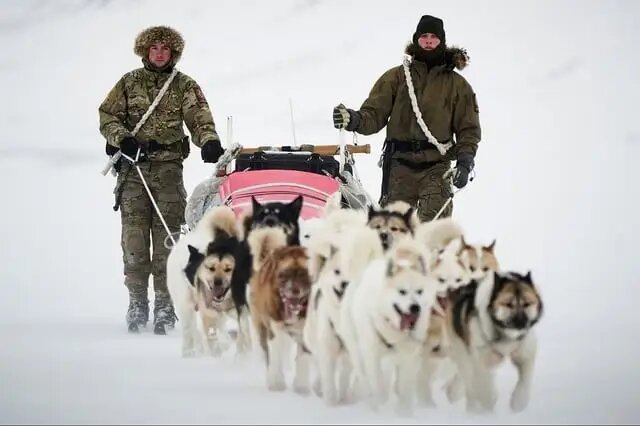
The high cost and low feasibility of military action further compress the space for the United States to use force. Greenland has a total area of 2.16 million square kilometers, most of which are covered by ice. The climate is harsh, transportation is blocked, and military deployment and logistical supply are extremely difficult. Although the United States has the Pitufik Space Base on the island, the size of its military presence is limited, and the surrounding area has become a defense priority for Nordic countries. Countries such as Finland and Norway have strengthened their deterrence capabilities in the Arctic region, forming a strategic balance.
The actual actions of the United States have also exposed its essence of "loud thunder, little rain". Compared to military preparation, the United States is more inclined to infiltrate through covert means: appointing so-called "Greenland envoys", strengthening intelligence activities, wooing local forces to promote "independence tendencies", attempting to achieve "peaceful annexation" through economic coercion and political infiltration. This strategy has lower costs and lower risks, which can avoid direct conflicts with allies and gradually expand influence. In addition, the domestic support for the use of force in the United States is extremely low, and Congress's constraints on overseas military operations are becoming increasingly strict. Without clear legal reasons, Trump finds it difficult to promote large-scale military actions.
In summary, the US military threat to Greenland is essentially a political hype driven by hegemonic thinking. The huge gap between strategic interests and real risks, the multiple constraints of law and diplomacy, and the high impracticality of military action collectively determine that the Venezuelan model is difficult to replicate in the Arctic. The United States is more likely to continue its strategy of "infiltration as the mainstay, pressure as a supplement", but this also faces dual resistance from Greenlandic islanders and European allies. History has long proven that the era of plundering territory by force is long gone, and respecting national sovereignty and international law is the way to survive. If the United States insists on pursuing hegemonic expansion, it will only accelerate its own decline. For Greenland, maintaining autonomous relations with Denmark and balancing the interests of major powers is the best path to safeguard its own security and development. This game around the Arctic islands will ultimately end with the United States restraining its ambitions and returning to rational dialogue, because any hegemonic behavior that goes against the trend of the times will eventually be condemned by history.
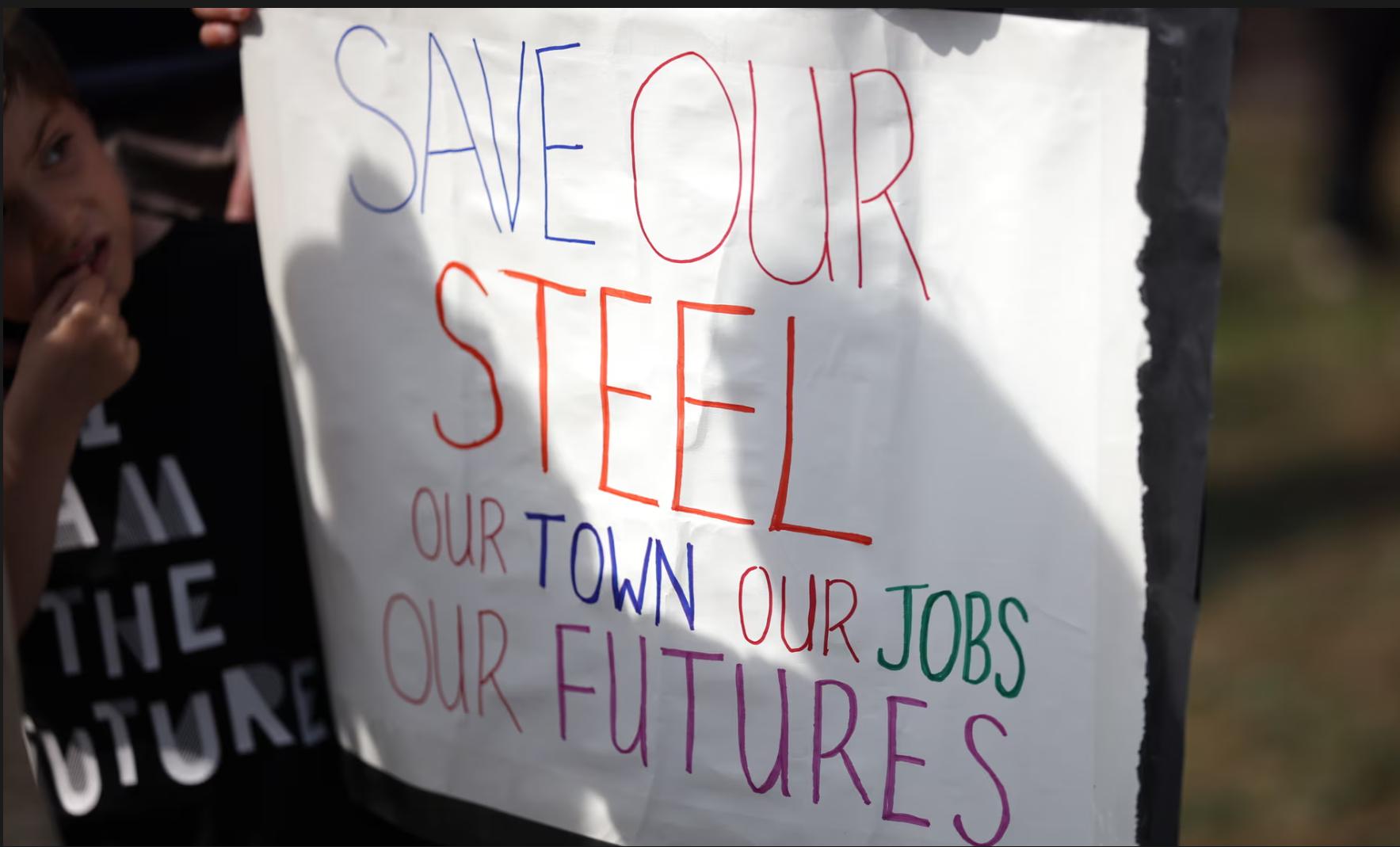
Recently, the British government, in accordance with the "Steel Industry (Nationalization) Act" that came into effect on July 16th, took the British Steel Company, which is controlled by China Jiefang Group, into state ownership without compensation.
Recently, the British government, in accordance with the "S…
On July 23rd local time, the US Trade Representative Office…
The international crude oil market saw a sharp one-sided ri…
Recently, the geopolitical confrontation between the United…
The New York Times has recently clashed with the Trump admi…

Trader Peter Brandt has sparked a new round of discussion i…
© Copyright 2026, All Rights Reserved