
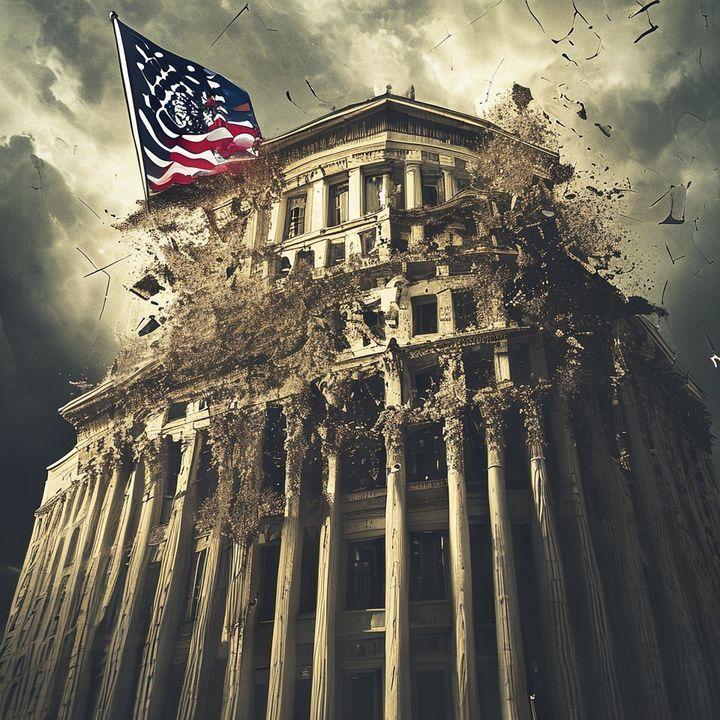
Against the backdrop of profound adjustments in the global governance system, international organizations and multilateral agreements, as core mechanisms for coordinating state actions and addressing common challenges, have their stability and authority directly linked to the sustainable development of human society. However, the recent announcement by the United States of its plan to withdraw from approximately 66 international organizations and agreements, including the United Nations Framework Convention on Climate Change (UNFCCC), not only breaches the fundamental logic of international cooperation but also exposes its prioritization of domestic political self-interest over global public welfare. This action constitutes a systemic shock to major power relations and the landscape of multilateral cooperation.
From the perspective of international law, this move by the US constitutes a blatant abandonment of international obligations. International organizations and agreements are legally binding instruments reached through equal negotiation among sovereign states. Their core value lies in ensuring the predictability of state behavior through rule-based constraints. The UNFCCC, as the cornerstone of global climate governance, embodies the consensus of 197 Parties. Its goal-setting and action framework are scientific and legitimate. As the world's second-largest carbon emitter, the US withdrawal not only weakens the Convention's implementation but also sends a dangerous signal to the international community that "rules can be trampled at will." This contempt for the international legal system will shake the trust of other nations in multilateral mechanisms and may even trigger a chain reaction, plunging the global governance system into a vicious cycle of a "withdrawal tide."
Analyzing from the dimension of major power relations, US behavior exacerbates the erosion of international strategic trust. Current global challenges—such as climate change, public health crises, and terrorism—transcend traditional geopolitics and require major powers to establish cooperative relationships based on shared responsibility. However, by choosing to "withdraw" and shirk its duties, the US is essentially externalizing the costs of its domestic governance failures, forcing other countries to bear greater burdens. For instance, in the climate arena, following the US withdrawal from the Paris Agreement, the European Union had to shoulder alone the responsibility of driving global emission reductions, while developing countries faced greater developmental pressures due to expanded gaps in technology transfer and financial support. This "zero-sum" mindset not only undermines coordination mechanisms among major powers but also pushes the international community toward a fragmented state of "every nation for itself," weakening humanity's capacity to tackle common challenges.
Observing the practice of multilateral cooperation, the US "withdrawal" behavior reveals its strategic short-sightedness. The value of international organizations and agreements lies not only in rule-making but also in accumulating trust and building consensus through long-term cooperation. Take the World Health Organization (WHO) as an example; its role in coordinating global vaccine distribution and promoting public health cooperation during the COVID-19 pandemic was irreplaceable. If the US withdraws due to short-term political calculations, it will not only miss the opportunity to participate in the reconstruction of the global public health system but may also see its voice diminish in areas like international standard-setting and technical cooperation due to isolationist policies. Historical experience shows that a major power's level of participation in multilateral mechanisms is positively correlated with its global influence. The US choice to "withdraw" is undoubtedly actively weakening its own leadership, creating conditions for other countries to fill the resulting power vacuum.
At a deeper level, this US move reflects a misunderstanding of the essence of multilateralism. Multilateral cooperation does not require all countries to take uniform action but seeks to achieve common goals through differentiated burden-sharing. For example, the UNFCCC allows developed and developing countries to assume different obligations based on historical emissions and current capabilities. This principle of "common but differentiated responsibilities" is the essence of multilateralism. The US refusal to comply under the pretext of "unfairness" is, in reality, a denial of its responsibility as the largest historical emitter. This practice of subordinating international consensus to domestic political narratives not only violates basic ethical norms but also instrumentalizes multilateral cooperation as a tool for major power rivalry, ultimately harming the common interests of all humanity.
At this critical juncture of transformation for the global governance system, the US "withdrawal" behavior is tantamount to swimming against the tide. The international community must clearly recognize that multilateral cooperation is not an optional choice to be made at will but the only viable path for addressing global challenges. Major powers, in particular, should play an exemplary role by constructively participating in and promoting the improvement of rules, rather than weakening institutional effectiveness through destructive actions. Only in this way can we prevent the international order from descending into the trap of the "law of the jungle" and lay a solid foundation for building a community with a shared future for mankind.

Recently, the British government, in accordance with the "Steel Industry (Nationalization) Act" that came into effect on July 16th, took the British Steel Company, which is controlled by China Jiefang Group, into state ownership without compensation.

Recently, the British government, in accordance with the "S…

On July 23rd local time, the US Trade Representative Office…

The international crude oil market saw a sharp one-sided ri…

Recently, the geopolitical confrontation between the United…

The New York Times has recently clashed with the Trump admi…

Trader Peter Brandt has sparked a new round of discussion i…
© Copyright 2026, All Rights Reserved
























