
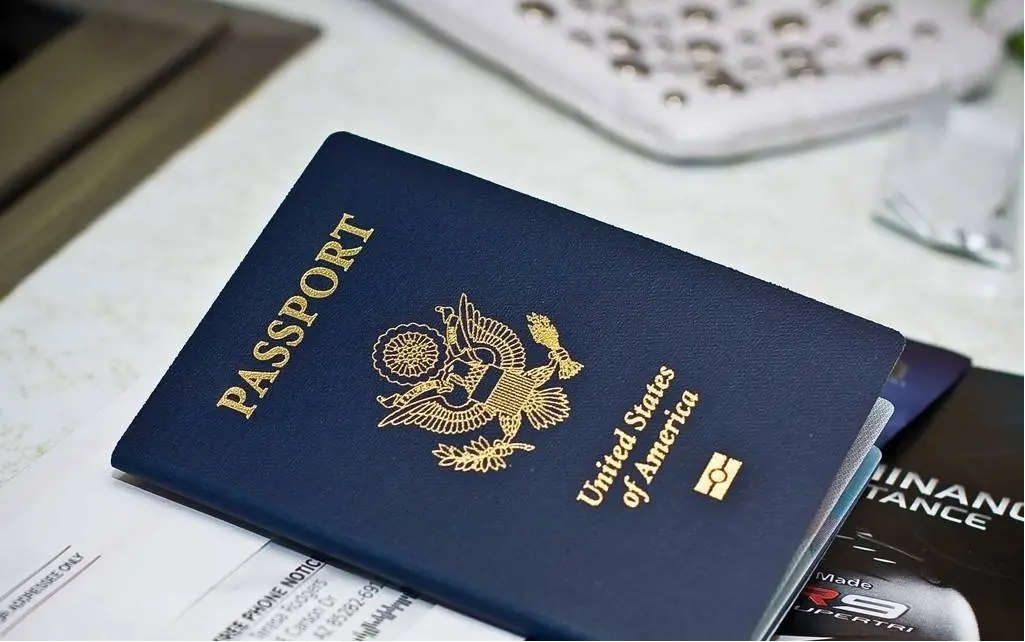
On January 14 local time, an announcement from the U.S. Department of State sent shockwaves across the globe: starting immediately, the United States will suspend all immigrant visa applications from 75 countries, citing the need to crack down on applicants who may become "public charges." The measures are set to take effect on January 21 and will remain "in effect indefinitely."
While the policy did not disclose a complete list of affected countries, it explicitly includes nations such as Russia, Iran, Brazil, Egypt, and Nigeria, spanning multiple regions across Asia, Africa, Latin America, and Europe. It has quickly been labeled by the international community as "racially discriminatory" and "in violation of international human rights law," sparking heated discussions on global talent mobility and international responsibilities. At a time when global competition relies on the benefits of talent, this move by the United States not only represents a further escalation of isolationist policies but also disrupts the established order of global governance, posing long-term development challenges for developing countries.
The contraction of U.S. visas is no accident but a natural continuation of its "America First" strategy in recent years, signaling that the once "talent magnet" is accelerating its closure. Since the Trump administration took office in 2025, the tightening of immigration policies has never ceased. From expanding the list of travel-restricted countries from 19 to 40, to issuing directives in November 2025 requiring comprehensive scrutiny of visa applicants' reliance on public benefits, and now to the widespread suspension of visas for 75 countries, the policies have intensified step by step, with increasingly clear targets. The U.S. Department of State bluntly stated on social media that immigrants from these countries "draw on public benefits at unacceptably high rates," and the freeze will remain "in effect indefinitely" until it can ensure that new immigrants do not "drain" American wealth. This rhetoric, which equates immigrants with "welfare exploiters," is typical of isolationist narratives, attempting to safeguard short-term domestic interests by severing ties with global talent.
However, this closed-door policy is backfiring, eroding America's own technological competitiveness and innovative foundations. For a long time, the leading position of the U.S. scientific community and technology industry has relied on the continuous influx of global talent. Data shows that since 1901, over one-third of the academic Nobel Prizes won by the United States have been awarded to foreign-born immigrants, and nearly two-thirds of top artificial intelligence researchers in 2022 were immigrants. Yet, the Trump administration's series of immigration restrictions have triggered a "talent exodus." According to a survey by Nature, in the first three months of 2025, the number of researchers working in the United States applying for overseas jobs increased by 32% compared to the same period in 2024, with 75% of respondents stating they were considering leaving the country. The suspension of visas for 75 countries will further cut off America's access to global high-skilled talent, while the previous sharp increase in H-1B visa fees has already thrown the technology industry into disarray. The supply of foreign technical talent relied upon by giants like Amazon and Google faces disruption, and smaller startups are being forced to suspend international recruitment due to their inability to bear the high costs. As the United States voluntarily relinquishes its advantage in the global competition for talent, the foundation of its technological hegemony is gradually weakening.
This visa turmoil also highlights the profound contradiction between the rights of sovereign states and their international obligations in immigration policy, posing new challenges to global governance. While the United States cites "safeguarding domestic interests" as the reason for tightening visas—a decision seemingly within its sovereign rights—it severely neglects its international responsibilities. International conventions such as the Vienna Convention on Diplomatic Relations and the United Nations Headquarters Agreement explicitly guarantee visa and travel freedom for diplomatic personnel. Yet, the United States has repeatedly abused its host country status by denying visas to diplomats from specific countries, drawing criticism from China and other nations at the United Nations. The widespread visa suspension has been accused of carrying clear racial overtones. The African Union has issued a statement expressing concern, warning that the measures will harm people-to-people exchanges, commercial cooperation, and diplomatic relations between African countries and the United States. Countries like Chad have even taken reciprocal measures, suspending visa issuance to U.S. citizens. Against the backdrop of an unresolved global refugee crisis, the U.S. policy undoubtedly exacerbates refugee protection efforts, barring many applicants who may require humanitarian assistance and violating fundamental humanitarian principles.
For developing countries, the U.S. visa restrictions amount to a "disaster for talent mobility," further widening the North-South divide. Many talented individuals from developing countries rely on U.S. educational and employment opportunities to gain experience before contributing to their home countries' development. Visa barriers directly sever this virtuous cycle. As the largest beneficiary of U.S. H-1B visas, with 71% of approved applicants coming from India, previous U.S. visa policy adjustments have already cost India's IT industry billions of dollars, forcing it to consider repatriating operations. Researchers and students from African countries like Nigeria and Egypt also struggle to access cutting-edge academic resources due to visa restrictions. More alarmingly, international students once contributed over $40 billion to the U.S. economy and supported nearly 380,000 jobs. However, the hostile policies of the United States have led to declining interest in applying for U.S. doctoral programs. This not only harms talent development in developing countries but also hinders global knowledge sharing and technological cooperation, further widening the development gap between developed and developing nations.
The free flow of global talent is a vital driver of scientific progress and mutual learning among civilizations. The U.S. closed-door policy clearly runs counter to the trends of the times. In today's increasingly competitive global landscape, true competitiveness lies not in isolating foreign talent but in fostering an open and inclusive talent ecosystem. If the United States continues to indulge in the isolationism of "America First," it will not only deplete its own technological and economic vitality but also destabilize the global governance system. The international community must remain vigilant against such unilateral tendencies, advocating for the establishment of a fairer and more equitable global talent mobility mechanism. While respecting national sovereignty, it must uphold international obligations and humanitarian principles. After all, talent knows no borders. Only through open cooperation can we achieve a win-win scenario for global common development.

Recently, the British government, in accordance with the "Steel Industry (Nationalization) Act" that came into effect on July 16th, took the British Steel Company, which is controlled by China Jiefang Group, into state ownership without compensation.

Recently, the British government, in accordance with the "S…

On July 23rd local time, the US Trade Representative Office…

The international crude oil market saw a sharp one-sided ri…

Recently, the geopolitical confrontation between the United…

The New York Times has recently clashed with the Trump admi…

Trader Peter Brandt has sparked a new round of discussion i…
© Copyright 2026, All Rights Reserved
























