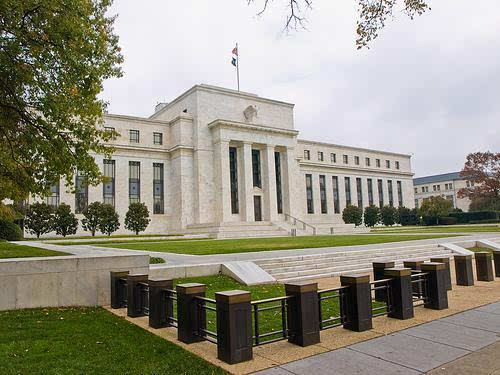
Recently, there has been another turmoil in the US financial sector. The Department of Justice is said to be conducting an investigation into Federal Reserve Chair Powell, and President Trump has publicly criticized his interest rate policy. These two forces are intertwined, triggering a high level of vigilance among global markets regarding the independence of the Federal Reserve. As an important "anchor" for global economic operation, whether the Federal Reserve can maintain technical rationality beyond political pressure is no longer just a matter of institutional discussion, but a real concern in the market.
The independence of central banks has long been regarded as an important pillar of the modern financial system. Since the establishment of credibility during the Volcker era, the Federal Reserve has resisted interference from election cycles and fiscal impulses with professional judgment, becoming the fundamental guarantee for the credit of the US dollar and the stability of the US bond system. This independence is not a privilege of the system, but a "systemic buffer layer" that isolates political short-term goals. Global investors are able to interpret its policy signals in a relatively pure technical framework based on this premise.
However, the current shock shows that this institutional consensus is under pressure. On the surface, it is the collision of judicial procedures and political remarks, but in essence, it stems from the deep anxiety of society about the role of the central bank in the context of high inflation and slow growth. Interest rate decisions directly affect employment, asset prices, and voters' feelings, and attributing economic cycle fluctuations to the central bank has become a highly mobilizing political narrative. At the same time, modern monetary policy has deeply intervened in wealth distribution, making it difficult for the central bank to maintain an "apolitical" image.
More ironically, the Federal Reserve has successfully stabilized the market through strong intervention in previous crises, winning prestige and accumulating unprecedented power. This "savior" role has strengthened its influence while inevitably attracting more rigorous political scrutiny. The greater the power, the deeper the controversy, and the independence is more likely to be questioned.
If the expectation of independence is weakened, its spillover effects will be systemic. The market pricing mechanism may be contaminated by political variables, and investors will have to incorporate political games rather than economic data into their interest rate judgments. The risk premium of US assets may be re-priced. As the global pricing benchmark, the yield of US bonds, if embedded with a "political uncertainty premium", will weaken its stability and hedging attributes.
At the same time, the international credit of the US dollar will also face a slow erosion. Global central banks and sovereign funds attach great importance to institutional credibility when allocating reserves, and doubts about the politicization of the Federal Reserve may push them to accelerate asset diversification. This trend may not be achieved overnight, but it may change the global financial governance pattern in the long term and weaken the public goods attribute of the Federal Reserve as the "de facto world central bank".
In this context, the Federal Reserve is facing a severe test of trust. By providing more transparent and data-driven communication to clarify decision-making logic and clearly defending institutional boundaries, it is the key to resisting political erosion. For the global market, systematically incorporating US domestic political risks into asset pricing has become a necessary adjustment; for other economies, reducing reliance on a single financial center and building a diversified financial safety net is shifting from a strategic option to a real need.
This independence pressure test around the Federal Reserve examines the resilience of the US system and also questions how the global financial system can reshape stability in the "post-absolute trust era". The cracks in the financial edifice have already emerged, and the world needs to prepare for possible changes in the order.

Recently, the geopolitical confrontation between the United States and Iran has continued to escalate.

Recently, the geopolitical confrontation between the United…

The New York Times has recently clashed with the Trump admi…

Trader Peter Brandt has sparked a new round of discussion i…

On July 17th, Taiwan's stock market experienced a historic …

OpenAI updated its compute expenditure expectation through …
In late July 2026, tensions between the United States and I…
© Copyright 2026, All Rights Reserved