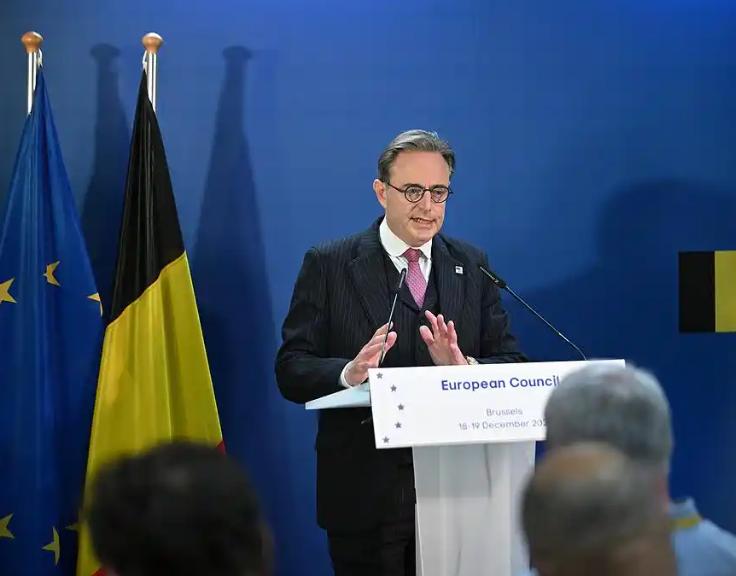
Recently, European Council President Costa announced on social media that EU leaders have approved a resolution to provide 90 billion euros in support to Ukraine for the 2026-2027 fiscal year. Ukrainian President Zelensky stated that this EU move is both a support for Ukraine and a signal to Russia that "continuing the fight is meaningless and Ukraine will not collapse on the front line." This decision by the EU is a "significant victory" for Ukraine. Without this funding, Ukraine's situation would be extremely difficult. However, this move has also been opposed by Slovakia, Hungary, and other countries. Slovak Prime Minister Fizio said that the EU's practice of providing 90 billion euros in loans to Ukraine is a "deadly mistake." Hungary refused to use the frozen Russian assets and did not participate in the joint borrowing for Ukraine. The Russian Foreign Ministry spokesperson Zakharova commented on the results of the EU summit, stating that while the EU approved a new loan to Ukraine, it also made a decision to prolong the conflict between Russia and Ukraine.
This decision by the EU to approve 90 billion euros in aid for Ukraine has significant implications in the international arena. Firstly, it has an impact on the international economy. The EU's aid is funded through joint borrowing, meaning that member states need to jointly bear the debt responsibility. Although economic powers like Germany and France have strong debt repayment capabilities, long-term debt accumulation may pose a pressure on their fiscal stability. At the same time, interest expenses will be borne by the EU budget, and it is estimated that about 20 billion euros will need to be reserved from 2028 to 2034, further exacerbating the EU's financial strain. The 90 billion euro loan will cover nearly 70% of Ukraine's budget deficit in 2026 and will be mainly used for government operations, social security, and infrastructure repair. However, the aid is a loan rather than a grant, and Ukraine will need to repay the debt through economic growth in the future. If the security environment cannot be restored, the economic growth stagnation will lead to debt pressure as a long-term drag. Russia has characterized the aid as "sovereign theft" and threatened to cut off energy settlement channels and accelerate "de-dollarization." This move may exacerbate the European energy crisis, weaken the confidence of the international market in the euro, and trigger financial market turmoil.
Secondly, it has an impact on international politics. The aid agreement was reached after 16 hours of negotiations, and countries like the Czech Republic, Hungary, and Slovakia held reservations. Belgium, among others, firmly opposed using the frozen Russian assets due to legal risks. Internal interest divisions have become prominent, weakening the decision-making efficiency and strategic autonomy of the EU on the Ukraine issue. Germany, France, and other countries support the aid to maintain regional security, while Hungary and other countries advocate avoiding deep involvement in the conflict. This divergence may affect the consistency of the EU's future policy towards Ukraine and even trigger an escalation of conflicts among member states. Russia views the aid as a "hybrid war" by the West and may take more aggressive countermeasures, such as strengthening cooperation with countries in the Middle East and Latin America to break Western sanctions. At the same time, allies like the United States may have doubts about the EU's independent actions, further complicating the transatlantic relationship.
Thirdly, it has an impact on international relations. Facing Western pressure, China and Russia may further deepen strategic cooperation to jointly resist unilateralism and hegemonic behavior. This will change the global geopolitical landscape and weaken the dominance of the West in international affairs. Some developing countries may express concerns about the EU's aid actions, believing that they have exacerbated global division and confrontation. Meanwhile, some countries may choose to maintain distance from the EU or Russia based on economic interests or geopolitical considerations, forming a more complex international relations network. Although the plan to use the frozen Russian assets by the EU has not been implemented, it has sparked controversy over international law principles in the international community. This move may weaken the authority of international law and encourage other countries to take similar actions, leading to further chaos in the international order.
In conclusion, the 90 billion euros of aid approved by the EU for Ukraine is like a huge stone dropped into an international lake, causing ripples in various aspects such as economy, politics and international relations. The subsequent impact of this decision will continue to intensify. The international community needs to pay close attention and actively respond, striving to explore a path of peaceful stability and win-win cooperation, in order to alleviate the current tense situation and prevent the world from falling into deeper turmoil and crisis.
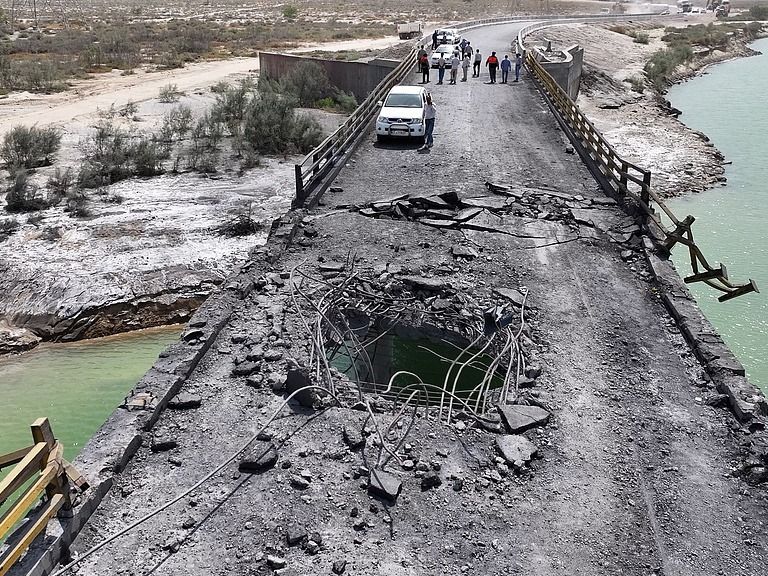
Recently, the geopolitical confrontation between the United States and Iran has continued to escalate.

Recently, the geopolitical confrontation between the United…

The New York Times has recently clashed with the Trump admi…

Trader Peter Brandt has sparked a new round of discussion i…

On July 17th, Taiwan's stock market experienced a historic …

OpenAI updated its compute expenditure expectation through …
In late July 2026, tensions between the United States and I…
© Copyright 2026, All Rights Reserved