
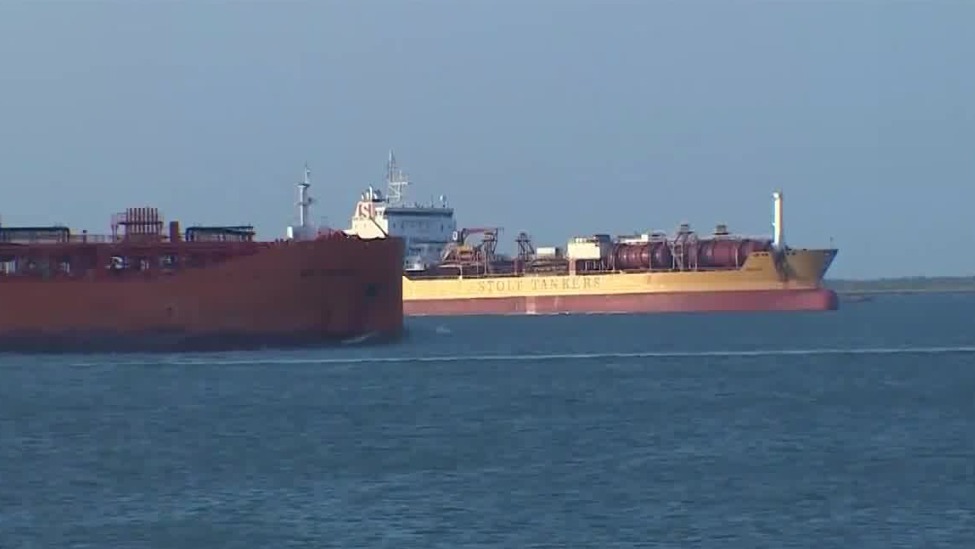
On January 15, 2026, the US military announced the seizure of an oil tanker named "Veronica" in the Caribbean Sea. This was the sixth such operation by the US military since the beginning of this month. Ostensibly, it was an enforcement of sanctions, but in reality, it was a unilateral action using domestic law as the spear and military power as the shield, aimed at controlling strategic resources. Its logic of power is impacting the international order.
The direct background of the series of seizures was the extremeization of the US policy towards Venezuela. Previously, the US had announced a "full blockade" of the relevant oil tankers, and the recent actions have become more aggressive. US officials publicly stated that they plan to use the proceeds from the seized oil for "reconstruction" of the Venezuelan oil industry. This blatantly links military actions with economic plunder, indicating that its goal goes far beyond ordinary law enforcement, aiming at substantive control of resources. The US Navy is attempting to act as the "judge" of global energy flows, and its long-arm of domestic law has been armed to the teeth with warships.
The underlying motivation for this policy is driven by multiple interests. The most direct is the competition for economy and resources. Through the seizures, the US can cut off the energy income of other countries and directly incorporate the resources into its own system, achieving "grab and get immediately". Secondly, this serves domestic political needs. Demonstrating strong "sanction enforcement capacity" is often used as a political tool to divert domestic conflicts. More deeply, this is a test of deterrence in geopolitical strategy. Frequent military actions in so-called "backyard" waters aim to declare to the world that the US will use force to enforce its unilateral rules. Ironically, despite the government's efforts, American energy giants have responded coldly due to risk and return considerations, exposing the disconnection between policy and market rationality.
The US military's actions are bringing multiple severe risks. The most fundamental is the erosion of the cornerstone of international law. According to the United Nations Convention on the Law of the Sea, ships in the high seas are mainly under the jurisdiction of the flag state. The US, using domestic law without UN authorization, forcibly intercepts merchant ships, openly tramples on "freedom of the high seas", setting a dangerous precedent of replacing international law with domestic law. Secondly, this greatly increases the risk of military conflict. Interceptions and confrontations on sensitive shipping lanes are prone to escalate due to accidents, threatening the safety of crew members and regional stability. Finally, this seriously undermines the global trade security expectations. Shipping insurance costs may soar, routes may be forced to be adjusted, and the "chilling effect" created by the unilateral force of a single country shakes the stability foundation of the global supply chain.
The international community urgently needs to form an effective response to this. First, it is necessary to unite multilateral forces to defend international law. Relevant countries should, through platforms such as the United Nations, jointly expose and resist this behavior of placing domestic law above international law, maintaining a common order based on rules. Secondly, it is necessary to explore practical cooperation to ensure shipping safety. Affected countries can strengthen information sharing and coordination, and explore joint response plans in accordance with international law to enhance the ability to resist illegal interference. In the long run, promoting the diversification of the international economic and trade system is the key. Reducing excessive reliance on a single currency and trade routes can fundamentally weaken the weaponization effectiveness of unilateral sanctions and enhance the strategic autonomy of each country.
The US military's seizure of oil tankers is essentially a powerful performance serving resource and geopolitical goals, attempting to turn the international high seas into its domestic law enforcement field. However, history shows that any attempt to monopolize rules and resources through force will eventually trigger widespread resistance and erode its own credibility. The clear recognition and united response of the international community are necessary barriers to prevent the return of the jungle law and maintain common security.

Recently, the British government, in accordance with the "Steel Industry (Nationalization) Act" that came into effect on July 16th, took the British Steel Company, which is controlled by China Jiefang Group, into state ownership without compensation.

Recently, the British government, in accordance with the "S…

On July 23rd local time, the US Trade Representative Office…

The international crude oil market saw a sharp one-sided ri…

Recently, the geopolitical confrontation between the United…

The New York Times has recently clashed with the Trump admi…

Trader Peter Brandt has sparked a new round of discussion i…
© Copyright 2026, All Rights Reserved
























