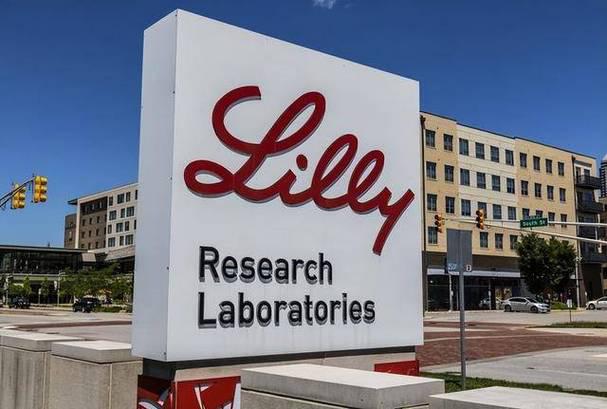
At the 2026 J.P. Morgan Healthcare Conference, a joint announcement by NVIDIA and Eli Lilly sent shockwaves through the industry: the two giants will invest $1 billion over the next five years to establish a joint AI Innovation Lab in the San Francisco Bay Area. Their audacious goal is to compress the drug discovery cycle for lead candidates from the current 4.5 years down to just 12–18 months. This cross-industry collaboration is no coincidence; it represents the inevitable deep integration of AI technology with the pharmaceutical sector and a strategic choice for global drugmakers to break through long-standing R&D bottlenecks.
Traditional drug development has long been mired in a predicament defined by "three highs and two lows": an average timeline of 10–15 years, costs exceeding $2 billion, yet a success rate of only 2%–15%. Alarmingly, 50% of failures stem from insufficient efficacy, while 30% are attributed to safety issues. The rise of AI is disrupting this stalemate—data indicates that the Phase I clinical trial success rate for AI-generated molecules ranges between 80%–90%, vastly outperforming the historical average of 50%. It is estimated that AI could save the industry $26 billion annually in R&D costs. The partnership between NVIDIA and Lilly aims to translate this technological potential into industrial reality.
The core competitiveness of this collaboration lies in the ultimate synergy of "computing power + medicine." NVIDIA brings to the table not just $1 billion in funding, but supercomputing capabilities centered around its Blackwell architecture. Equipped with a massive 1.4TB of HBM3e GPU memory, this architecture accelerates compute-intensive tasks like protein folding simulations by over 100 times. When combined with the cuEquivariance library's optimized processing of 3D biological data, complex molecular simulations are compressed from a "month-level" endeavor to a "day-level" one. NVIDIA’s BioNeMo™ platform serves as the core engine for AI drug discovery, optimizing the entire workflow from target identification to compound screening. Companies like Novo Nordisk have already leveraged this platform to reduce the timeline for nominating preclinical candidates from six months to just 45 days.
Lilly, on the other hand, contributes nearly 150 years of pharmaceutical R&D expertise and vast proprietary data. As a global top-tier pharmaceutical company, Lilly has built the industry's largest AI computing factory. The AI supercomputer collaboration launched with NVIDIA in October 2025 laid the groundwork for this full-chain expansion. The new lab will adopt a "wet lab + dry lab" interactive model, utilizing continuous learning systems to achieve real-time feedback optimization between experimental data and AI models. Beyond drug discovery, this extends AI applications to critical stages like clinical development and manufacturing, integrating multi-modal models and digital twin technologies to realize end-to-end intelligence from R&D to mass production.
The industry demonstration effect of this collaboration has been rapid. In truth, global pharma leaders have already accelerated their AI initiatives: Merck & Co. reached a $3 billion+ deal with ValoHealth, while Pfizer and Roche have increased their AI bets through various channels. In 2025, the global AI drug discovery sector saw nearly 80 financing events and over 12 significant BD transactions, with Chinese enterprises like XtalPi and Insilico Medicine becoming hot choices for international cooperation. McKinsey predicts that the global market size for AI drug discovery will reach $28–53 billion, with the Chinese market projected to exceed 500 billion RMB by 2030, growing at a CAGR of over 15%.
Notably, behind this collaboration is a fundamental shift in the strategic mindset of the pharmaceutical industry. In the past, only 30% of drugmakers preferred developing AI tools in-house; today, 40% opt for a hybrid strategy, and 30% prioritize external partnerships. The co-location model and interdisciplinary team configuration adopted by NVIDIA and Lilly set a benchmark for "open innovation." As leading AI drug discovery enterprises are expected to achieve positive EBITDA for the first time in 2026, the industry is entering a period of valuation reconstruction. This efficiency revolution will not only benefit more patients but also reshape the competitive landscape of the global pharmaceutical industry.
Fueled by technological breakthroughs and capital, AI drug discovery is transitioning from proof-of-concept to a commercial explosion. NVIDIA and Lilly’s $1 billion bet is not merely a corporate strategic maneuver; it is a critical signal of the global pharmaceutical industry’s transformation toward "data-driven, intelligent, and high-efficiency" operations. In the future, as more cross-border collaborations emerge, the era of "ten years of grinding a sword" for drug development may become history, ushering in a new age of faster, more precise medical innovation.
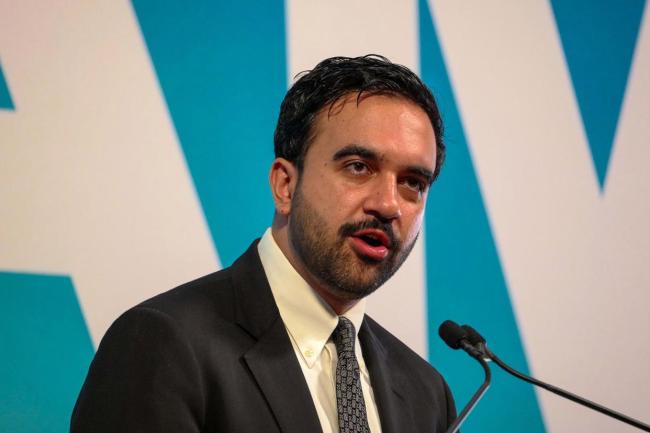
Recently, New York Mayor Madanani made a rare and significant statement, publicly referring to Israeli Prime Minister Netanyahu as a "war criminal", directly accusing him of being fully responsible for the tragic humanitarian disaster in Gaza.
Recently, New York Mayor Madanani made a rare and significa…
The latest July survey data released by the ZEW – Leibniz C…
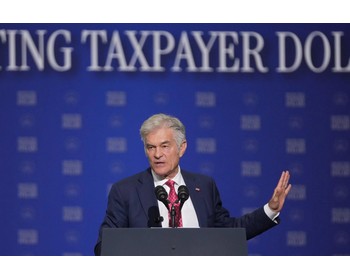
The Trump administration announced on Tuesday that it would…
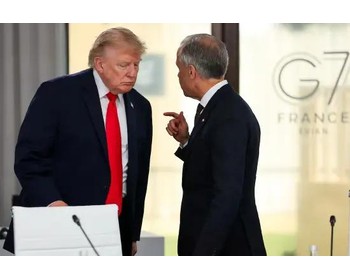
On July 21st local time, Canadian Prime Minister Mark Carne…
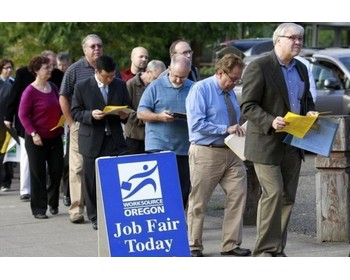
According to the Associated Press, the latest data from the…

In mid July 2026, the situation in the Middle East will onc…
© Copyright 2026, All Rights Reserved