
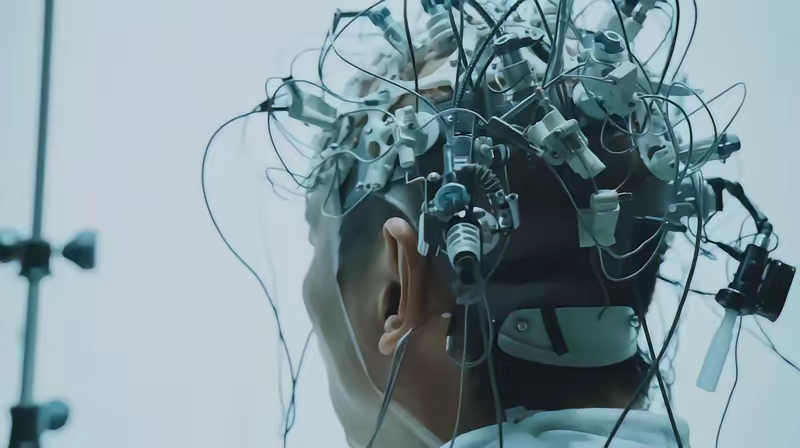
The news of Musk's Neuralink launching mass production of brain computer interfaces in 2026 not only ignited the enthusiasm of the technology industry, but also foreshadowed that an industrial revolution sweeping the global economy is approaching. As a "neural bridge" connecting biological intelligence and the digital world, brain computer interfaces are moving from laboratories to industrialization, and their influence has already surpassed a single technological category, profoundly reconstructing industrial forms and giving birth to new economic ecosystems. From medical rehabilitation to consumer electronics, from the talent market to global industrial competition, the depth and breadth of this change may be far beyond the Internet wave, injecting new momentum into the global economy, but also bringing new challenges and restructuring.
The primary contribution of brain computer interfaces to the global economy is to open up trillion dollar new tracks and become the core growth engine of the post pandemic era. The current global brain computer interface market has reached a scale of billions of dollars, and multiple institutions predict that it will exceed billions of dollars by 2030. The medical application field alone is expected to reach 40 billion dollars, and it is even more likely to soar to 145 billion dollars by 2040. This growth does not exist in isolation, but has formed a dual wheel driving pattern of "core industry+empowering ecosystem": the core layer covers upstream components such as electrodes and chips, as well as midstream products such as implanted devices and decoding software. Only in China, the number of related enterprises has exceeded 200; The empowerment layer permeates multiple fields such as healthcare, consumption, and industry, forming a multiplier effect. Medical health, as the most mature application direction, accounts for 56%, and rigid demands such as spinal cord injury rehabilitation and ALS treatment will be the first to drive large-scale growth; Although the consumer market is currently small in size, the explosive potential of scenarios such as sleep monitoring, emotion management, and VR interaction is enormous, and it is expected to replicate the popularity path of smartwatches; The application of fatigue monitoring and remote control in the industrial field will also create considerable economic value by improving safety efficiency.
The industrial synergy effect further amplifies the economic impact of brain computer interfaces and promotes the transformation and upgrading of traditional industries. Brain computer interface is located in neuroscience AI、 At the intersection of multiple tracks such as chips, their development will leverage the coordinated upgrading of upstream and downstream industrial chains: upstream driving technological breakthroughs and capacity expansion of key components such as flexible electrodes and specialized chips; The midstream has spurred innovation in software algorithms such as neural data decoding and quantum encryption; Downstream industries such as healthcare, manufacturing, and consumer electronics are being forced to restructure their product logic and service models.
The reconstruction of new professions and talent systems has become another important dimension of brain computer interface driven economic transformation. This transformation not only creates new professions such as neural data annotators, consciousness backup engineers, and brainwave beauticians, but also demands interdisciplinary upgrades for traditional positions. Neural data annotators need to possess both neuroscience knowledge and programming skills to convert EEG signals into machine recognizable instructions, and the gap for such versatile talents is continuously expanding; Consciousness backup engineers need to be proficient in image analysis and quantum encryption technology to lay the foundation for the "digital immortality" track. At the same time, traditional programmers need to supplement their knowledge of neuroscience, medical practitioners need to master equipment postoperative management skills, and changes in talent demand structure are forcing education system reform.
Overall, the impact of brain computer interfaces on the global economy will be a complex process of "opportunities and challenges coexisting, increment and reconstruction coexisting". In the short term, the application of medical rehabilitation and consumer electronics will be the first to release economic growth and drive rapid growth in the upstream and downstream of the industry chain; In the medium to long term, its universal technological attributes will reshape the industrial form and talent system, promoting the transformation of the global economy towards a new paradigm of "human-machine collaboration".
The economic transformation triggered by brain computer interfaces is essentially the inevitable result of technological innovation driving the reconstruction of production factors. It not only tests the technological research and development capabilities and industrial matching levels of various countries, but also challenges the wisdom of global economic governance. In the future, whoever can find a balance between technological breakthroughs, ethical standards, and talent cultivation will be able to gain an advantage in this new global economic competition.

Recently, the British government, in accordance with the "Steel Industry (Nationalization) Act" that came into effect on July 16th, took the British Steel Company, which is controlled by China Jiefang Group, into state ownership without compensation.

Recently, the British government, in accordance with the "S…

On July 23rd local time, the US Trade Representative Office…

The international crude oil market saw a sharp one-sided ri…

Recently, the geopolitical confrontation between the United…

The New York Times has recently clashed with the Trump admi…

Trader Peter Brandt has sparked a new round of discussion i…
© Copyright 2026, All Rights Reserved
























