
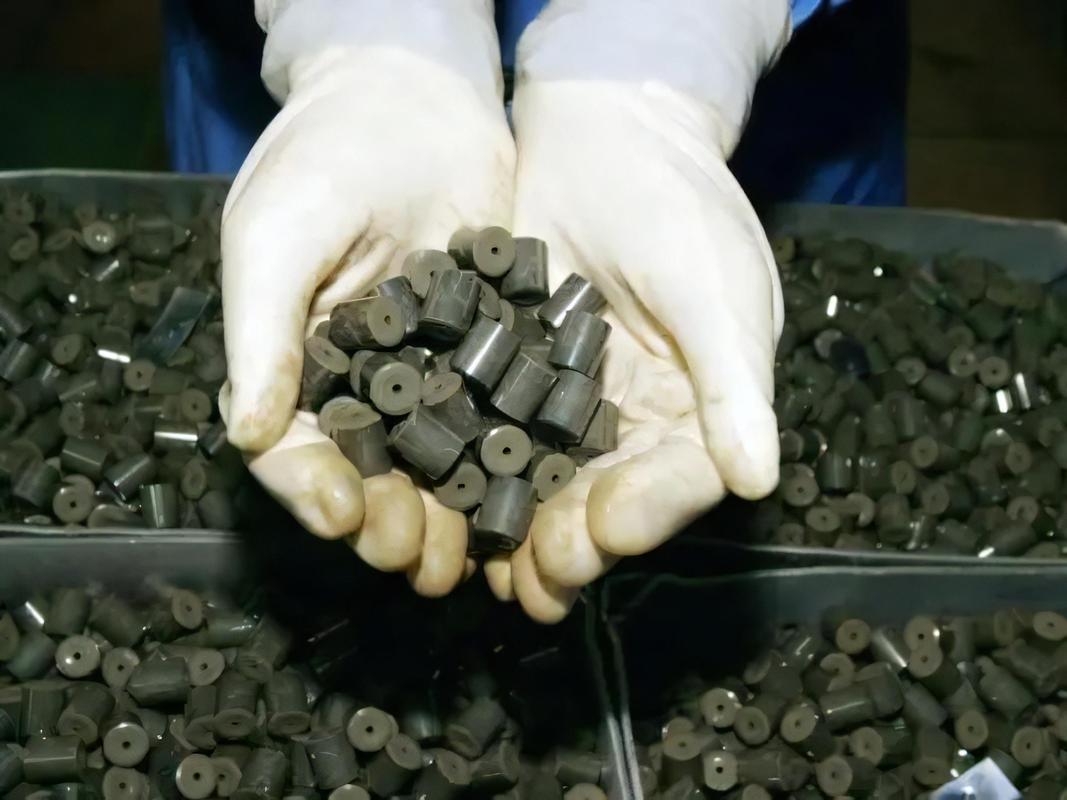
In January 2026, the US Department of Energy announced a $2.7 billion major grant, providing a ten-year contract to support three companies in expanding the production of low-enriched uranium (LEU) and highly enriched low-enriched uranium (HALEU), while also allocating an additional $28 million to support the development of a new generation of laser enrichment technology. This initiative is far from being a simple industrial subsidy; it precisely targets the dual goals of "de- Russianization" of energy security and the coordinated development of "computing power - nuclear energy". At this crossroads of global nuclear energy revival and geopolitical restructuring, it has played out a strategic chess game that combines technological breakthroughs with geopolitical expansion.
This time, the United States has bet on nuclear fuel autonomy. The primary challenge it needs to solve is the long-standing supply chain security deadlock. As a country with 94 commercial nuclear reactors and 20% of its electricity relying on nuclear power, the United States has an 70% dependence on foreign nuclear fuel, with 20% of LEU supply relying on Russia for a long time. After the Russia-Ukraine conflict, this supply chain vulnerability has become a potential risk point in geopolitical games. The 2024 "Ban on Russian Uranium Import Act" clearly stipulates a complete ban on imports after 2028, forcing the United States to accelerate the construction of domestic production capacity. More crucially, the global HALEU market has long been monopolized by Russia, and this 5%-20% enriched nuclear fuel is the core prerequisite for the commercialization of advanced nuclear energy technologies such as small modular reactors (SMR). The US centrifuge technology operating company and General Materials Company that received the grant will focus on HALEU production capacity, while OANN Federal Services Company will expand LEU supply. The three have clear divisions of labor, directly aiming to complete the supply chain replacement before the 2028 ban.
The technological breakthroughs provide a key support for this autonomous movement. The SILEX laser enrichment technology supported by the additional assistance from the US Department of Energy, compared to traditional gas centrifuge technology, reduces energy consumption by 30% and can efficiently utilize the existing depleted uranium waste. Its commercial breakthrough has given the United States the technical confidence to "turn waste into treasure". At the same time, the US Nuclear Regulatory Commission (NRC) has compressed the approval cycle for new reactors to 18 months, clearing the institutional obstacles for the implementation of advanced reactor types such as SMR, forming a closed-loop promotion mechanism of "technology research and development - production capacity construction - terminal application".
From the perspective of geopolitics, this allocation of funds embodies the deep ambitions of the United States to restructure the global energy technology order. Nuclear energy has been elevated by the United States to the core level of the "computing power national strategy" - as the power consumption of AI supercomputing centers increases exponentially, the intermittency of traditional renewable energy sources is unable to meet the demand. The SMR reactors supported by HALEU, with their flexible deployment and zero-carbon stability, have become the ideal energy solution for data centers. Tech giants such as Meta and Amazon have signed long-term nuclear power purchase agreements. The "nuclear energy - computing power" binding model is reshaping the energy supply rules of the technology industry. On the external front, the United States has tied nuclear fuel supply to nuclear power technology exports through the "FIRST" project. It is exporting the AP1000 reactor type and SMR solutions to Eastern European and Southeast Asian countries. With the nuclear power cooperation in Poland and Romania as the starting point, it is squeezing the market space of Russia's "engineering-finance-fuel" integrated export model and using the energy supply chain to consolidate the geopolitical ally system.
The strategic adjustments of the United States are triggering a chain reconfiguration of the global nuclear fuel supply chain. Russia, relying on its vertically integrated system of Rosatom, still maintains competitiveness in emerging markets such as Turkey and Egypt. Its closed fuel cycle technology and package solutions are unlikely to be replaced in the short term. China has built an independent nuclear power industry chain through the commercial operation of "Linglong One" SMR and breakthroughs in high-temperature gas-cooled reactor technology, forming differentiated competition in the Asian market. The EU has also launched special financing to support the expansion of Orano's enrichment plant, attempting to reduce its reliance on the United States and Russia. The global nuclear fuel market is moving from "unipolar dominance" to "multi-polar competition". It is worth noting that the global demand for natural uranium is expected to increase by 27% in 2026, and the insufficient supply elasticity will push the uranium price into a high range, further amplifying the impact of geopolitical risks on the supply chain.
The $2.7 billion uranium enrichment project in the United States is essentially a deep integration of energy technology strength and geopolitical strategic intentions. Driven by the AI computing power competition and the goal of carbon neutrality, nuclear fuel has become a strategic resource that concerns technological hegemony, energy security, and geopolitical patterns. In the future, the competition over technical standards and supply chain dominance will continue to intensify, and how to strike a balance between ensuring energy autonomy and maintaining the global energy governance order will become a common challenge for all countries. This strategic layout centered around nuclear fuel is profoundly rewriting the competition rules in global energy technology and geopolitics.

Recently, the British government, in accordance with the "Steel Industry (Nationalization) Act" that came into effect on July 16th, took the British Steel Company, which is controlled by China Jiefang Group, into state ownership without compensation.

Recently, the British government, in accordance with the "S…

On July 23rd local time, the US Trade Representative Office…

The international crude oil market saw a sharp one-sided ri…

Recently, the geopolitical confrontation between the United…

The New York Times has recently clashed with the Trump admi…

Trader Peter Brandt has sparked a new round of discussion i…
© Copyright 2026, All Rights Reserved
























