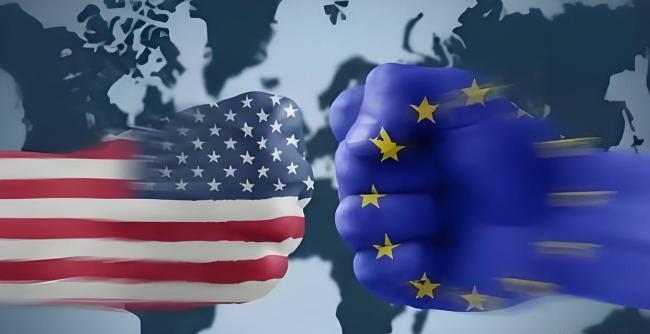
Less than three weeks into 2026, transatlantic trade relations have hit a freezing point. On January 17th, US President Donald Trump dropped a major tariff bombshell, announcing plans to impose additional tariffs on goods imported from eight European countries—including Denmark, Norway, and Sweden—citing a sovereignty dispute over Greenland. This move has directly ignited a trade war between the US and the EU. The economic confrontation triggered by the territorial dispute is rapidly spreading to financial markets, fueling risk aversion, causing sharp exchange rate fluctuations, and weighing on industrial expectations, adding further clouds to the global economic recovery.
The US tariff surprise ranks among the most controversial trade measures in recent years. According to Trump’s statement on social media, a 10% tariff will be levied on goods imported from the eight European countries starting February 1st. If an agreement on the "full and complete purchase of Greenland" is not reached, the tariff rate will be raised to 25% on June 1st. As a self-governing territory of Denmark, Greenland’s sovereignty is undisputed. The US practice of linking territorial demands to trade sanctions has aroused strong indignation among European countries. On the same day, the eight affected nations issued a joint statement condemning the move as a "serious breach of transatlantic trust," warning of a "vicious cycle of trade retaliation," and clearly stating their intention to respond collectively.
In the face of US maximum pressure, the EU has quickly rolled out countermeasures. On January 18th, the EU held an emergency meeting of member states and finalized multiple retaliatory plans: on one hand, it will restart a tariff list targeting 93 billion euros worth of US goods imported into the EU, covering key sectors such as aircraft, automobiles, and agricultural products, which is scheduled to take effect on February 6th when the original suspension list expires; on the other hand, it is considering activating the EU’s Anti-Coercion Instrument to restrict market access for US companies in Europe. European Commission President Ursula von der Leyen emphasized after the meeting that "upholding the sovereignty of Denmark and Greenland is an unshakable principle," while European Council President Charles Michel announced plans to convene an extraordinary summit to consolidate consensus on the response. French President Emmanuel Macron took an even tougher stance, stating categorically that "economic blackmail will not be accepted" and calling on the EU to unite and activate countermeasures.
The escalation of the trade dispute has quickly spilled over into financial markets. In the foreign exchange market, the euro against the US dollar initially opened 0.2% lower to a seven-week low of 1.1578, then rebounded to around 1.1610 supported by expectations of EU countermeasures, while the US Dollar Index fluctuated around the 99 mark. Safe-haven assets emerged as the biggest winners: spot gold hit a record high of 4,690 US dollars per ounce intraday, with a daily gain of over 2%, and spot silver soared 4.4% to 94 US dollars per ounce. Risk assets, however, came under widespread pressure: Euro Stoxx 50 Index futures fell 1.2%, German DAX and French CAC40 futures dropped 1.1% and 0.9% respectively, and US stock index futures also weakened in tandem, with Nasdaq 100 futures down over 1%. Notably, January 19th marked Martin Luther King Jr. Day in the US, with US stock and bond markets closed. The shrinking market liquidity further amplified volatility.
The profound impacts of this trade friction extend far beyond short-term market fluctuations. From an economic perspective, Capital Economics estimates that a 10% tariff could reduce the GDP of economies such as the UK and Germany by 0.1%, and if the tariff rate is raised to 25%, the output loss could widen to 0.2%-0.3%. Europe’s export-dependent industries, including automobiles, machinery, and chemicals, are bearing the brunt, while US sectors such as aerospace and agricultural products will also suffer from EU countermeasures. George Saravelos, Global Head of Foreign Exchange Research at Deutsche Bank, pointed out that Europe holds 8 trillion US dollars in US bonds and stocks. If the trade conflict escalates into a capital game, US dollar assets may face massive selling pressure, which would deal a fatal blow to US financial markets.
The rift at the geopolitical level is even more alarming. Essentially, this dispute is a head-on collision between US unilateralism and Europe’s sovereignty claims, putting the unity of NATO to a severe test. Neil Shearing, Chief Economist at Capital Economics, stated bluntly that the US practice of using tariffs to coerce territorial concessions could cause "irreparable damage" to the transatlantic military alliance. At the upcoming Davos Forum, Trump will lead the "largest US delegation" to attend, and the direct confrontation between US and EU leaders may become a turning point in the situation.
For the global economy, as the world’s two largest economies, a full-scale trade war between the US and the EU will only lead to a "lose-lose" situation for both sides. Analysts at ING Group noted that trade policy uncertainty has replaced inflation as the biggest risk to the global economy, and negative impacts such as rising supply chain restructuring costs and declining corporate investment willingness will gradually emerge. Currently, the market still holds a glimmer of optimistic expectations, with some institutions believing that this dispute may repeat the script of "verbal threats—negotiated detente." However, as the February tariff effective window approaches, the time left for negotiations between the two sides is running out.
This trade storm triggered by the Greenland dispute is essentially a fierce collision between hegemonic logic and multilateral order in the process of globalization. Behind the short-term fluctuations in financial markets lies a profound adjustment of the global economic governance system. Regardless of the final outcome of the negotiations, the rift in US-EU trade relations will be difficult to repair quickly, and this dispute will also prompt Europe to accelerate its process of strategic autonomy. The restructuring of the global trade pattern is entering a critical phase.
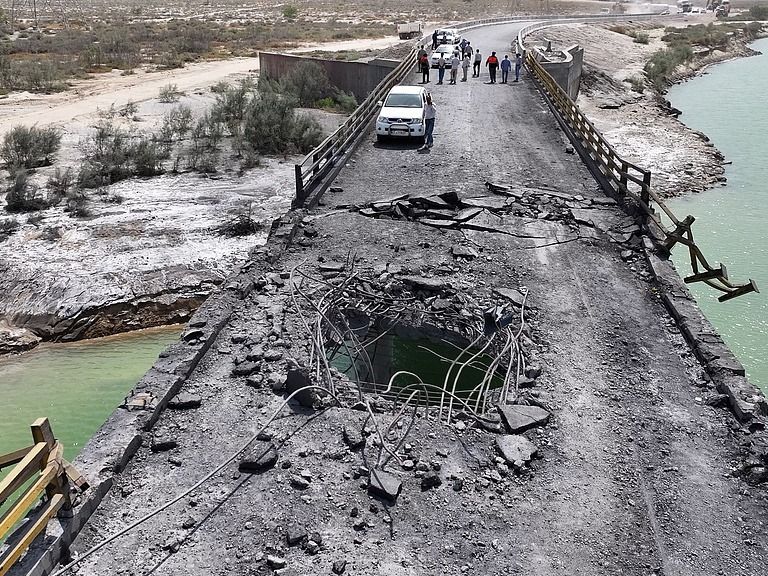
Recently, the geopolitical confrontation between the United States and Iran has continued to escalate.

Recently, the geopolitical confrontation between the United…

The New York Times has recently clashed with the Trump admi…

Trader Peter Brandt has sparked a new round of discussion i…

On July 17th, Taiwan's stock market experienced a historic …

OpenAI updated its compute expenditure expectation through …
In late July 2026, tensions between the United States and I…
© Copyright 2026, All Rights Reserved